
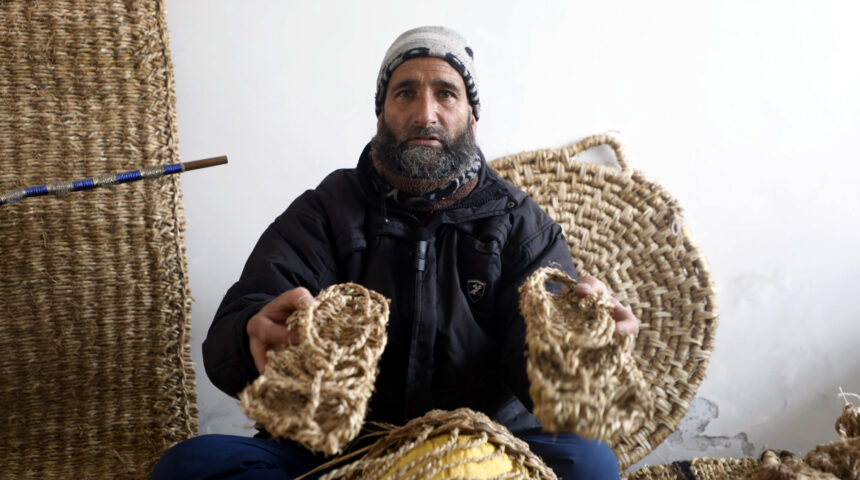
60 year old Muhammad Yousuf,a Kashmiri footwear maker, has kept alive the centuries-old tradition of making footwear (Pulhoor) with paddy straw. Resident of Zantrag village in Khrew, Pampore, he not only makes the traditional footwear but also several other items with straw, including mats, covers for cups, straps for wooden slippers and baskets. Yousuf learnt this art of making footwear, mats etc from his forefathers and he is now also making these items at the School of Design in Srinagar, where many come to learn this craft. Though customers for such items are very few, these straw made items are...
Blog
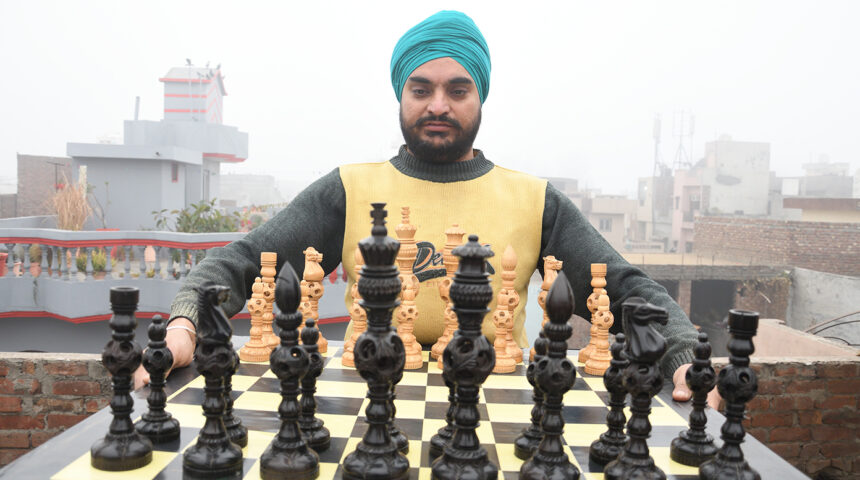
Photo Essay: Chess Maker, Amritsar
Amritpal Singh is an award winning, third generation chess-maker. This work was started by his grandfather who crafted various items out of ivory and white sandalwood. After both of these were banned, they started using wood. Commonly used wood types are: papri (boxwood), tali (sheesham), acacia, aabnoos and red sandalwood. For chess pieces papri is used. This is sourced from the jungles of Bihar. If necessary, Amritpal Singh goes to these remote areas himself to source the wood. Though he is now known for his innumerable designs of chess sets, Amritpal Singh used to also craft murti sets, which are...
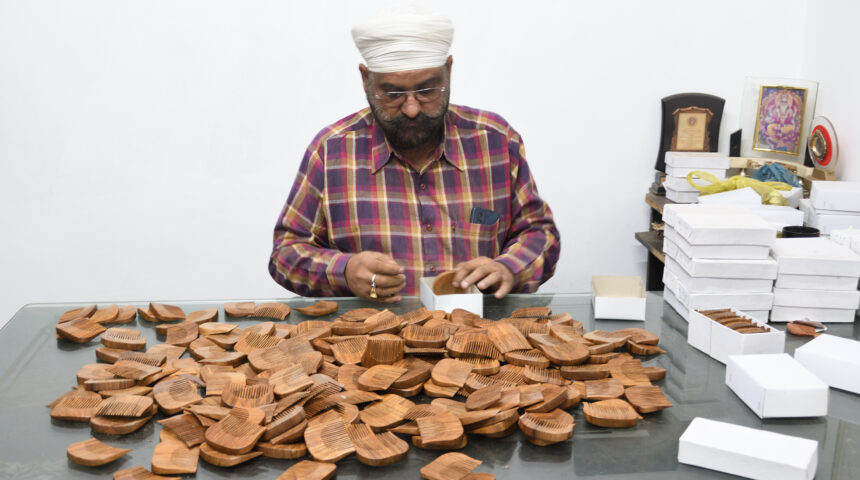
Photo Essay: Wooden comb (kanga) of Amritsar
Rupinder Singh Jabbal, grandson of Sardar Harbhajan Singh Jabbal, the famous theater artist from Amritsar, is the 4th generation craftsman making wooden combs (kanga). His son, now the 5th generation also is a craftsman and works in the family business. Sardar Harbhajan Singh Jabbal was born on 1st October,1941 to Smt. Beant Kaur Ghatora in Pakistan. His father Sardar Phoola Singh was a master of Ivory work. He himself is a very good craftsman. His model of Darbar Sahib, Amritsar, which was made of Sandal wood fetched the State Award for him. But he is widely recognized as Punjabi comedian....
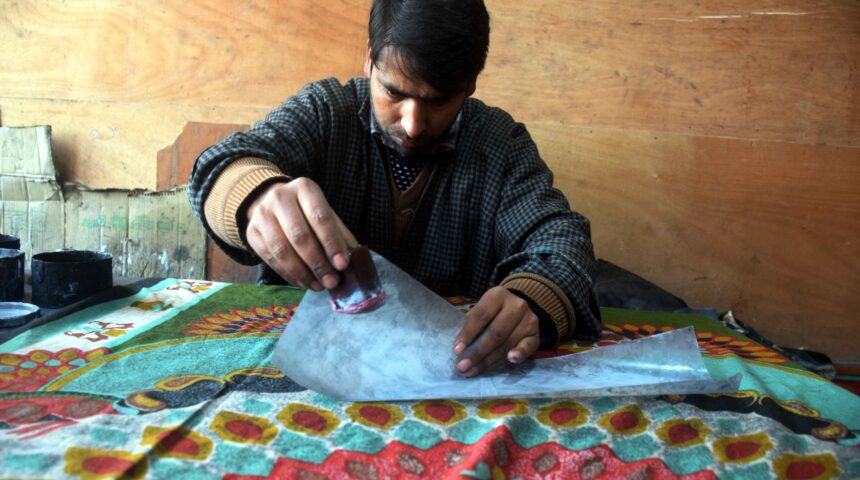
Photo Essay: Papier Mache & Kalamkari Shawls
Papier-mâché is the French word for “chewed paper”, which is a standard English loan word, for objects made by moulding paper pulp in various shapes and then decorating them with designs in various colours. In the figurative sense the word ‘papier-mâché’ has come to be identified as the art of Kashmir. It is based primarily on paper pulp, and is a richly decorated, colourful artifact; generally in the form of vases, bowls, or cups (with and without metal rims), boxes, trays, bases of lamps, and many other small objects. These are made in homes, and workshops, in Srinagar, and other...
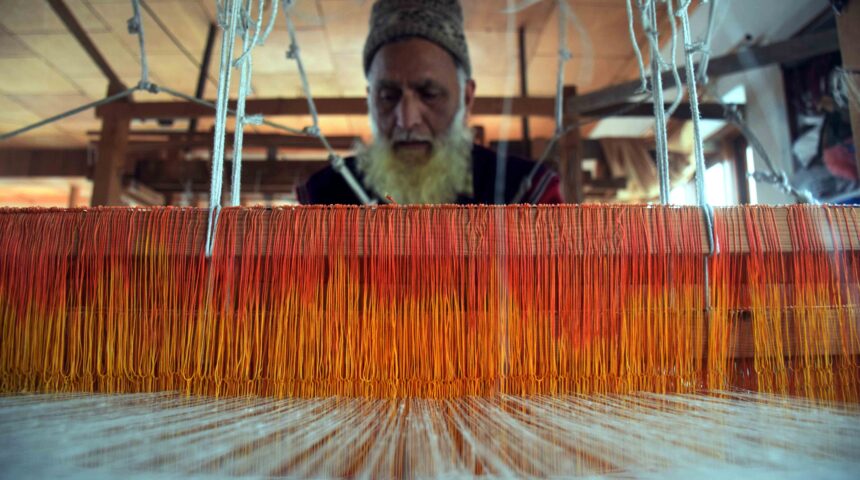
Photo Essay: The Art of Weaving Pashmina
The word pashm means “wool” in Persian, but in Kashmir, pashm referred to the raw unspun wool of domesticated Changthangi goats. In common parlance today, pashmina may refer either to the material or to the variant of the Kashmir shawl that is made from it. Samples of wool fibres discovered from corroded copper artifacts from Harappa dating back to the Indus valley civilization are extremely fine and resemble Pashmina and Shatoosh. The material gained prominence through its use in the Kashmir shawl. In Mughal times, this was used as an indicator of rank and nobility. In Akbar’s time, a pair...
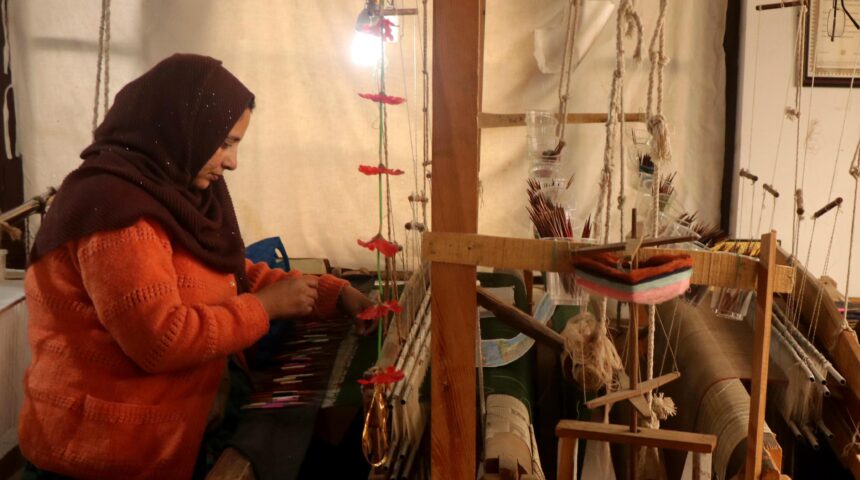
Photo Essay: Kani Shawls
A Kani shawl is a type of Kashmir shawl originating from the Kanihama area of the Kashmir valley. The shawls are woven from pashmina yarn. The government of Jammu and Kashmir has granted a geographical indication to the Kani shawl, making it illegal to sell shawls made outside of the Kanihama area as Kani shawls. Kani weaving is believed to be an art indigenous to Kanihama and traced back to 3000 BC. This exquisite shawl was once coveted by Mughal Kings, Sikh Maharajas and British Aristocrats. The Ain-i-Akbari records that Emperor Akbar was an avid collector of Kani shawls. While...
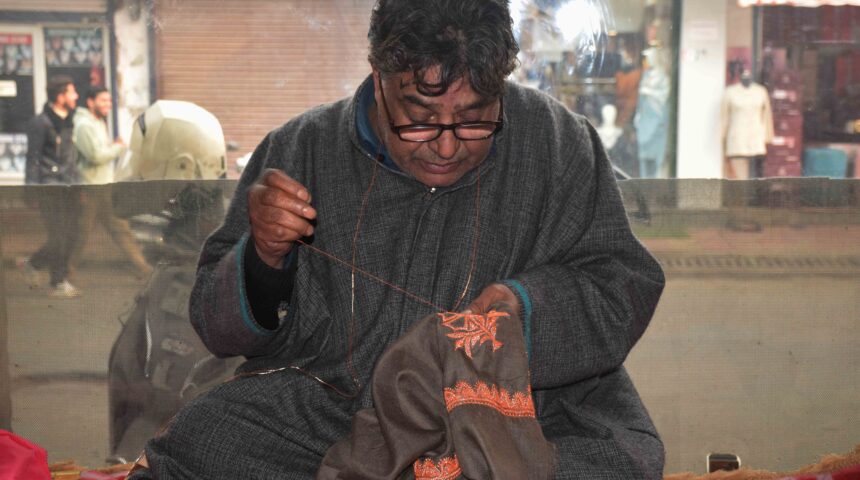
Photo Essay: Tilla Dozi (Tilla Dori)
Tilla is one of the most exquisite forms of embroidery in Kashmir. It is extensively used to decorate ethnic wear with the help of silver, golden, and copper metallic threads. The threads are delicately tied by needlepoint over the fabric to create exquisite designs. Tilla is a traditional craft of Kashmir which is used to adorn pherans and shawls but over the years, the embroidery is done on sarees, shalwar kameez, and other garments as well. Tilla refers to the gold or silver zari and dori refers to the silk thread. Zari is basically a brocade of tinsel thread meant...
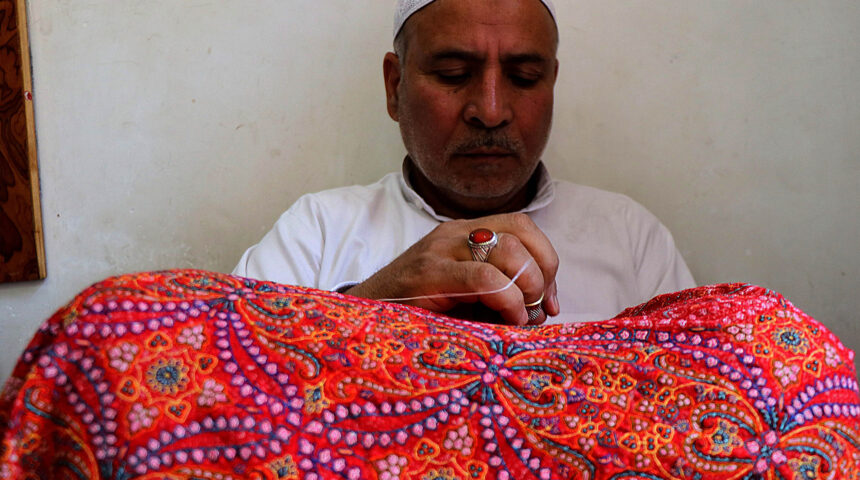
Photo Essay: Sozni Embroidery
Sozni is a popular needle point embroidery technique from Kashmir valley. It is usually practised by the local craftsman in a home-based workshop called Karkhanas. Most of these are located in Central Kashmir’s Budgam district. In the local dialect, the craft is also referred to as Sozni Kaem, Kani Sozni or setchzinikaem. To make a Sozni embroidered shawl, a pashmina shawl is chosen first. Sozni can also be done on other types of fabric such as cotton and silk, but the embroidery appears best on Pashmina Shawls and Toosha shawls (high quality wool). The chosen shawl is sent to a...
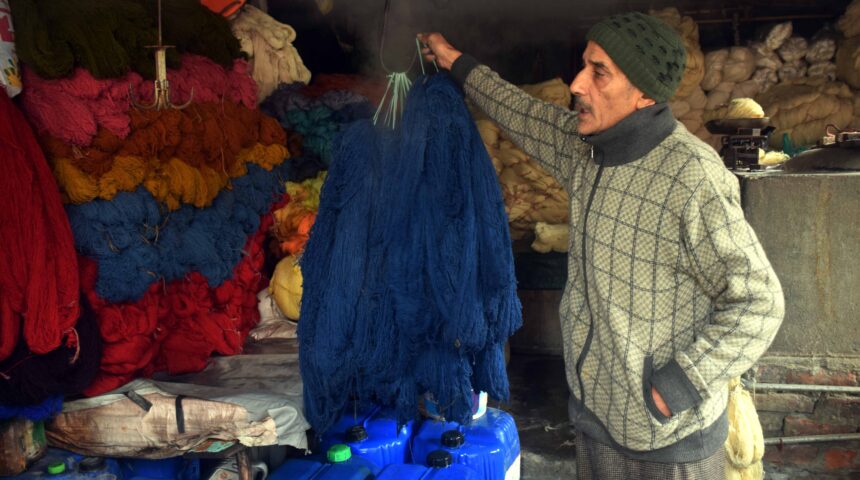
Photo Essay: Aari work- dyeing process. Part 2
Process of dyeing of aari thread staple: 70 year old Bashir Ahmad works in his family owned, 122 years old dyeing karkhana at Bohri Kadal, Srinagar. Bashir is among the last hand-dyers or Rangrez in Srinagar who continue to manually dye silk and woollen threads especially for aari embroidery. Bashir started working at the karkhana at the age of 15 with his father. His grandfather and great father were dyers too at Bohri Kadal which was at one time the hub of dyers. Bashir trained others in creating colours, getting the right shades, examining the dyed thread for quality etc....
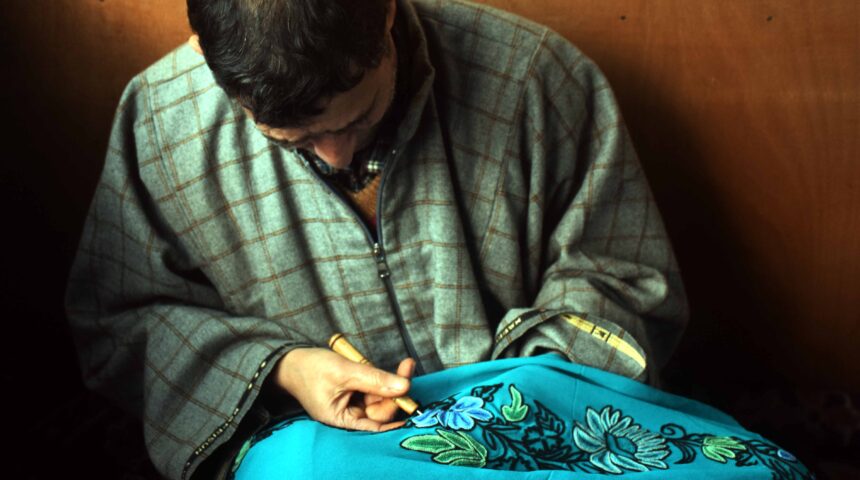
Photo Essay: Aari work (Aari kaem), Part 1
Embroidery is more than a craft to the Kashmiri craftsman; it is an emotion woven into threads over a period. The craftsman does just everything from the collection of the finest raw material to thread selection best suited as per the required fabric count. The higher the count, the finer the yarn is and the more exquisite the embroidery would be. One of the better known one is the aari embroidery. Also known as crewel embroidery, it is a specialty of the artisans of the Valley. This type of embroidery is created in fine and concentric rings of chain stitch...
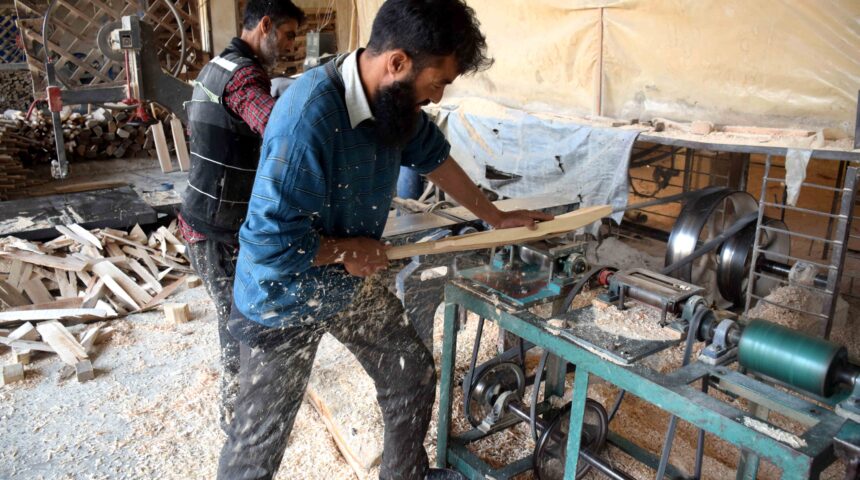
Photo Essay: GR8 Batting
31-year-old Fawzul Kabeer is a young entrepreneur from Kashmir. He has made his mark in the international market for his GR8 willow bat industry, whose bats are being used by many of the top national and international cricket teams. Kabeer’s story has been one of hard work. It took his one and a half years of unrelenting efforts to finally get his cricket bats made of Kashmiri willow approved by the International Cricket Council (ICC), the world governing body of cricket. Read more: http://kashmirnewsline.net/gr8-batting-its-way-to-t20-world-cup/
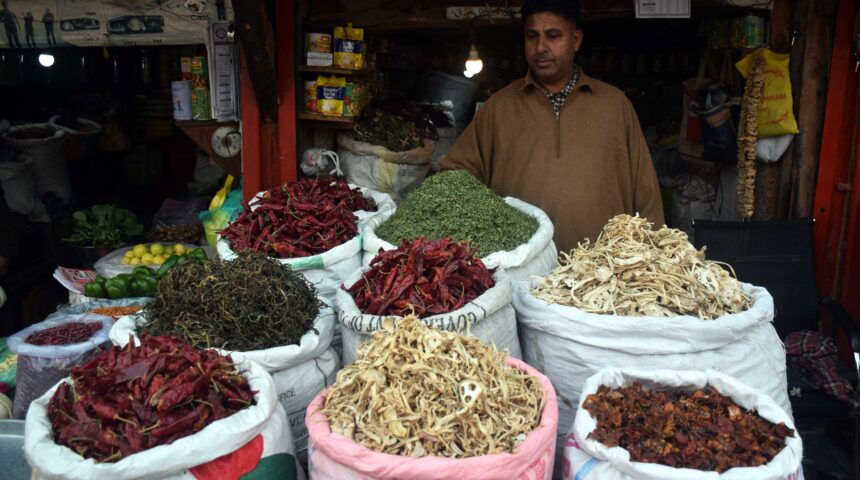
Photo Essay: Winter dried vegetables – Hokeh Seun
Before the onset of harsh winters (chillai kalan) in Kashmir, every house would have vegetables strung on the windows or balconies of their houses, to be sun-dried. These can still be seen in a few houses in the Downtown area. In olden times harsh winters severely restricted people’s movement. As there wasn’t any agricultural activity due to the severe cold, people had to dry vegetables and stock them to survive the winter. During July and August, there is a large amount of gourd, tomato, brinjal and many other vegetables available,thanks to the Kashmiri kitchen gardens, a part of almost every...