

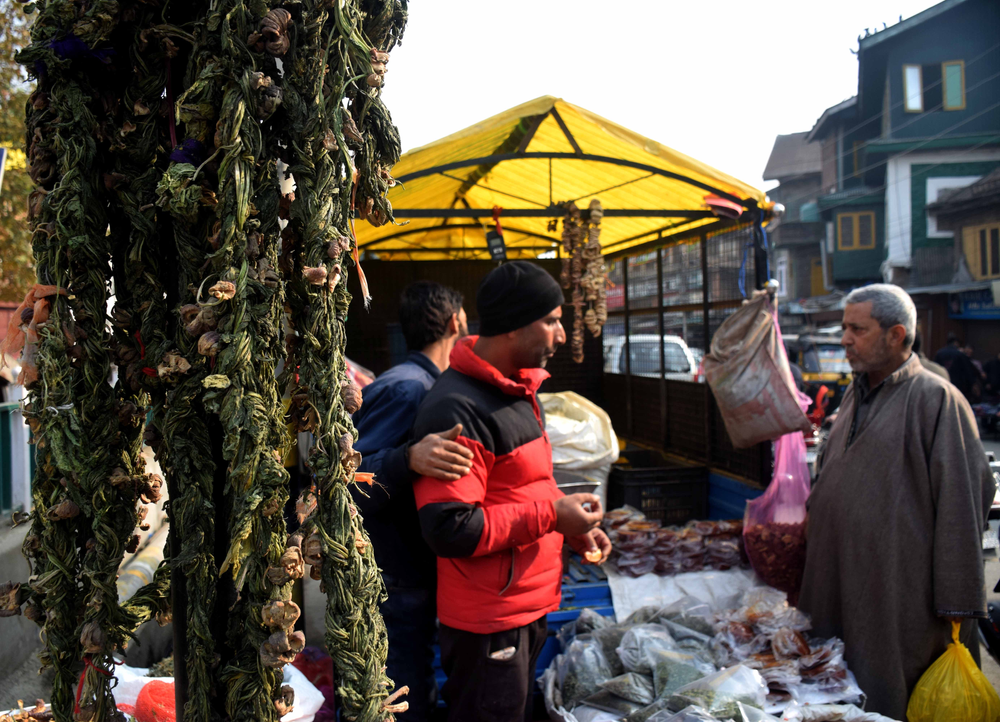
Before the onset of harsh winters (chillai kalan) in Kashmir, every house would have vegetables strung on the windows or balconies of their houses, to be sun-dried. These can still be seen in a few houses in the Downtown area.
In olden times harsh winters severely restricted people’s movement. As there wasn’t any agricultural activity due to the severe cold, people had to dry vegetables and stock them to survive the winter.
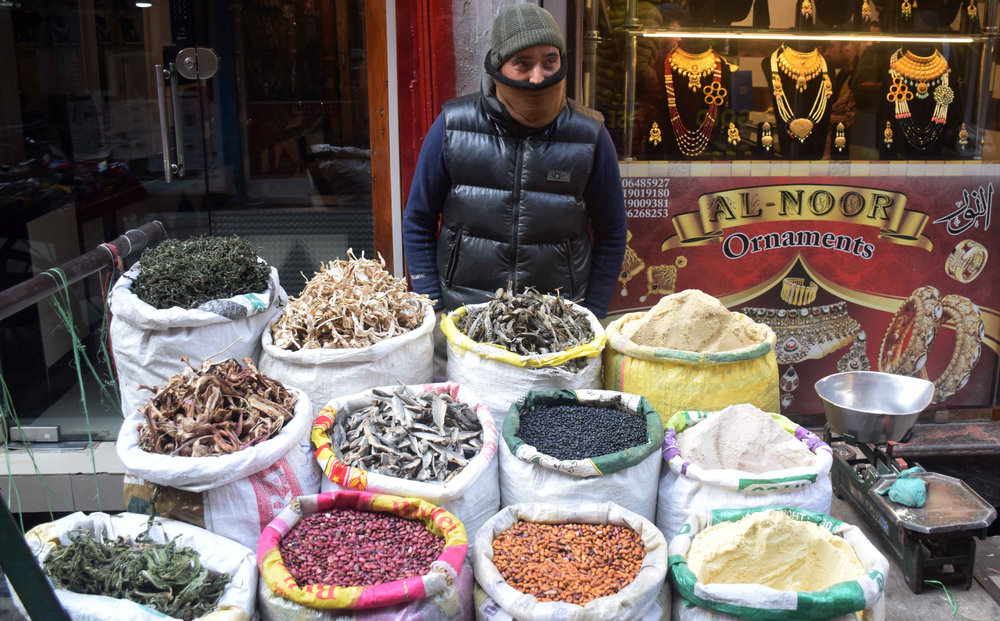
During July and August, there is a large amount of gourd, tomato, brinjal and many other vegetables available,thanks to the Kashmiri kitchen gardens, a part of almost every household. It’s not only turnip, gourd, tomato and brinjal which are sun dried, but also others including lotus stem, fish, pepper, spinach and dandelion. Although most of the vegetables are available now throughout the year, sun dried vegetables are still used extensively.
Kashmiri dried vegetables (hokhe seun/syeun) include dried tomatoes (ruwangan hache), bottle gourds (alle hachi), brinjal (wangan hache), turnip (gogji aare/ gogji hatche), dandelion greens (hooch handh), quince apple (bamchoont hache), fenugreek (meath), iberian knapweed (kraich), dried fish (hokhe gade), dried spinach (huch palak).Sliced vegetables are dried either by threading them into garlands which are hung on walls or simply laid out in the sun. The fruits and vegetables of summer that have been carefully sun-dried and stored for months are soaked in hot water until they swell up. They are then sauteed in oil and masalas. Some of the winter dishes using sun dried vegetables are gogje paneer, alhache chicken and hoggad chutney.






Leave a Reply