

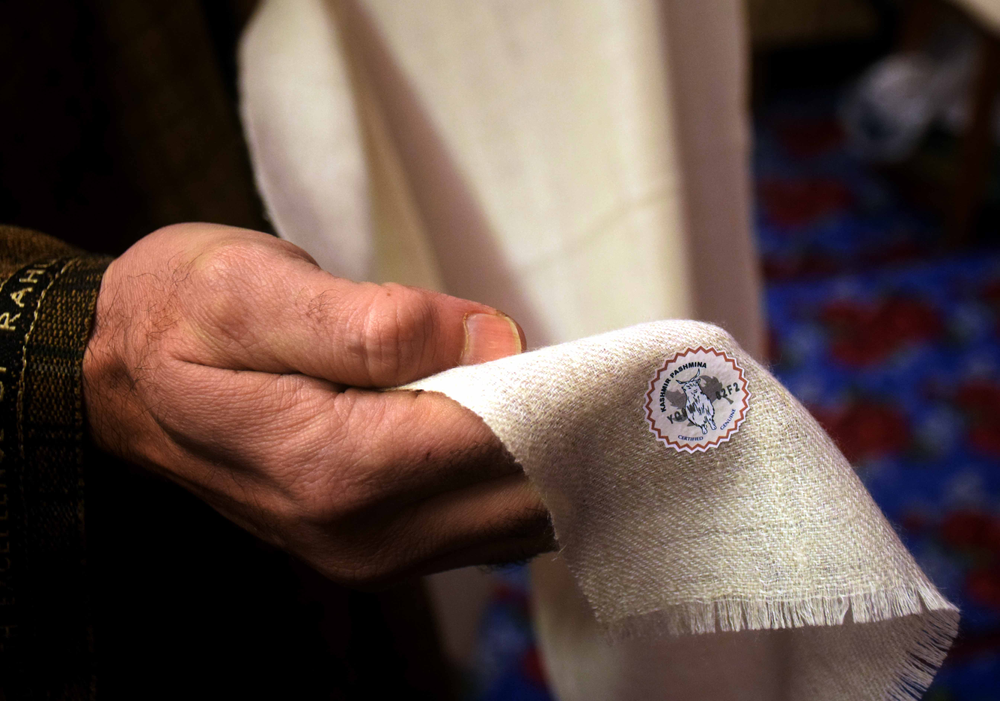
The word pashm means “wool” in Persian, but in Kashmir, pashm referred to the raw unspun wool of domesticated Changthangi goats. In common parlance today, pashmina may refer either to the material or to the variant of the Kashmir shawl that is made from it. Samples of wool fibres discovered from corroded copper artifacts from Harappa dating back to the Indus valley civilization are extremely fine and resemble Pashmina and Shatoosh. The material gained prominence through its use in the Kashmir shawl. In Mughal times, this was used as an indicator of rank and nobility. In Akbar’s time, a pair of pashmina shawls were an expected part of khil’at ceremonies.
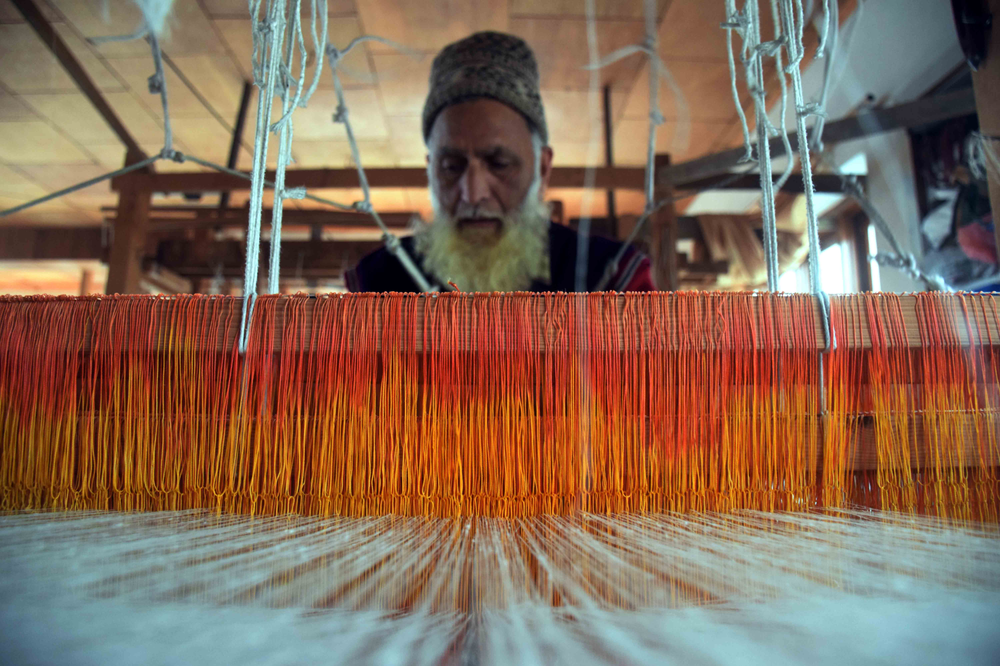
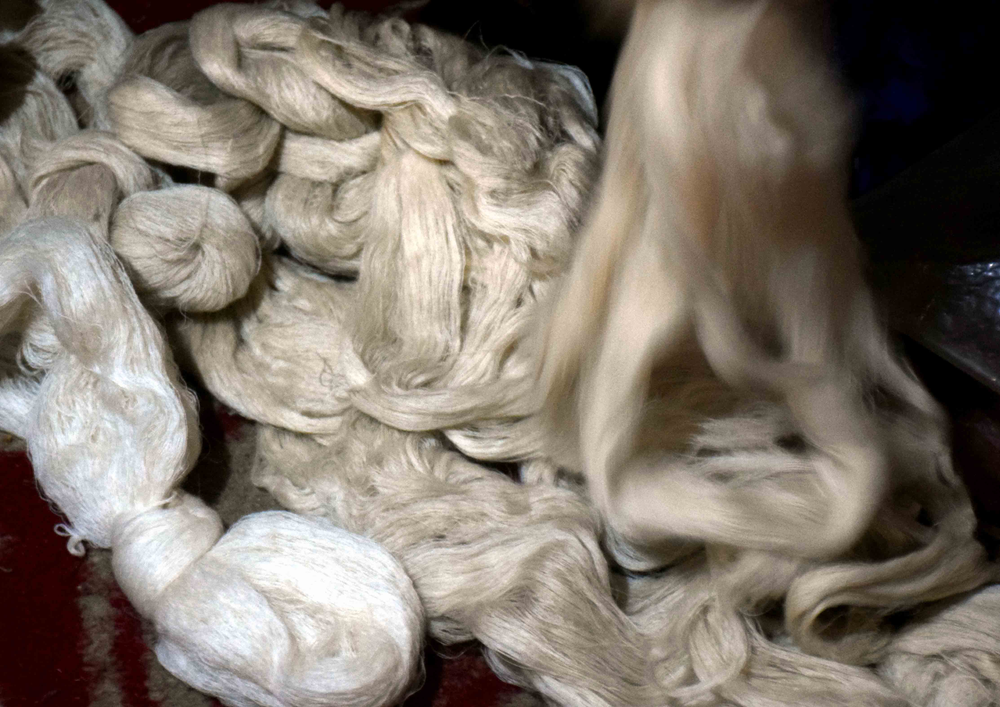
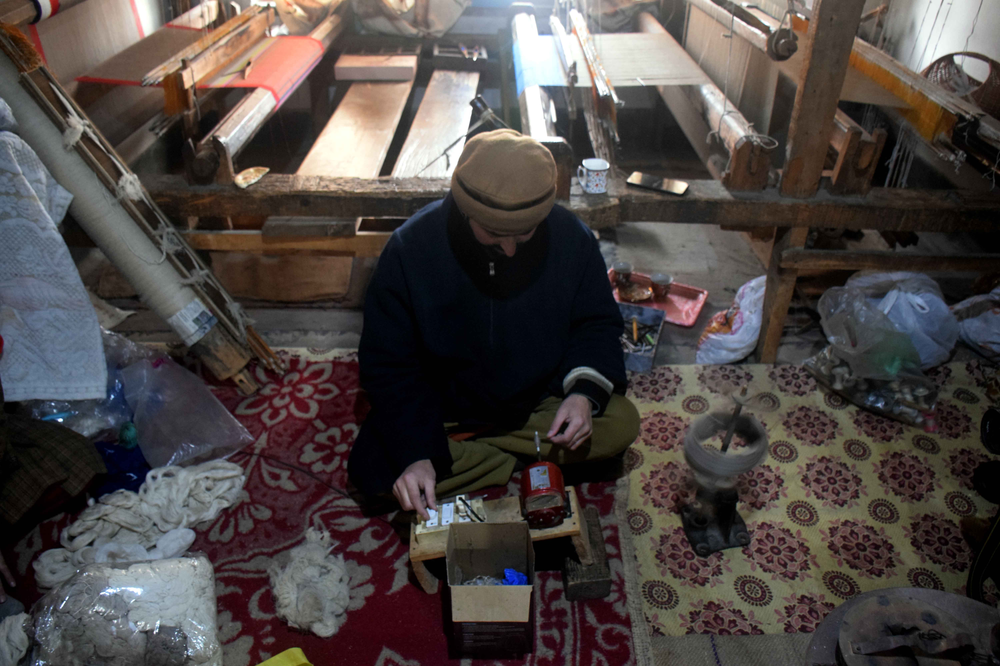
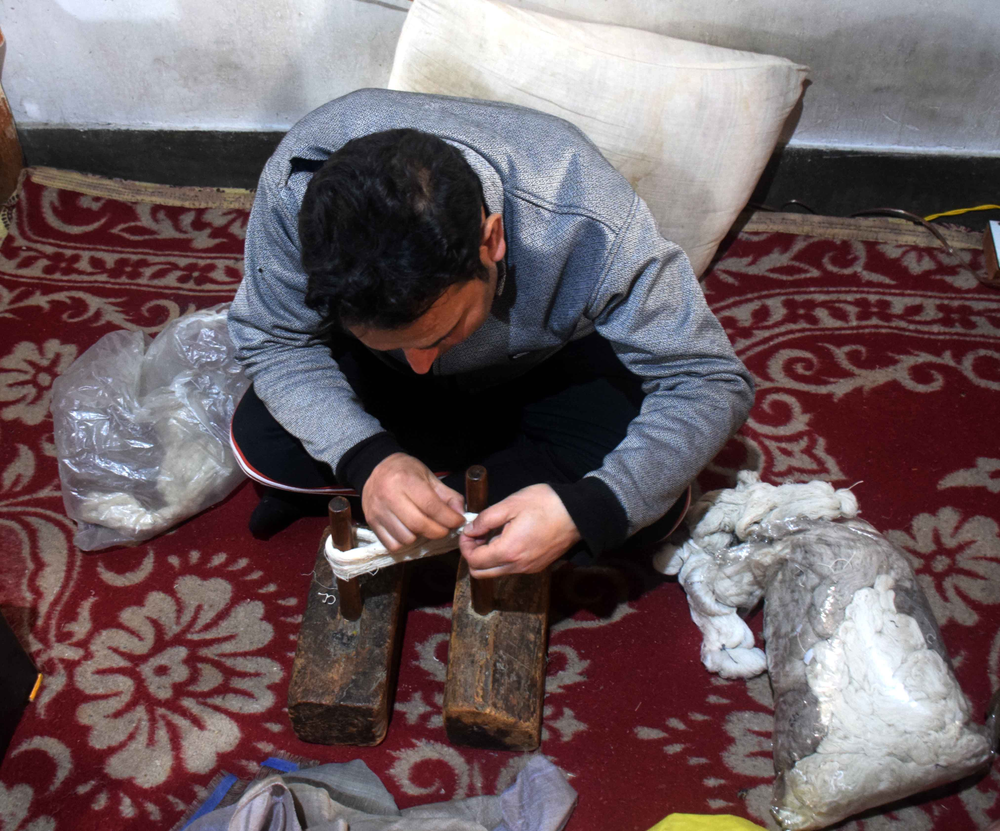
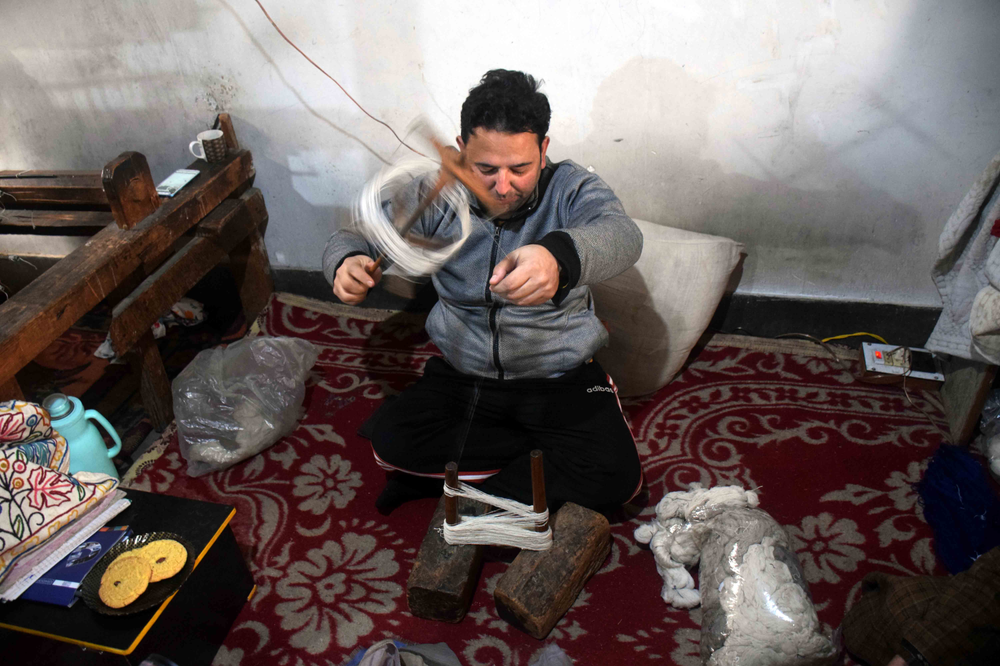
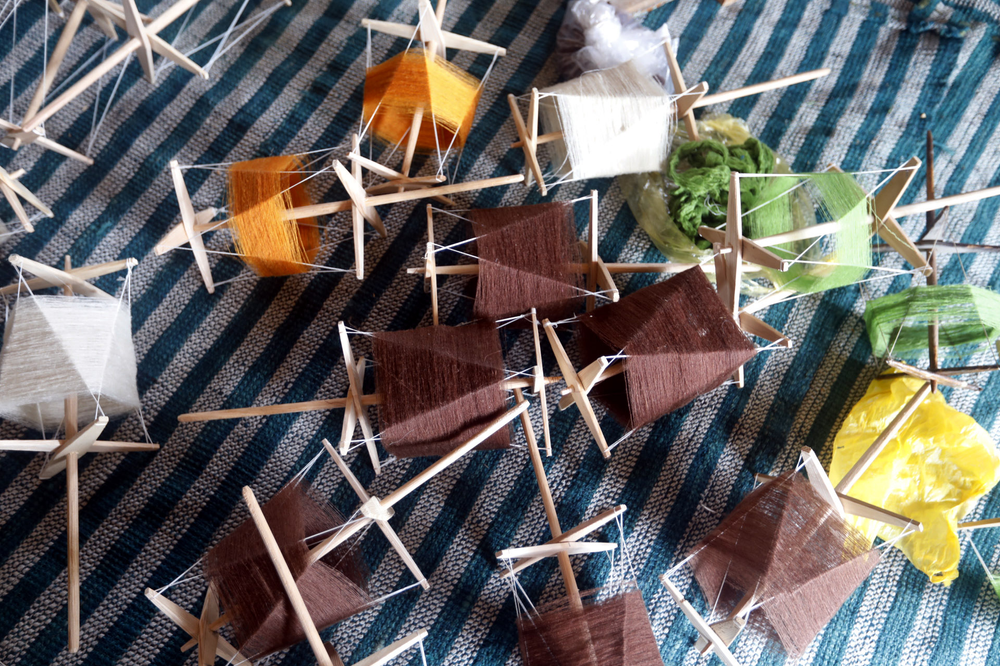
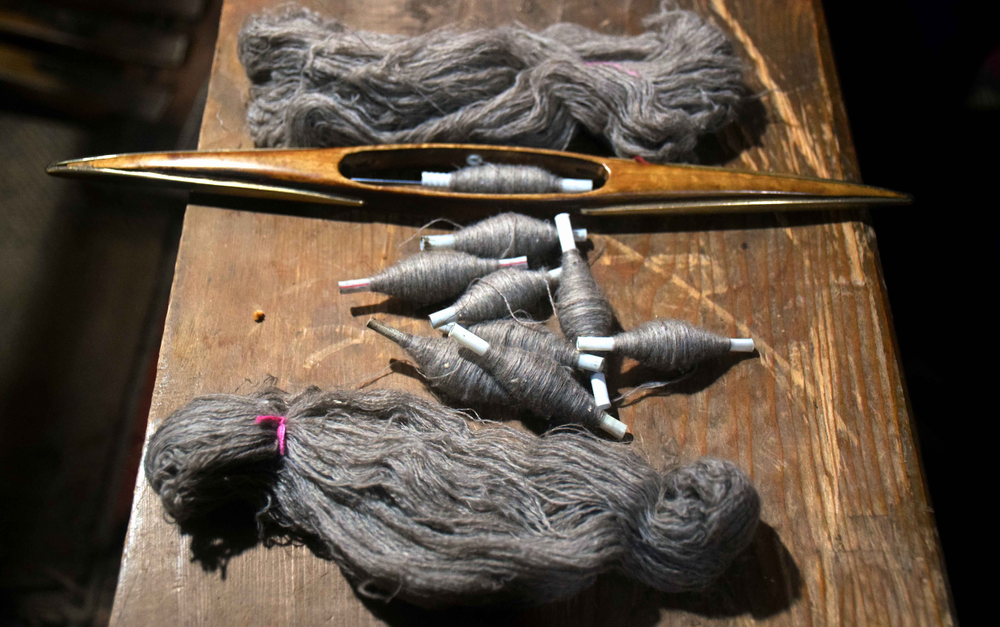
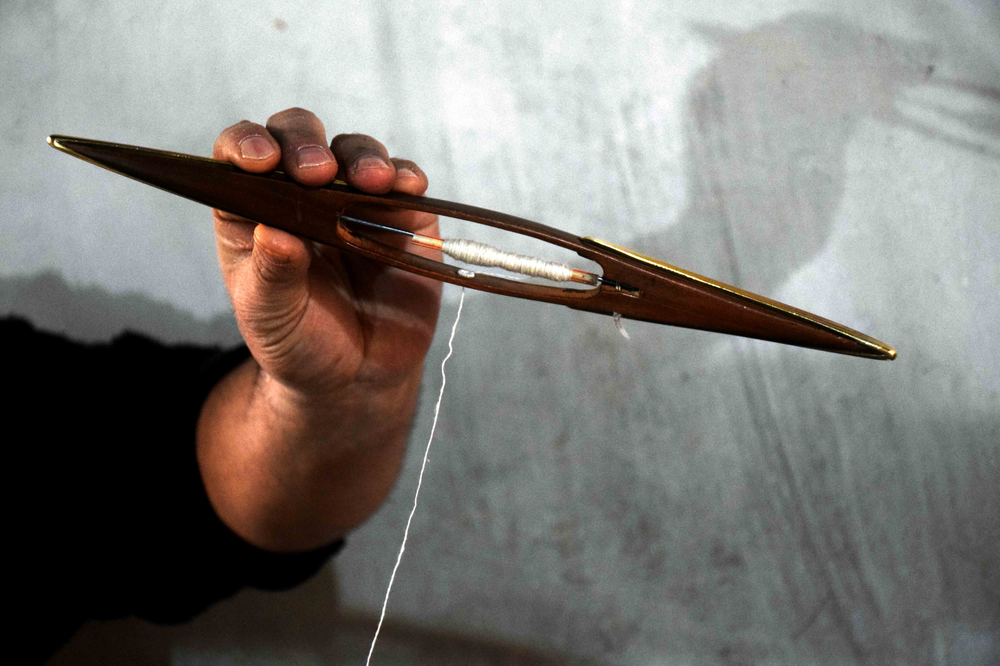
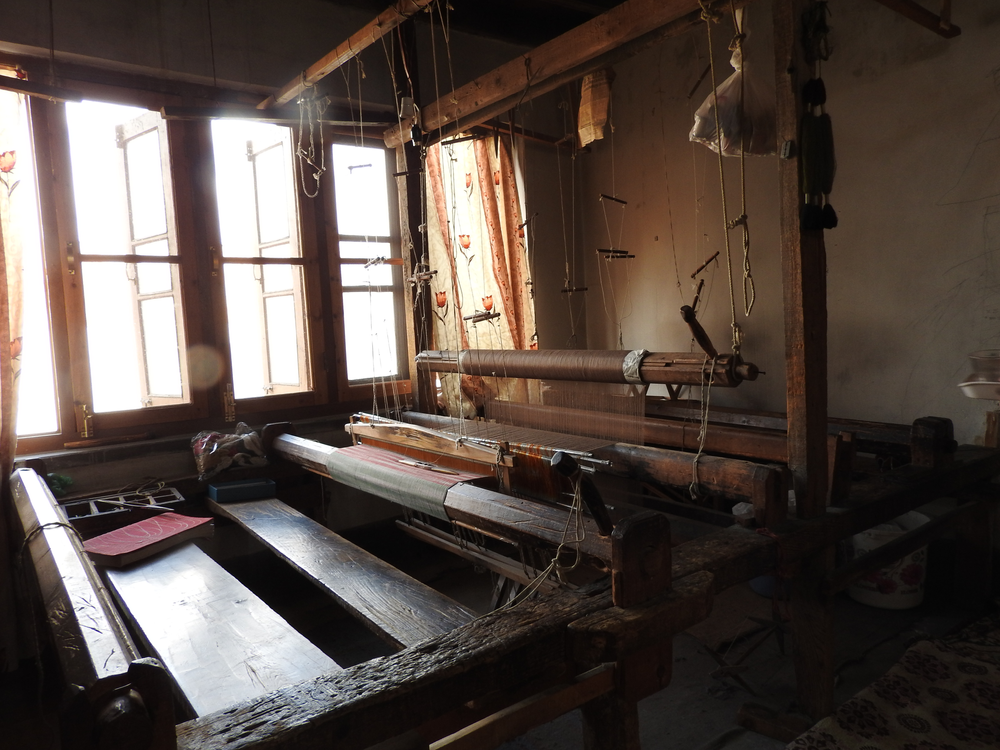
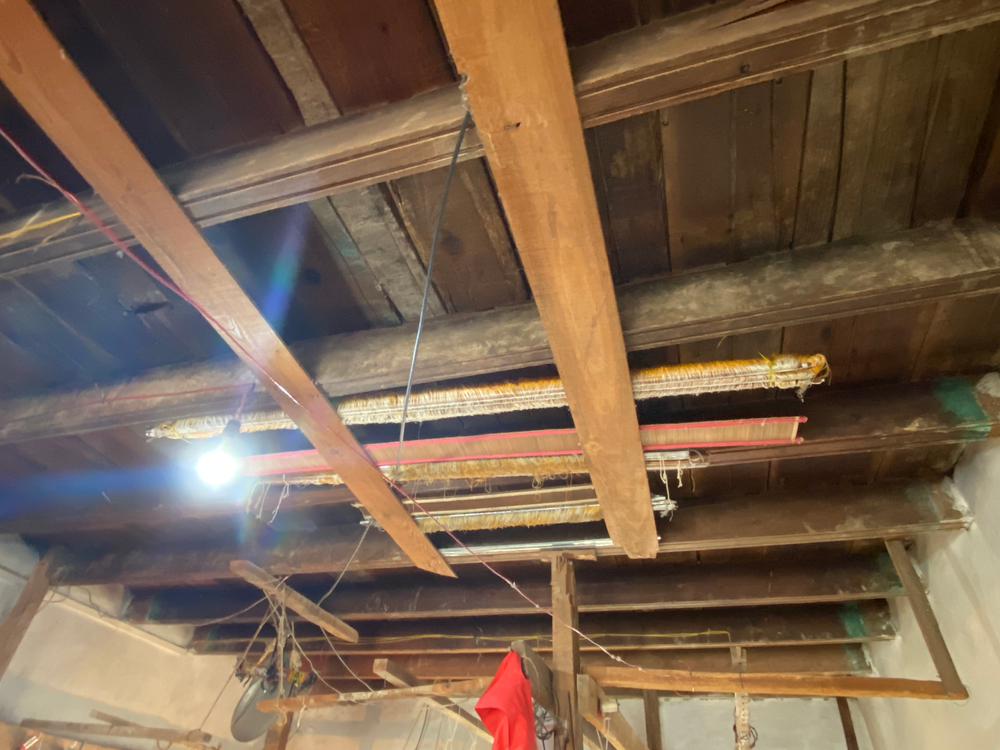
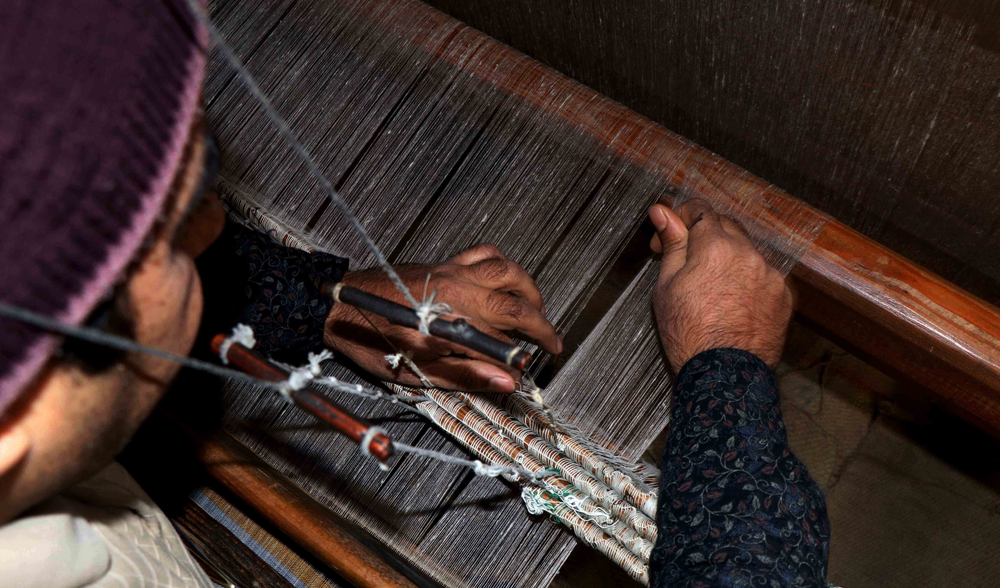
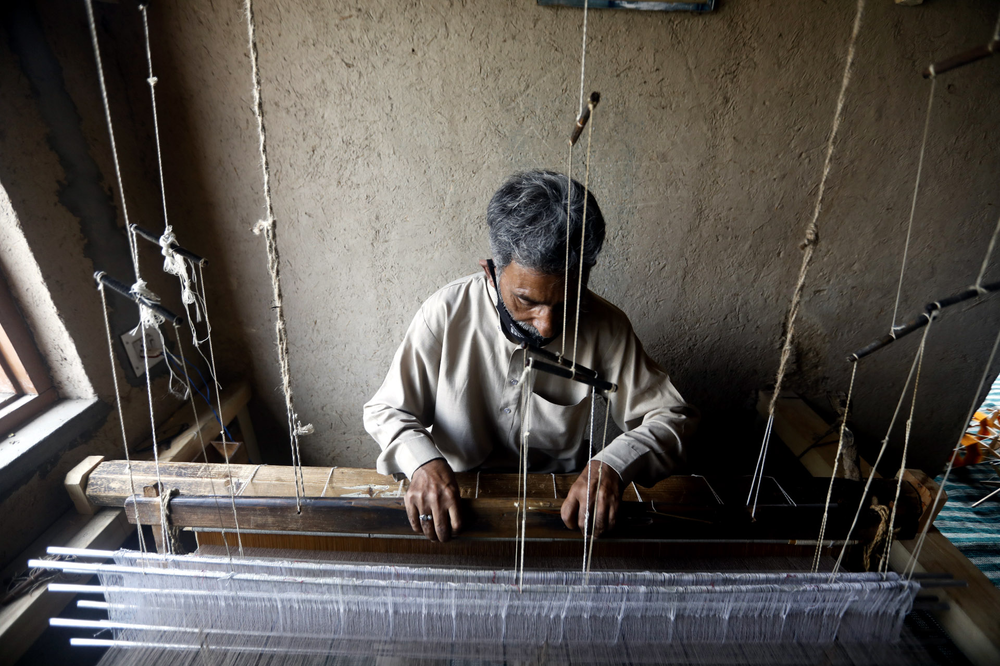
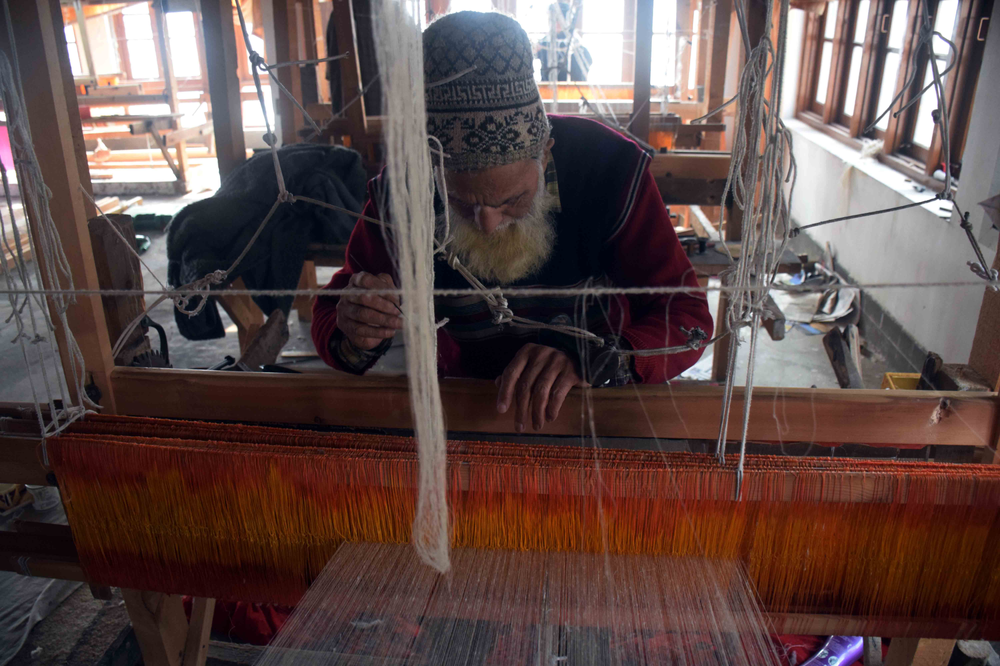
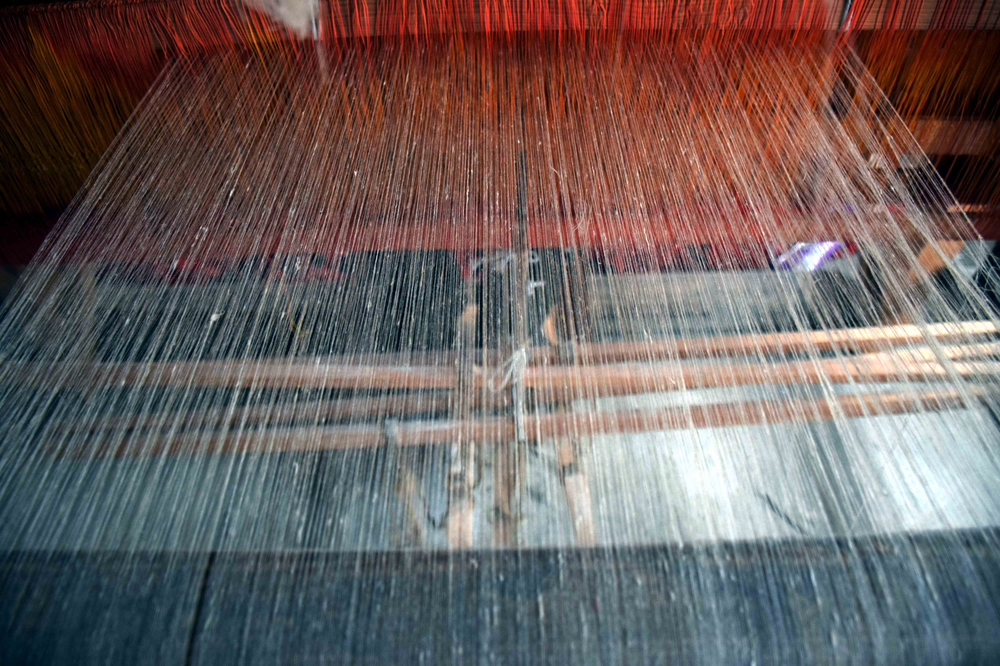
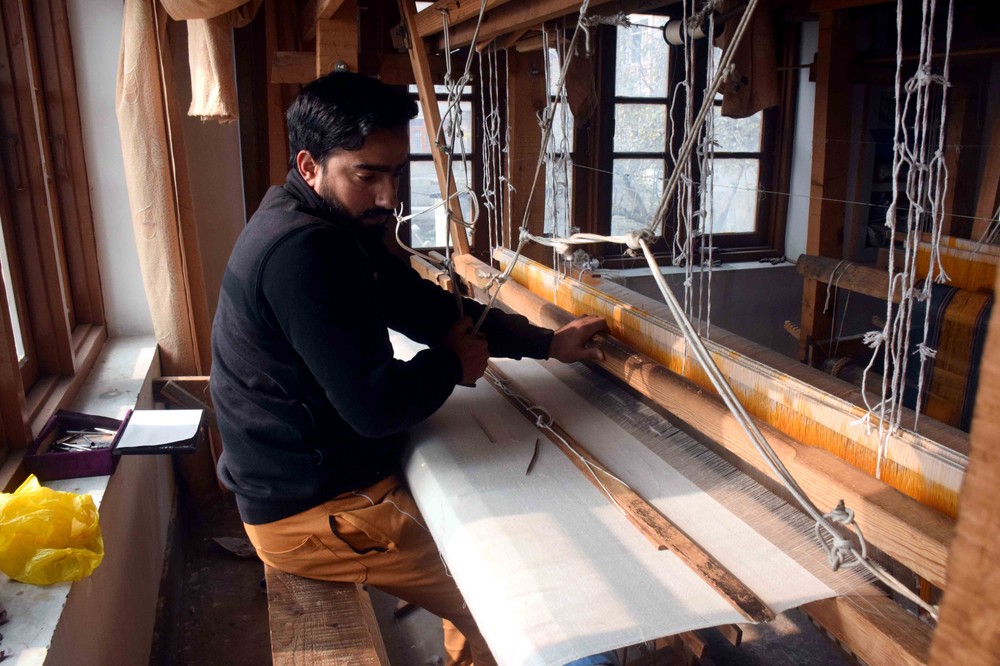
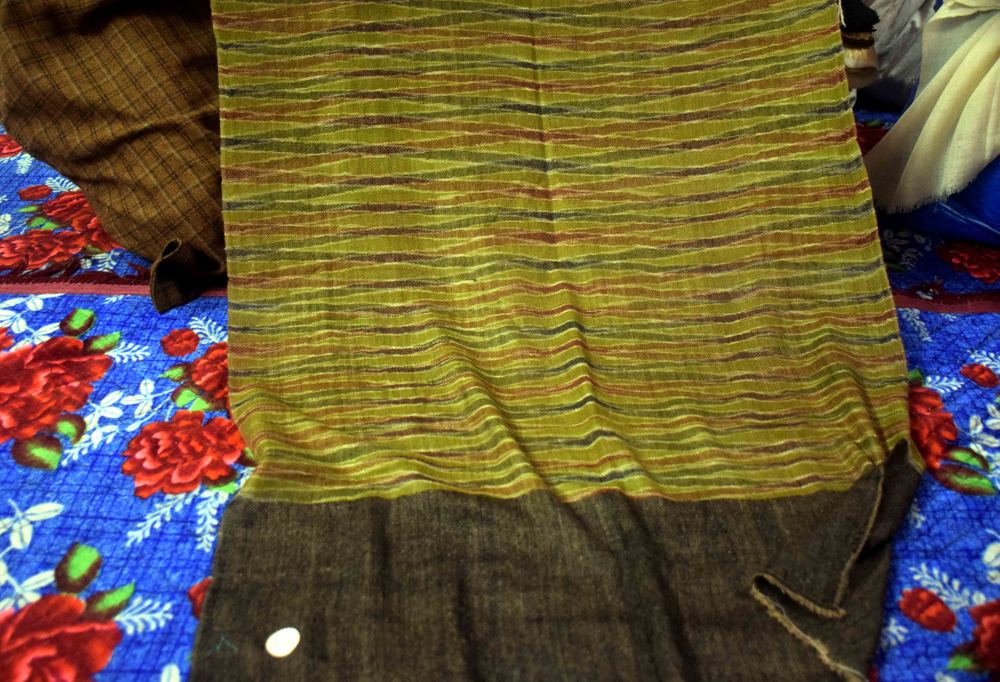
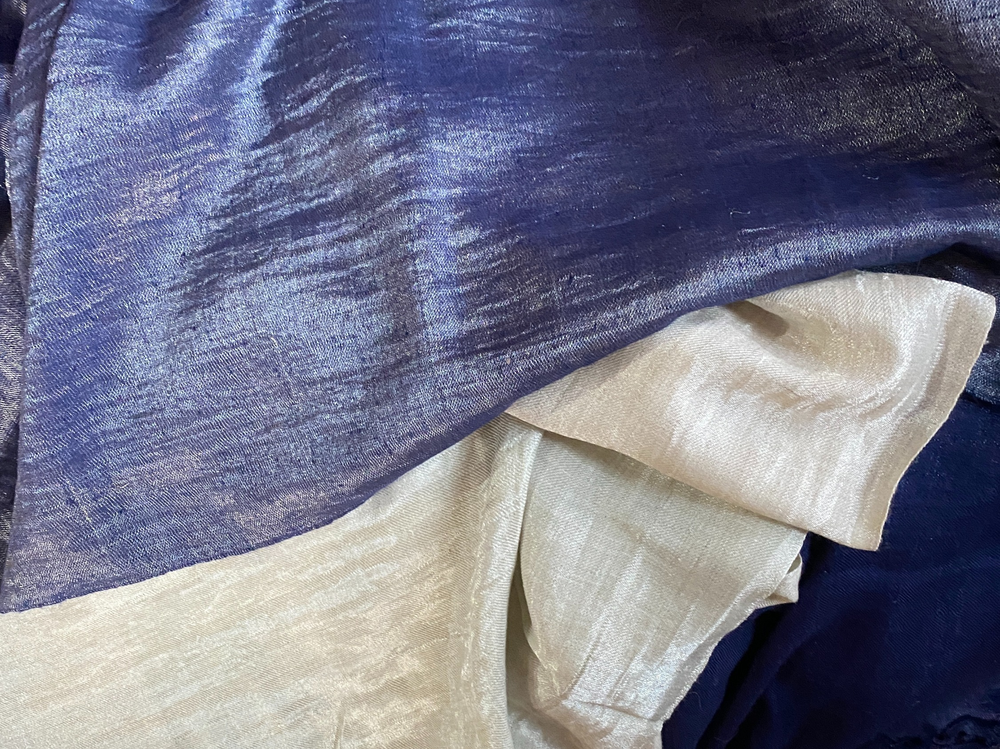
The weaving process comprises the following key steps: 1)Shedding: Shedding is the process of lifting up some warp thread by the harness or loom to create a way for inserting the weft; 2) Picking: Inserting the weft yarn; 3) Beating up: Moving forward the weft yarn to keep it in line or close to the preceding weft yarn. Artisans use a weft yarn horizontally at precise angles to the warp. The alternating movement of the warp and weft is what creates and differentiates one weaving from another even when using the same base fiber.During the step of shedding, artisans add the design components into a shawl. They create beautiful patterns by selecting the yarns to lift up at the precise time when inserting the desired weft under them. Pashmina shawls have a glossy look due to its tapestry weaving that has a glistening effect. Overall, it is an incredible art of weaving and Winding of Yarn: The yarn after drying in sun is again wound on wooden spindles. This process is called Tulun in Kashmiri. The weaver works works the loom, simultaneously with his feet and hands. This wool is collected by “Herders” during the spring season and it grows back till the time winter sets in. One goat sheds approximately 80–170 grams (3–6 oz) of the fibre. A traditional producer of pashmina wool in the Ladakh region of the Himalayas are a people known as the Changpa. Raw pashmina is exported to Kashmir. All steps, from combing (removing impurities and guard hair, and aligning fibers) and spinning, to weaving and finishing, are traditionally carried out by hand by specialized craftsmen and women. The major center of pashmina fabric production is in the old district of the city of Srinagar. The approximate time put into producing a single traditional pashmina stole (70x200cm) is 180 hours.
There are three types of Kashmiri shawls – Shahtoosh, Pashmina and Raffal. Shahtoosh being the finest and most expensive and now a rarity. Raffal is spun out of Merino wool. Most of the Pashmina raw material is sourced from Changthangi goat found in Ladakh. Cashmere (derived from an anglicisation of Kashmir) of Scotland is sourced from China/ Mongolia/ Afghanistan/ other Central Asian countries).
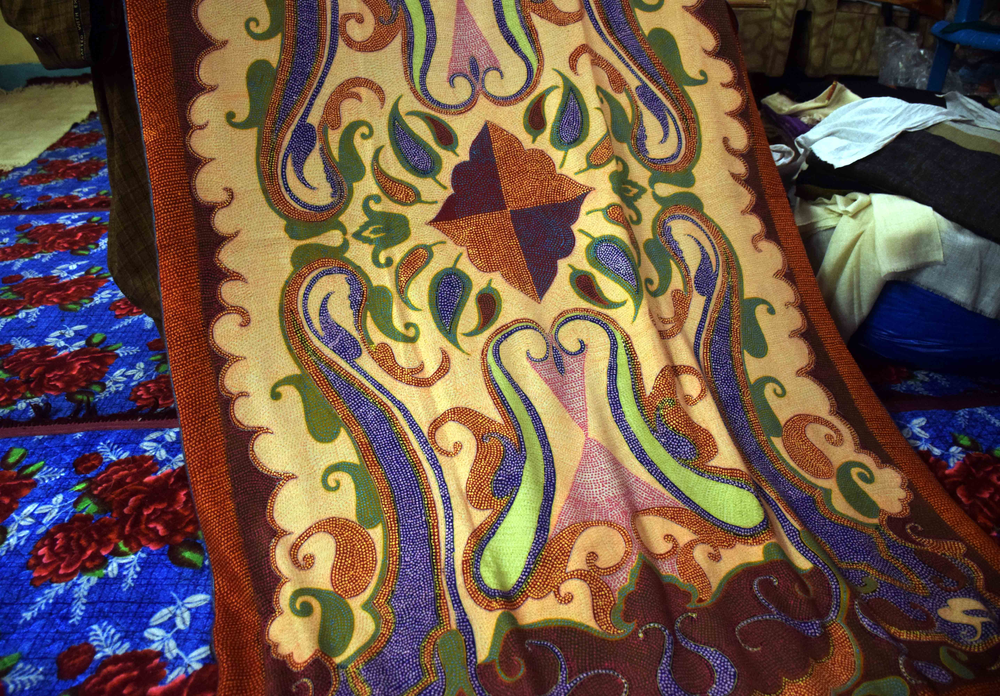
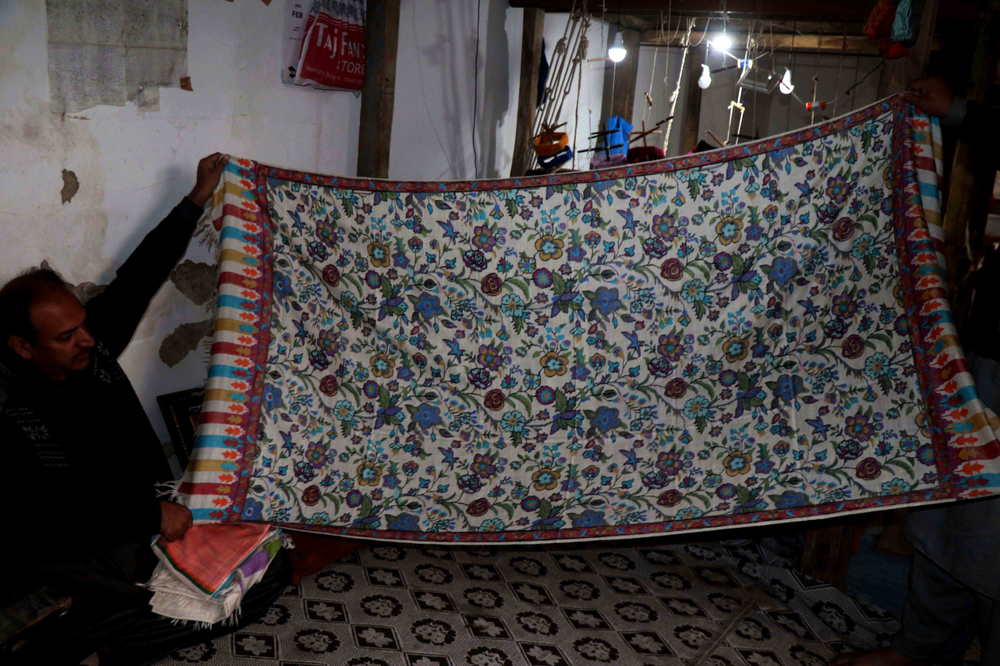
Types of embroidery on Pashmina – sozni, papier mache embroidery, tilla embroidery, and aari.
Kani shawl, a favourite of Akbar and Maharaja Ranjit Singh, is another type of Kashmiri shawl originating from the Kanihama area, near Tangmarg. Kani shawl is made from pashmina on a handloom. But instead of a shuttle used in regular pashmina shawls, Kani shawls use needles made from cane or wood. The distinguishable, patterns, usually of flowers and leaves, are woven into the fabric like a carpet, thread by thread, based on the coded pattern called ‘Talim‘. The talim guides the weaver in number of warp threads to be covered in a particular colored-weft.
Jamawar, (means a body robe or wrap), is a special type of shawl made in Kashmir. The best quality of Jamawar is built with Pashmina. The brocaded parts are woven in similar threads of silk or polyester. Some shawls took a couple of decades to complete; consequently, original Jamawar shawls are highly valued. A favourite of the rich merchants and noblemen, it is said that Akbar was one of the greatest patrons of Jamawar.


Leave a Reply