

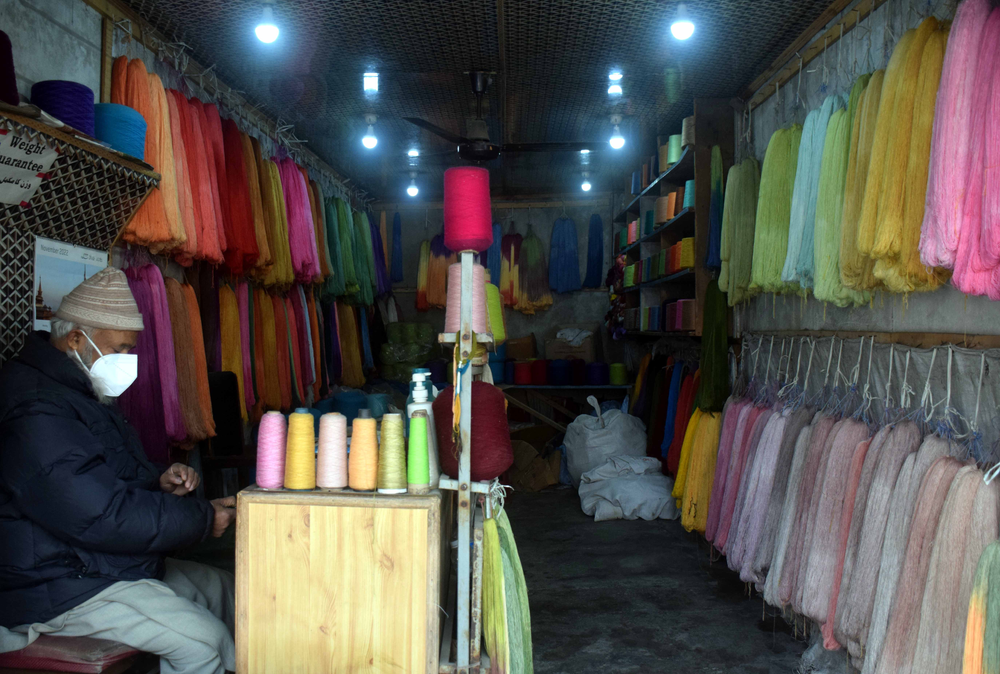
Process of dyeing of aari thread staple: 70 year old Bashir Ahmad works in his family owned, 122 years old dyeing karkhana at Bohri Kadal, Srinagar. Bashir is among the last hand-dyers or Rangrez in Srinagar who continue to manually dye silk and woollen threads especially for aari embroidery. Bashir started working at the karkhana at the age of 15 with his father. His grandfather and great father were dyers too at Bohri Kadal which was at one time the hub of dyers. Bashir trained others in creating colours, getting the right shades, examining the dyed thread for quality etc. Those trained by him would work with him for years and some went on to open their own units later. According to William Moorcroft, (1767 – 27 August 1825), an English veterinarian and explorer employed by the East India Company, 300 tints or shades of colours made using vegetable dyes were in regular use back then.
The number was later reduced to 64 shades. Bashir derives all colours from five basic dyes – brown, orange, pink, yellow and blue. These too have changed from vegetable dyes to synthetic dyes. The bale of wool or threads are boiled in a cauldron to absorb the colour and then dried on hangers after ensuring right shade has been achieved. These are sold as thread staples or bales of wool. Bashir works alone in the workshop. His children, one a doctor and the other an engineer, won’t be carrying the trade forward.




Leave a Reply