
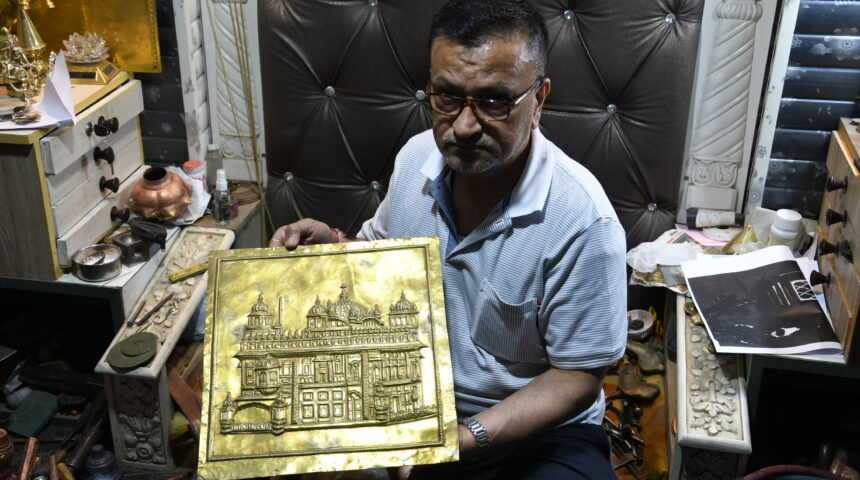
Art apart, the metal, particularly brass, has remained the most important utility object in India since time immemorial. The use of brass was, thus, apparently considerable. According to J.L. Kipling, Principal, Mayo School of Art, Lahore; 65,468 maunds of brass was imported into Punjab in 1882-83. Rewari, Jagadhri, Amritsar, Jandiala, Phagwara, Gujranwala, Pindi Dadan Khan and Kangra were popular for articles made from brass. Rewari was famous for making bells, particularly the large globular cart-bell, like an exaggerated hawk-bell, called zang that gave a loud and shrill sound. Maharaja Ranjit Singh is said to have brought metal craftsmen from Kashmir...
Blog
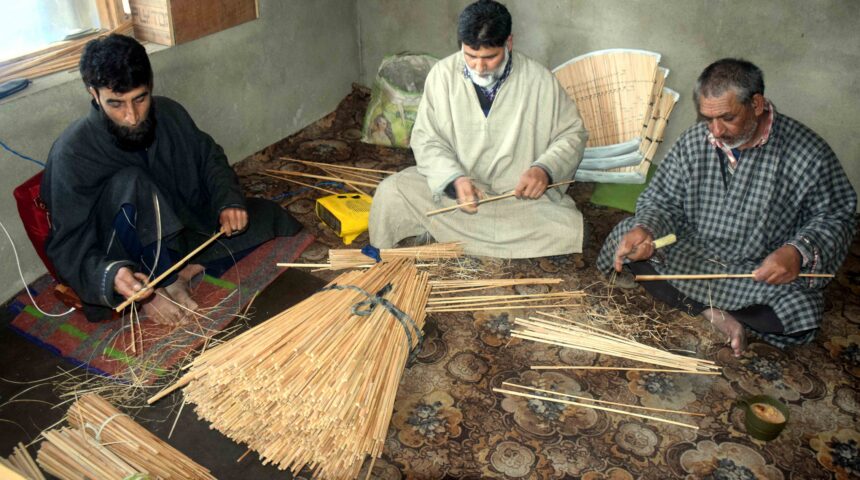
Photo Essay: Kashmiri Tomlah Shupp (Rice Cleaner)
Through out the world, in Europe, especially the Greek culture (& mythologies), China and the Asia, in all the paddy growing regions, a traditional handmade rice winnower (made of bamboo, reed, palm leaf, plant fibres – depending on the region and material availability) has been used. Winnowing is a process by which chaff is separated from grain. It can also be used to remove pests from stored grain. Winnowing usually follows threshing in grain preparation. In its simplest form, it involves throwing the mixture into the air so that the wind blows away the lighter chaff, while the heavier grains...
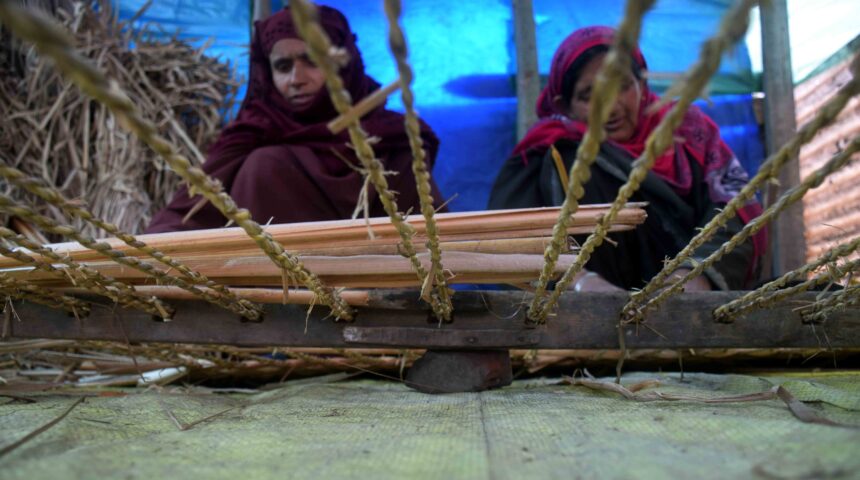
Photo Essay: Waghoo, reed mats of Kashmir
A waghoo/ wagoo/ waguv is a traditional reed mat usually spread underneath the sitting rugs, found in every Kashmiri home. Its purpose is to ensure that the rug holds onto the floor and doesn’t fold. It is a 300-year-old craft that involves interweaving reed and rice straws together to create a matting which provides warmth in winter and cooling in summer. The production of reed mat or waghoo used to be an integral part of the socio-occupational life of a Kashmiri neighbourhood until few years ago. Waghoo has been indispensable to the Kashmiri cottage industry, sustaining as many as 30,000...
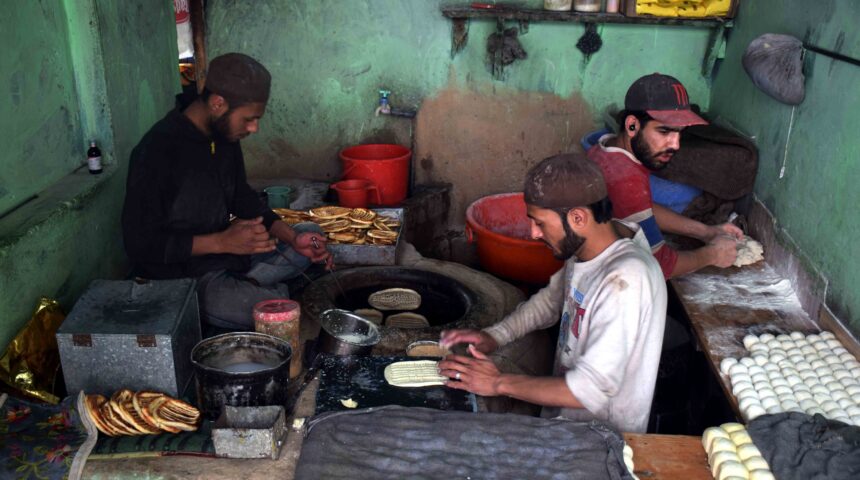
Photo Essay: Kandurs of Kashmir
During Ramzan special breads are made such as the Lacha Bagerkhane (Warke Bagerkhane), Makie Wor (Sugar-free Kulcha), Butter Roti, Lawasa, Kripa, Namkeen and Sweet Roti. The culinary art of baking in Kashmir can be traced to Central Asia, although some might argue that the British introduced it. Kashmir being on the famed ’Silk Route, was influenced by Central Asia. The indigenous bakeries in Kashmir are locally called Kandurs probably deriving its name from the Tandoors (the earliest finds dating back to 2600 BC) used to bake breads such as rotis & naan. A number of bakeries have sprung up in...
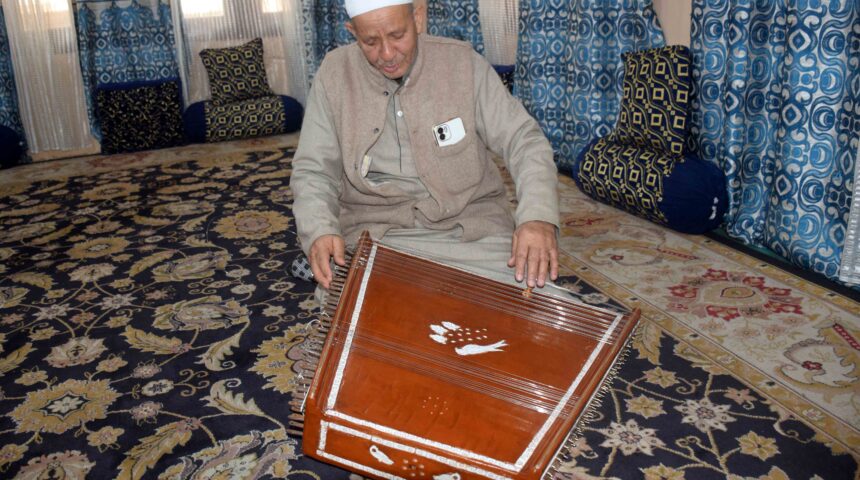
Photo Essay: Kashmir’s Last Santoor Maker
Ghulam Muhammad Zaz is an artist from Zaina Kadal, from downtown Srinagar (Shehar-i-Khaas). He is known for making Santoor and other handcrafted traditional musical instruments. He is known to be the last Santoor maker of Kashmir. On 26 January 2023, at the age of 82, he was honoured with Padma Shri, the fourth highest civilian award in India. “My eight generations have been into the making of santoor and other handcrafted musical instruments, but the recognition has come in now,” says Zaz. In the Old City’s Zaina Kadal, Ghulam Mohammad Zaz lives in a traditional house , nearly 300 years...
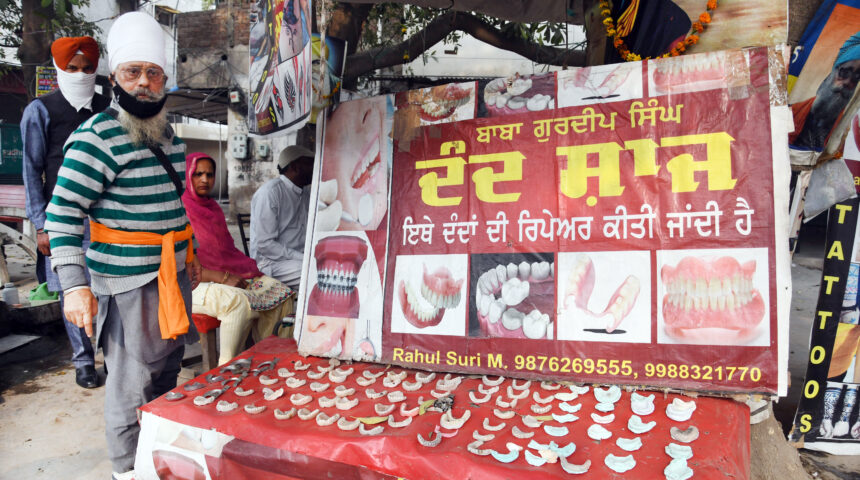
Photo Essay: Dand Saaz, The Tooth Maker
Baba Gurdeep Singh is a well known roadside dentist of Amritsar. Hailing from Village Kallah, near the historical Naurangabad Village, district Tarn Taran, Punjab, he learnt the craft of making dental cement teeth from him paternal uncle at the age of 15. At the age of 65, he is the fourth generation in this work and has also trained his sons. He, along with a couple of his helpers fixes people’s dental problems using desi treatment for a small fee. He considers it his sewa to treat people who cannot afford expensive dental treatments, and makes enough to pay his...
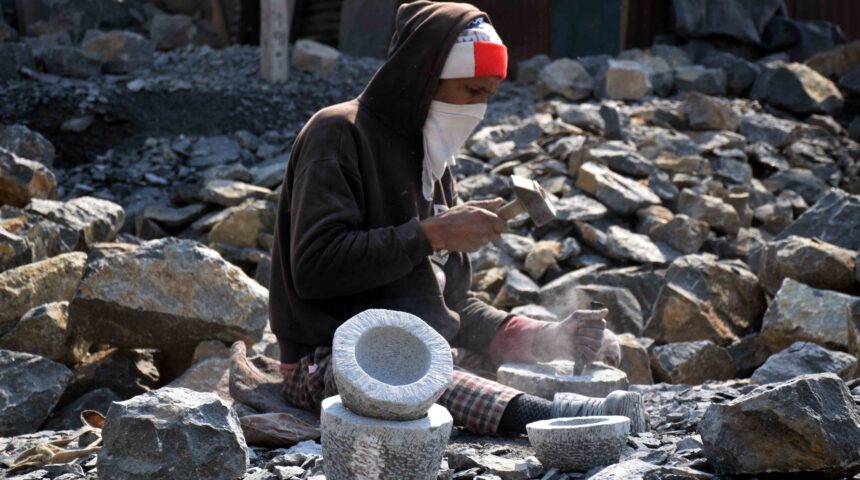
Photo Essay: Sangtaraash – the stone carvers of Kashmir
Kashmir, has had a long history of the art of stone carving, especially as sculpture. There were thousands of families directly earning their livelihood from this work across Kashmir valley, however, the numbers are dwindling fast and only a few hundred remain. The person who molds the stones is called as Sangtaraash locally in Kashmir. It is the combination of two Farsi words Sang means stone and Tarash means moulder. The sangtarash selects the stone as per the design and carves it accordingly. The art of stone carving is found in various places of Kashmir, but Pampore area on the...
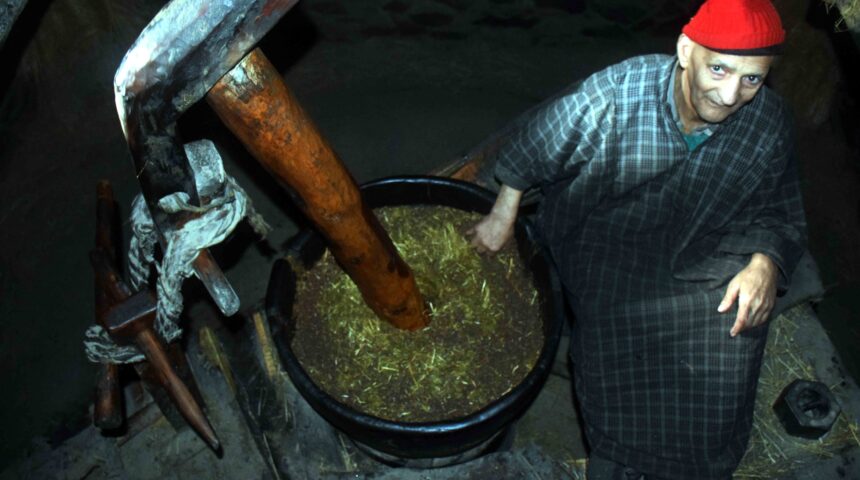
Photo Essay: Traditional ox-driven oil mill of Kashmir
82-year-old Ghulam Mohammad Wani from Namblabal, Pampore, in Pulwama district, is one of the last few keeping the tradition of ox-driven mills alive in Kashmir. Ghulam Mohammad Wani, known as Mum Wani, has been working in his mill for the last six decades, since he was in class 5, when he learnt it from his parents and grandparents, and maybe the last in the entire Valley who is working in an ox-driven mill. People prefer to buy market oil and demand for manually extracted oil is very less but there are some customers who still prefer to use this extracted...
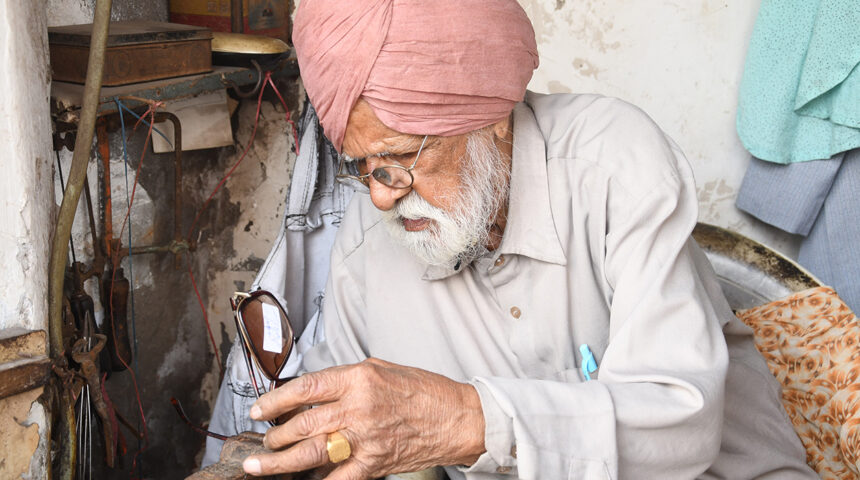
Photo Essay: Chashma repair center, Amritsar
Many crafts, especially the smaller and lesser known ones are slowly dying with shift to technology and mass production. However, there are still a few who have managed to retain this legacy and devoted their lives to sustaining such crafts. One such individual is Mohan Singh, now in his late 80s, who fixes eyeglasses. Mohan Singh’s small eyeglasses repair shop near Golden Temple in Amritsar takes you back 30-40 years. Charging a nominal fee, the shop has no fancy equipment that one would come across in today’s technologically advanced shops. Mohan Singh’s family were goldsmiths in Lyallpur (Faisalabad),before Partition. In...
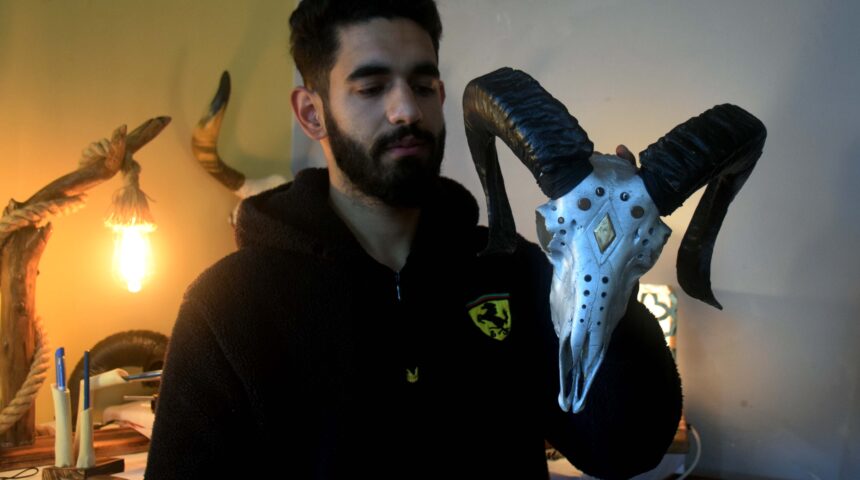
Photo Essay: The bone carver
Kashmir is well-known for its handicrafts, which include finer elements of design and craft like embroidery, pashmina weaving, carpet weaving and intricate wood carving—but 23 year-old Aziz-ul-Rehman from Gulab Bagh area of Srinagar has mastered the art of making various decorative items by carving animal bones. Aziz, who is studying in the Department of Fisheries, was inspired by videos of such arts on social media and during COVID lockdown, he regularly painted different types of images on the bones to turn them into works of art. He has slowly mastered the art of bone carving. Working with scrap bones and...
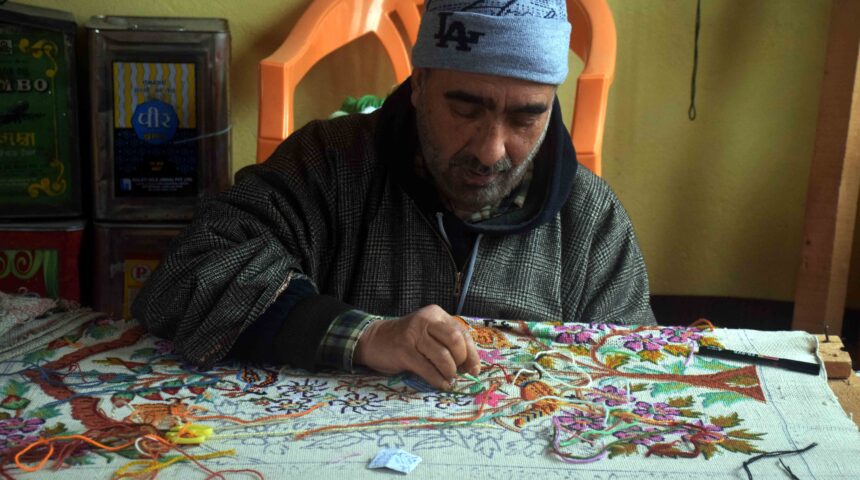
Photo Essay: Tapestry/ Embroidery in Kashmir
For many years the words embroidery and tapestry have caused a bit of confusion. The word tapestry was originally applied to a fabric where the pattern was woven into the fabric as it was being made. It is a form of textile art, traditionally woven by hand on a loom. Tapestry is weft-faced weaving, in which all the warp threads are hidden in the completed work, unlike most woven textiles, where both the warp and the weft threads may be visible.Embroidery is the ornamentation of a fabric using a needle and thread. For many years now, the word tapestry has...
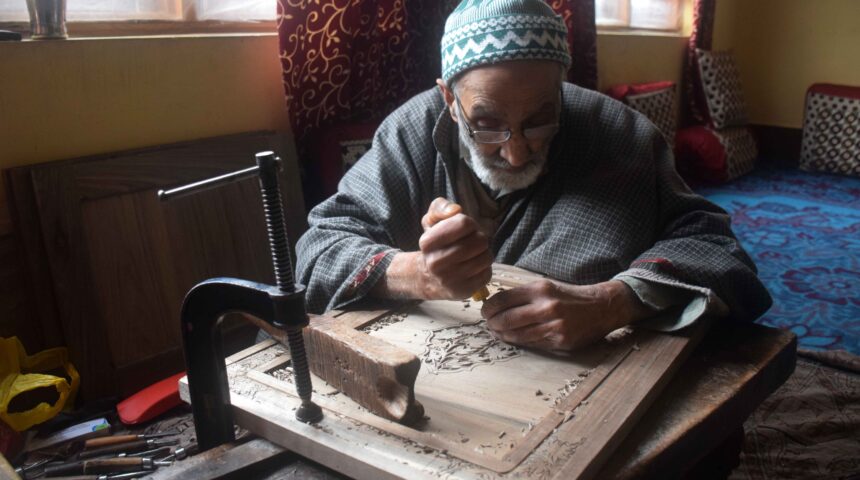
Photo Essay: Walnut wood carving
Walnut wood carving is an ornamental and delicate craft process that is unique to Kashmir due to the concentration of walnut trees in this region. The raw material used for the fine woodcarving of Kashmir is obtained from walnut tree locally known as Doon Kul and is cut only once it matures to an age of 300 years. Wood used for carving can be from the root or trunk of the tree. The wood derived from the root is almost black with the grain more pronounced than the wood from the trunk, which is lighter in color. Branches have the...