
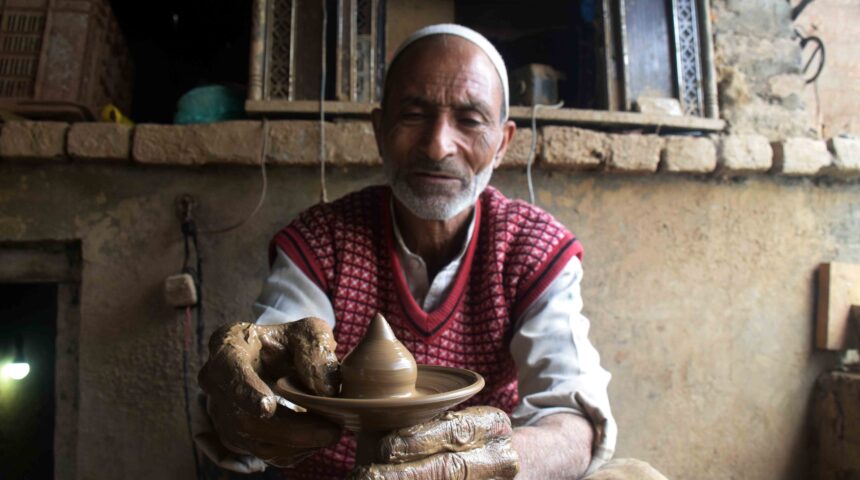
The Kumar family from Srinagar is renowned for their exquisite glazed pottery,also known as Dalgate pottery or Khanyar pottery (locally known as Rogan-i-Keam) . Abdul Salam Kumar, from Ishber Nishat, began his journey in the craft of pottery at the age of 10, working alongside his father. Today, together with his three sons, he has preserved and continued this traditional craft. Their showroom is in the Hazratbal area. Mohammad Umar Kumar, his son, a commerce graduate, has joined his father and infused new life in to the craft. He as developed new techniques and designs that include making items by...
Blog
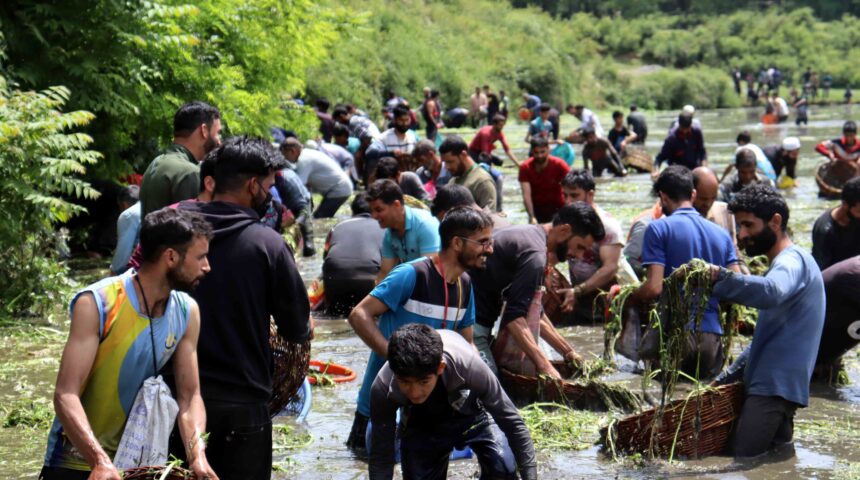
Photo Essay: Panzath Nag, Kashmir’s Spring Cleaning Festival.
Age old traditional wisdom and community initiatives have stood the test of time and are probably the knowledge and methods we need to resort to fight climate change and rising pollution levels. One such centuries old tradition is still followed in South Kashmir in the village of Panzath. Annually the local communities take a day off from work to weed and desilt the Panzath Nag, which keeps the water body clean. The spring, also called Naagbal, is the origin of numerous lesser springs. Most smaller springs have dried up due to pollution and land development. The spring is mentioned in...
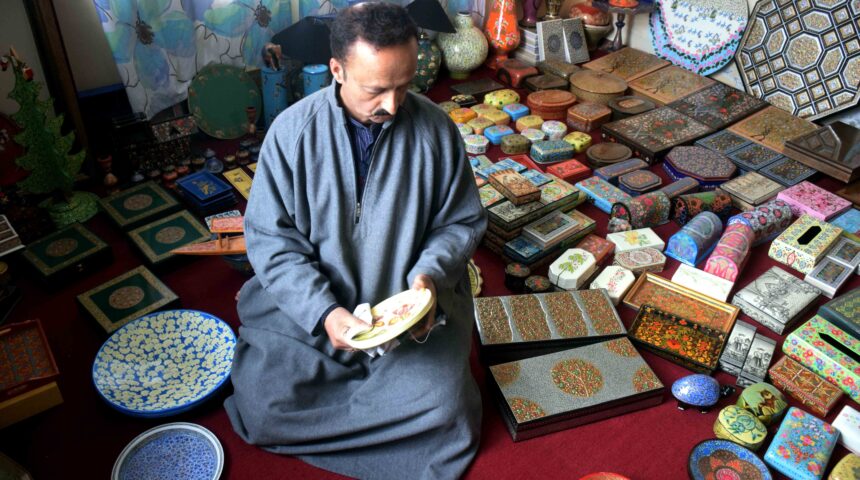
Photo Essay: Papier Mache, Kashmir
A woman from Kashmir, Masrat Jan, is reviving the dying papier-mache craft, and breaking the gender stereotypes around it. Papier mache is mostly done by men in Kashmir, while women mostly do needlework and embroidery on shawls and suits. In her 50s, Jan, a well-known papier-mache artist lives in the Lal Bazar area of Srinagar. She learnt the art from her maternal grandfather. She got support from her husband who is an artist as well, and has won several state awards. Seeing the papier mache art declining in the region she has started assembling many young girls and women from...
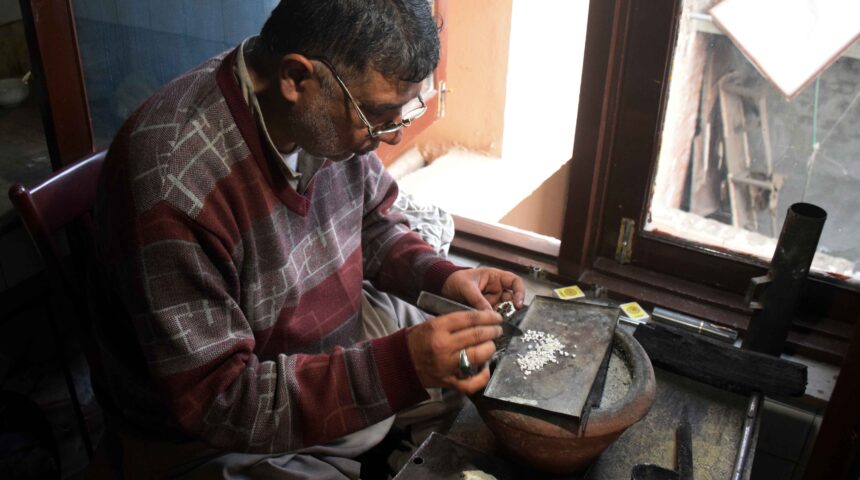
Photo Essay: Craft of Kashmiri Turquoise
Nisar Ahmed Bhat,70, of Fateh Kadal, Srinagar is probably the last artist of the Valley involved in the craft of turquoise or Ferozi. The craft of Turquoise or Ferozi originated in Iran and came to Kashmir , as with many other crafts, with Mir Sayyid Ali Hamadani (Shah-e-Hamdan). Nisar’s grandfather learnt it at a famous karkhana near Jama Masjid, from skilled artisans who were called joras. In those times the Turquoise stone was imported all the way from Iran. At this time, around 70 artisans were employed at the karkhana. There were famous ones like Sadder ud din Shah –...
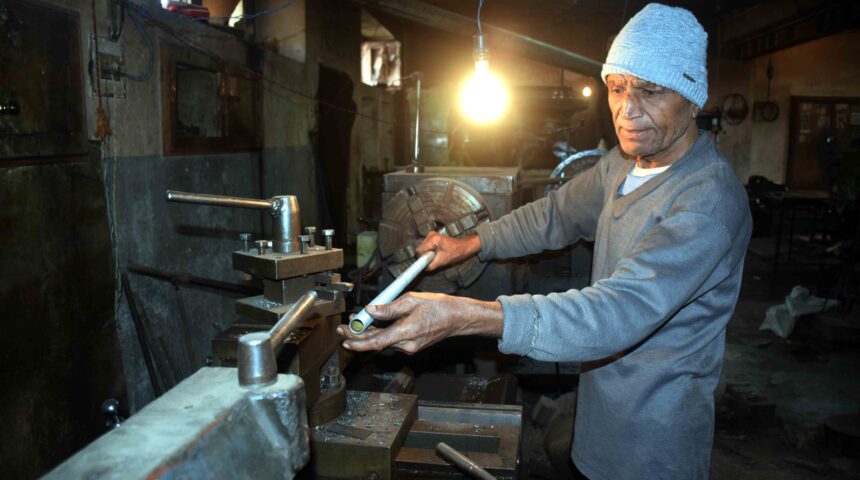
Photo Essay: Zaroo Gun Factory, Srinagar
Zaroo Gun Factory is one of only two family-run workshops in Srinagar. Violence in the region and crackdowns on gun licenses have decimated the business, but the Zaroos are determined to keep the craft alive. Zaroo gun factory was established in 1958 by Ghulam Mohammad Zaroo in Nowhatta, Srinagar. The small dark workshop packed with lathes and milling machines adjacent to the Zaroo family home is the center of a gun manufacturing business that has been supplying the Kashmir region with rifles since 1953. For Farooq Ahmad Zaroo, who inherited the business from his father, Ghulam, each day brings a...
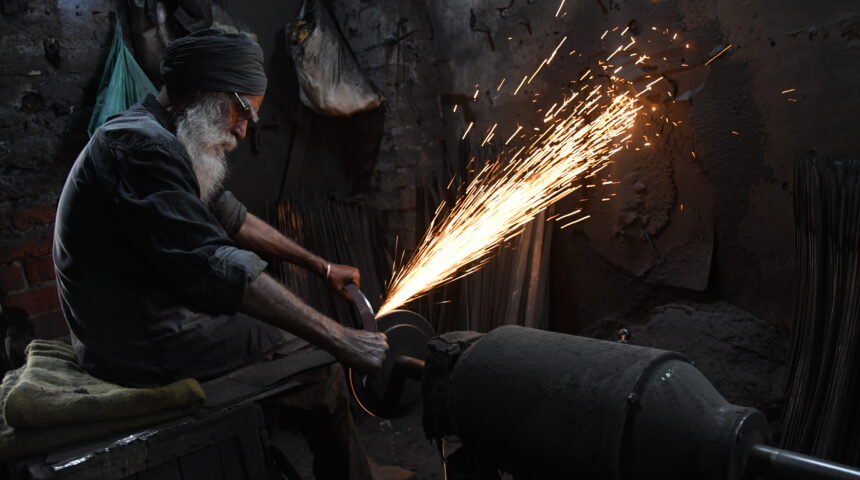
Photo Essay: Kirpan manufacturing, Amritsar
Surjeet Singh has been making swords and kirpans for the last 50 years. He is the main karigar at the Simran Industries in Ajit Nagar, Amritsar. He is the first in his family to learn this craft. He learnt it at the Ajit Singh Karkhana. The kirpan is a curved, single-edged blade that Khalsa Sikhs are required to wear as part of the Sikh Code of Conduct (the 5Ks) It is commonly manifested as a dagger or knife in the present-day. Traditionally, the kirpan was a full-sized talwar (sword) around 76 cm (30 inches) in length. However, British colonial policies...
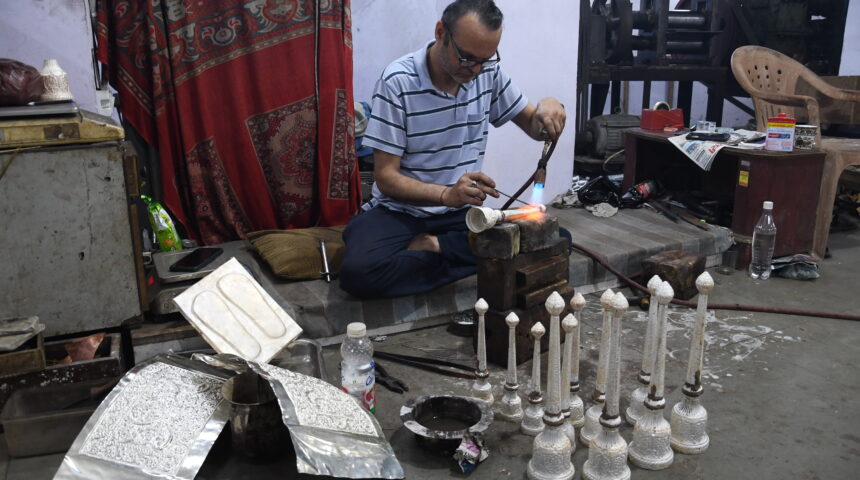
Photo Essay: Chaur Sahib
Chaur Sahib is an implement normally found next to the Manji Sahib where the Guru Granth is placed. The chaur is used to fan the Granth as a sign of reverence and respect for the scriptures. The chaur is usually constructed from yak hair mounted in a wooden or metal handle. The sevadar (volunteer) respectfully waves the Chaur Sahib above the Granth as a sign of respect and dedication. It was common practice in Punjab for the younger members of the family to perform seva for their elders by waving fans during the hot weather months. During this earlier period,...
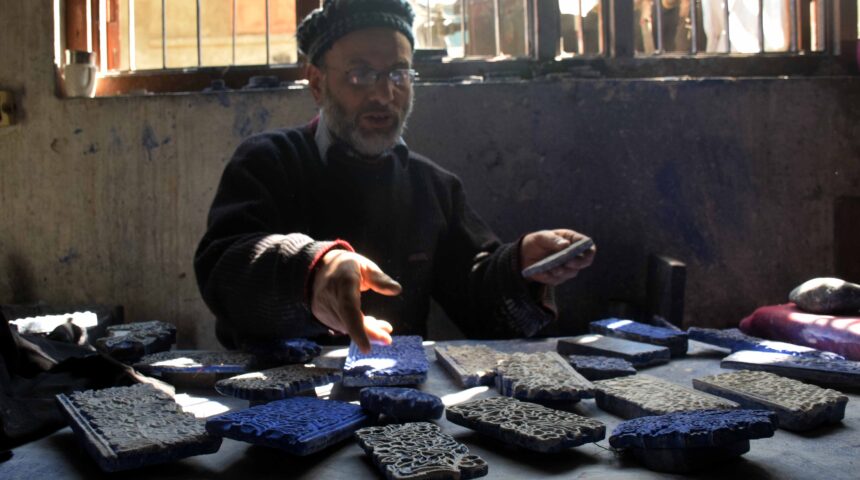
Photo Essay: Naqash (Print work of Kashmir)
Print work of Kashmir is a unique form of traditional printing that combines wooden blocks and hand pressed paper still practiced in Kashmir. These are later used by design printers, commonly known as Naqashs for printing Shawls and other clothing items.Intricate designs are created through vibrant colours, known as naksha by naksha walas. Nakshai work in Kashmir had an intense market and formed an important part of the culture of Kashmir. Blocks of various measurements are cut from walnut lumber and seasoned and as soon as they are dry, different designs are carved out on them according to the actual...
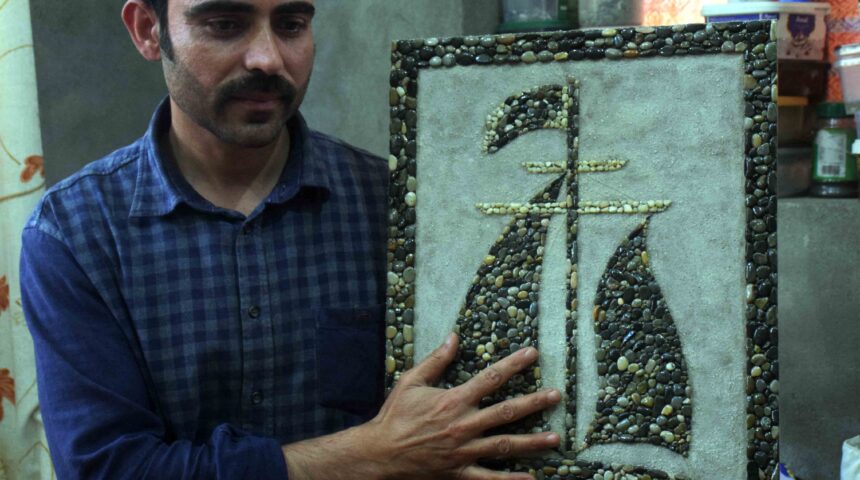
Photo Essay: Pebble artist, Kashmir
Manzoor Ahmad is a 34-year-old pebble artist from the village of Guzarbal, Ganderbal district. Being a nature lover, Manzoor uses natural materials for his art. He draws inspiration from the natural world around him and often creates images that are inspired by what he sees. He first began with creating artworks of pencil waste and gradually changed over to creating art works with pebbles and stone dust. This is a tough task as he needs to find the right colours and shapes of pebbles. He is helped by his friends in searching for the small stones and pebbles. ...
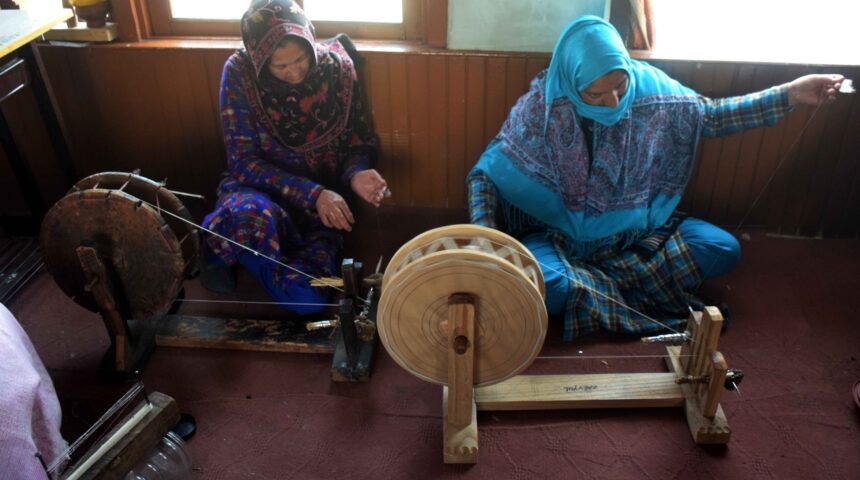
Photo Essay: Yender, the Spinning wheel
A spinning wheel is a device for spinning thread or yarn from fibres. It was fundamental to the cotton textile industry prior to the Industrial Revolution. It laid the foundations for later machinery such as the spinning jenny and spinning frame, which displaced the spinning wheel during the Industrial Revolution. The basic spinning of yarn involves taking a clump of fibres and teasing a bit of them out, then twisting it into a basic string shape. The spinner continues pulling and twisting to make it longer and longer, and to control the thickness. Thousands of years ago, people began doing...
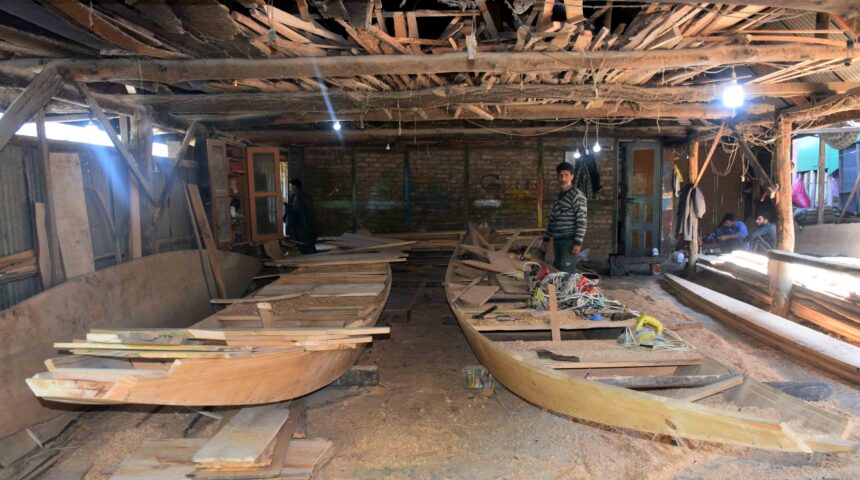
Photo Essay: Shikara construction
Ghulam Nabi Kenzu, of Baba Mohalla, Dal Lake,smokes a hookah, taking a break from his busy schedule of making shikaras to cater to the rising tourist foot fall in Srinagar. The shikara has become a cultural symbol of Kashmir. Like the Venetian gondolas, it is a wooden boat found on Dal Lake and other water bodies, primarily of Srinagar in Kashmir. Shikaras are of various sizes and are used for multiple purposes, including transportation. A usual shikara seats six people, with the driver paddling at the rear. The tourist shikara has half a bed on one side, where one can...
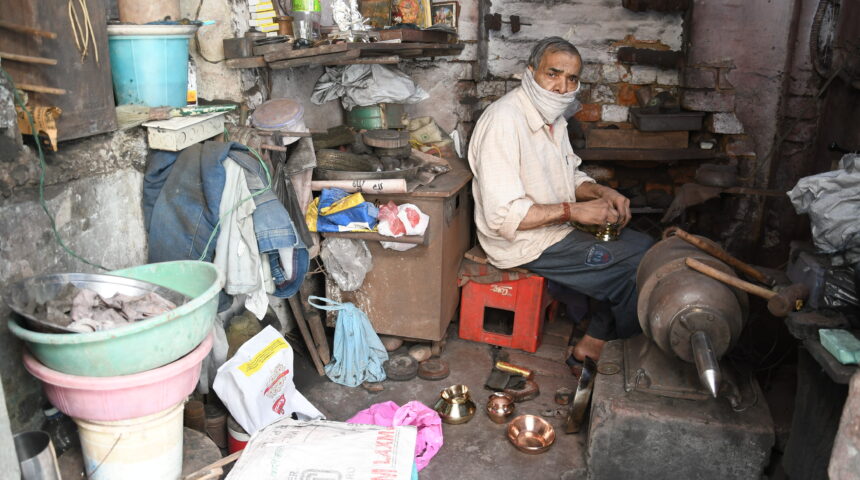
Photo Essay: Metal Polisher, Amritsar
Polishing is a necessary stage in many manufacturing processes. Architectural metal, cookware, kitchenware, metal automobile parts, etc are some of the products that are polished before they reach the market. In other cases, metals can be polished as part of general repairs or restoration. Metal polishing is a finishing method that uses an abrasive material to smooth surfaces. When polished, the surfaces of metallic objects are enhanced as the surfaces are freed of defects and become more reflective and shiny. Besides its aesthetic value, metal polishing also removes oxidation from beneath the surface and prevents further corrosion of a metal,...