A waghoo/ wagoo/ waguv is a traditional reed mat usually spread underneath the sitting rugs, found in every Kashmiri home. Its purpose is to ensure that the rug holds onto the floor and doesn’t fold. It is a 300-year-old craft that involves interweaving reed and rice straws together to create a matting which provides warmth in winter and cooling in summer.
The production of reed mat or waghoo used to be an integral part of the socio-occupational life of a Kashmiri neighbourhood until few years ago. Waghoo has been indispensable to the Kashmiri cottage industry, sustaining as many as 30,000 lives. Currently, just about 300 individuals are associated with the production as the demand diminished over the years with increased preference for polyethylene foam, now being commonly used as an insulator.
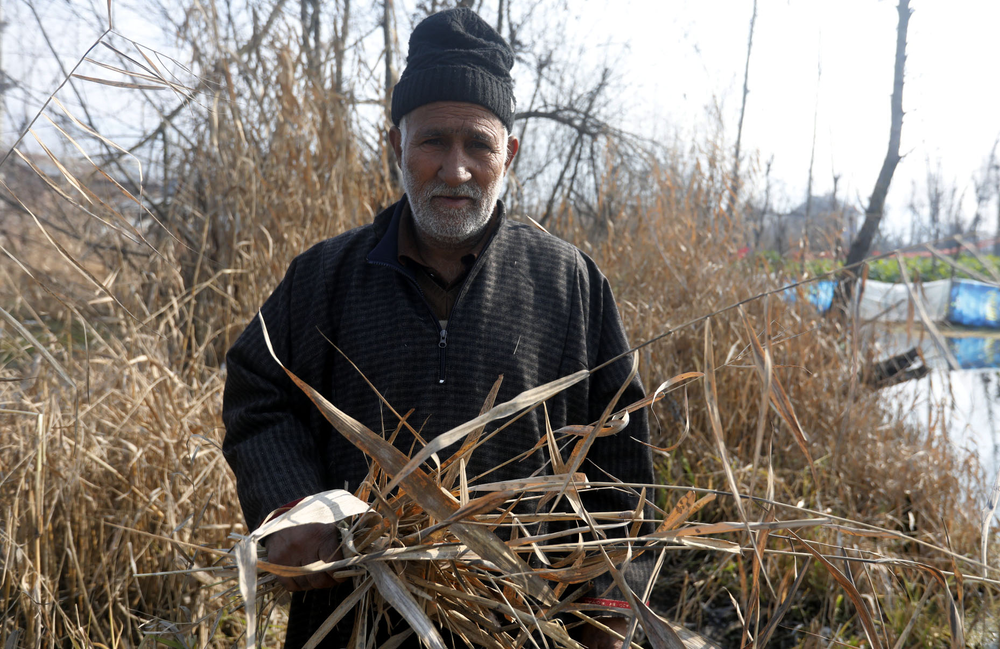
Ashraf Mohallah, Sultan Mohalla are some of the mohallas of Saida Kadal, which have been the centres of waghoo production. From Rainawari to Matta Mohalla, in Dal, over 500 households, mainly women, had been weaving these since time immemorial. For making waghoo people collect the special type of grass from Dal Lake which is locally known as peich.
Women would purchase bundle of reed grass for Rs 100 and the leftover grass from Rice harvest. It would take them a day to weave a waghoo of 10’×3’ From one bundle of grass they would weave one and a half waghoo. The women manufactured as many as 300 mats annually, helping the household financially. Now many have taken up tailoring or other crafts such as papier mache.
The woven mats of dried reed are sold by hawkers, mostly men. The waghoo-walas were once a common sight in every neighbourhood. They would sell 4-5 mats a day.
Now, an estimated 2.5 lakh meters of foam sheets are sold annually in Kashmir valley alone. Increased reliance on foam naturally translated into closing down of employment avenues for women.
Foams are durable, but they have their own downsides. It is a non-biodegradable substance, unlike the reed mat. Discarding of waghoo due to other alternatives has almost destroyed a centuries old tradition of Kashmir. The reed mats also are a deterrent to infestation of bugs and also are said to have several health benefits, such as being good for preventing ortho ailments, especially back pain, promotes better sleep, better blood circulation and prevents allergies.
The decline in use of reed mats has also had a cascading effect on the wetlands of Kashmir. The waghoo makers used to get reed from marshes such as in Mirgund in Pattan, Shalbaug in Ganderbal etc. With reduction in reed requirement, reed vegetation has spread over acres wetland area, resulting in reduction in open water spaces. This has further shrunk the wetlands which unfortunately are being treated as “wastelands” and getting used for un-checked urban expansions. With reed mat makers gone, the removal of reed is a considerable expense.
In addition dried reed is highly inflammable. A mere spark can set vast expanse of land on fire. A fire near Baba Demb marsh in Srinagar was caused by reed spreading over several kanals.