Age old traditional wisdom and community initiatives have stood the test of time and are probably the knowledge and methods we need to resort to fight climate change and rising pollution levels.
One such centuries old tradition is still followed in South Kashmir in the village of Panzath. Annually the local communities take a day off from work to weed and desilt the Panzath Nag, which keeps the water body clean. The spring, also called Naagbal, is the origin of numerous lesser springs. Most smaller springs have dried up due to pollution and land development. The spring is mentioned in Rajtarangrani and Nilamata Purana, Kashmir’s ancient texts.
Panzath Nag is a freshwater spring, spread across 500 sq.m in Qazigund, Anantnag, about 70 km south of Srinagar. Qazigund is known as the Gateway to Kashmir in the south. Qazigund Byepass Is Via Dalwach, Chimulla & Shampora Villages. Qazigund is surrounded by springs, known as nags in the local language. Verinag source of river Jhelum is only 10 km from Qazigund. Panzath Nag is just 3 km from Qazigund and famous Vasak Nag in Kund is around 12 km from Qazigund.
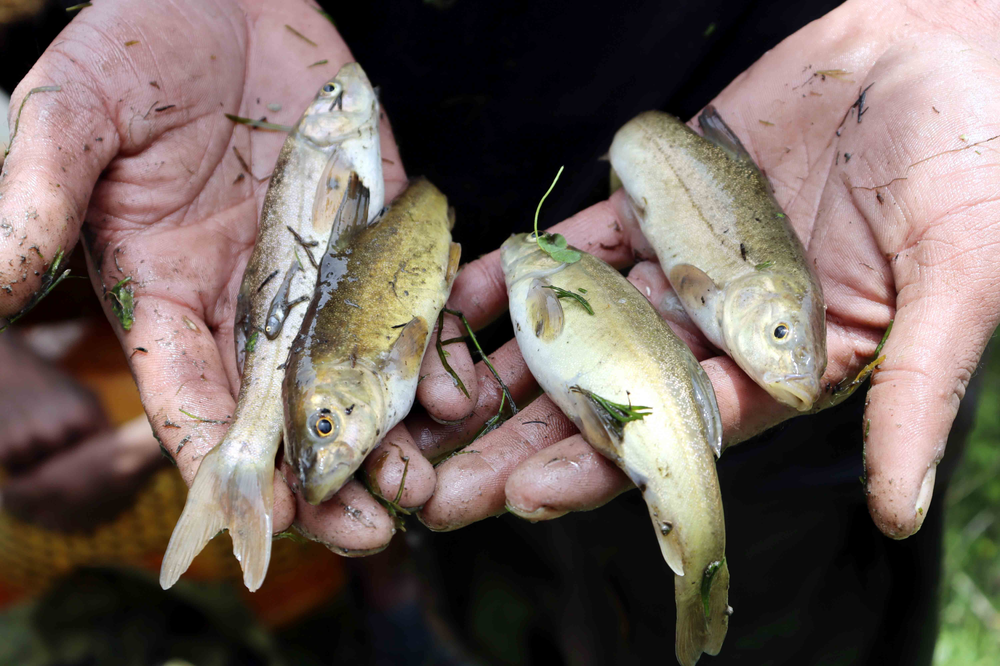
This year the festival was held on the 28th of May. People clean the freshwater spring with wicker and plastic baskets. This is age-old ritual is still carried out by many villagers in the districts of Kulgam, Pulwama and Shopian. Once a year, they congregate at the spring and spend the day clearing it of weeds and accumulated silt. Every year in the third or fourth week of May, villagers pick a day when the apple, almonds and walnut orchards are in full bloom. They clean Panzath Nag and also catch fish. In the late summer, spring experiences difficulties with weeds, silt, and decreasing water levels. The celebration aids with spring weeding and keeps the water flowing throughout the rest of the year which aids in irrigation. This cleaning is also important since these springs provide water to other water bodies such as lakes, wetlands and rivers.