
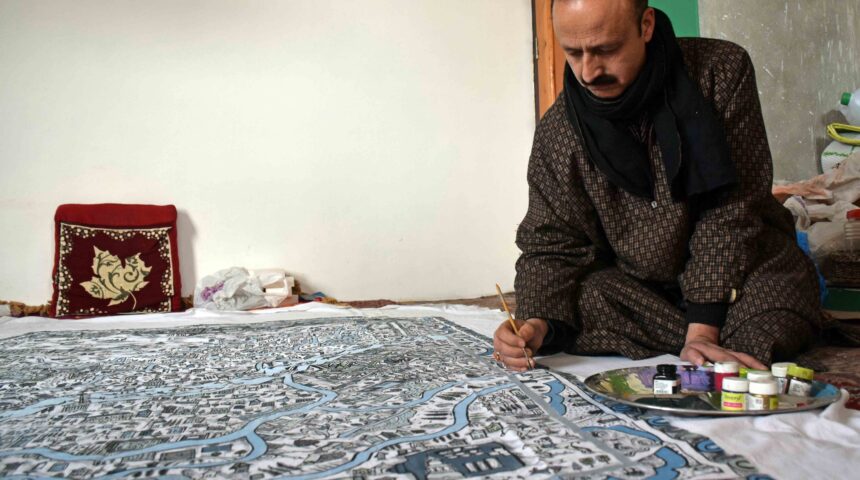
Maqbool Jan, an artist from Srinagar’s Lal Bazar area, has dedicated his life to perfecting the art of papier-mache. Over the years, he has won several State, National, and International Awards, including the prestigious UNESCO Seal of Excellence for Handicrafts in 2007-2008. From Mughal Mohalla in Lal Bazar, Srinagar, he was forced to learn the craft after his father’s untimely death, but it soon became a way of life for him and his family. “Our whole family is associated with this art, and we have been earning our livelihood very well,” he said. “Besides that, I have taught dozens of...
Blog
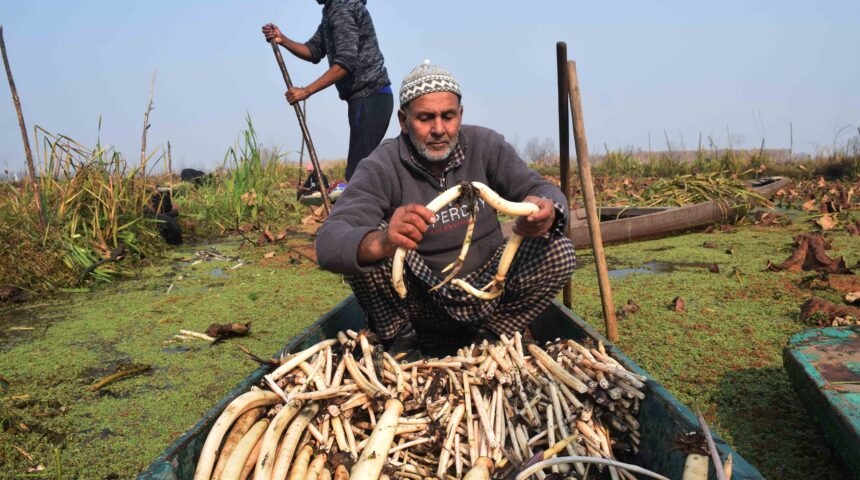
Photo Essay: Lotus-stem(Nadru) harvesting in Kashmir
Nadru, or lotus stem, is a quintessential part of Kashmiri cuisine. The seeds are sown just once, and harvest is enjoyed for years. The harvesting season is between September and March when farmers spend all day on their boats, eating, praying and gathering the nadru from Dal Lake, and Anchar Lake in Srinagar, and Manasbal Lake in Ganderbal. On cold mornings, farmers in boats, wielding six-foot long wooden poles with metal hooks on one end called shum, pulling out the lotus stems from deep inside the water, is a common sight. It is cooked in several ways, combined with fish,...
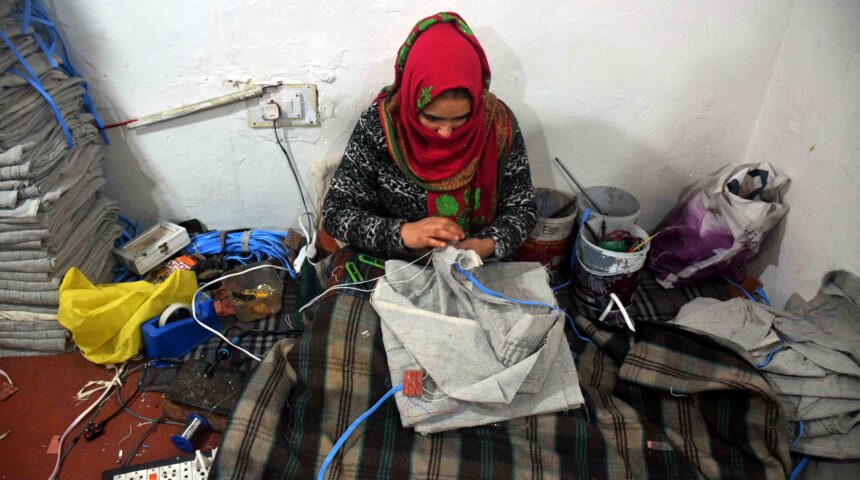
Photo Essay: Electric Blanket production in Kashmir
Locally made electric blankets are proving to be the best alternatives for traditional kangri and these blankets are in good demand in Kashmir, say manufacturers. These blankets are capable of heating an entire room within a few minutes while using minimal energy. These blankets not only provide an alternative to traditional kangri but also to ammams. Electric blankets are the latest addition to heating measures in Kashmir for insulating people against a bone-chilling cold. These blankets are also made in Kashmir, which has proved a remunerative market for the electric blankets so far given the temperature often goes sub-zero after...
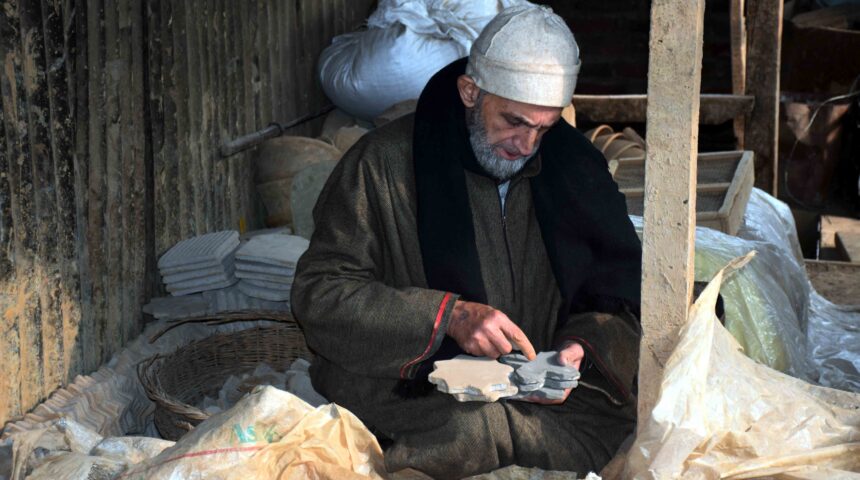
Photo Essay: Khanyari Tiles of Kashmir
Once considered a quintessential cultural element, Khanyari (Rainawari)Tiles were used in every traditional house of Kashmir to decorate the floors. In the past, the glazed tiles were made by a large community of artisans from Khanyar, Srinagar. At its peak, people in that Mohalla would make 50000 tiles a day, reduced to barely a 100. Now there is only one artisan left who continues to make these tiles – Haji Ghulam Mohammad Kumar (76). He has been associated with the craft for the past 60 years, and makes multiple designs in the shape of square, star and khatamband. He learnt...
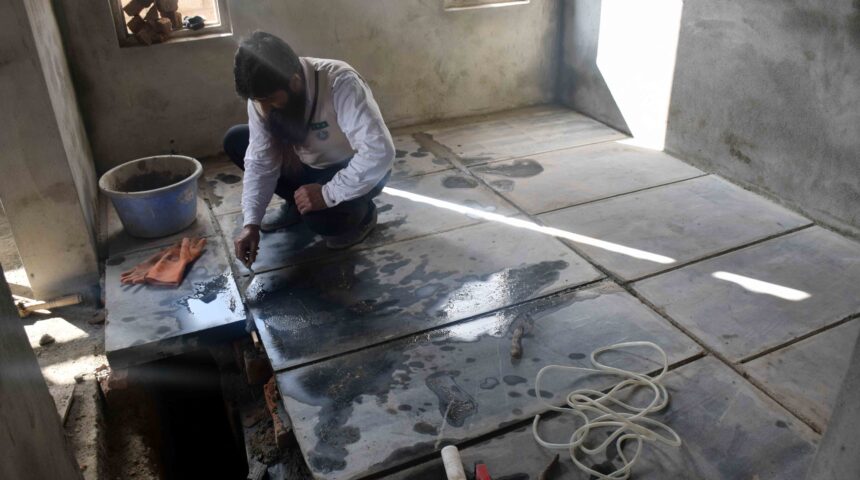
Photo Essay: Traditional Hammams of Kashmir
The hammam has its origins in the bath houses of the Roman Empire, from where it travelled to Asia Minor and soon came to be known as the Turkish Bath, where it came to be known as hammam. Though these came to be associated with the Ottoman period, the first is said to have been constructed under the Ummayads (661-750 CE). The hammams were initially built in the palaces, where it developed into a major institution within the harem where important political discussions were held. Other than these there were public bath houses built under royal patronage or as part...
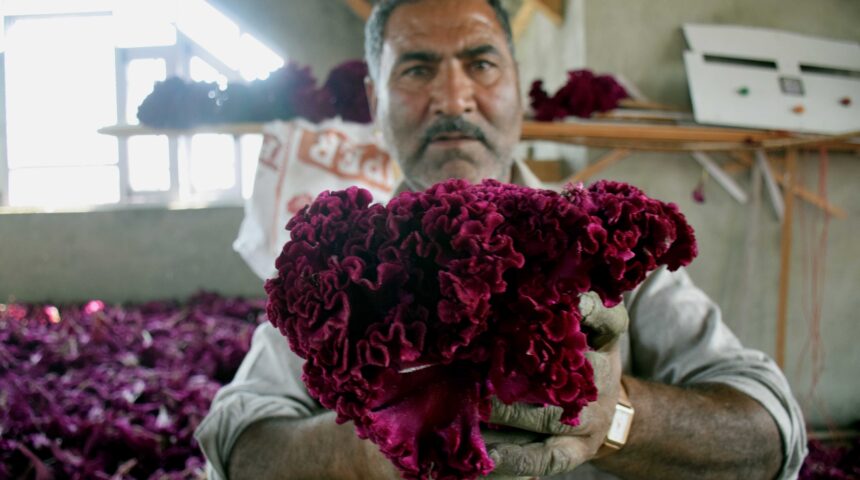
Photo Essay: Mawal
Cockscomb (Celosia), a plant with fluffy edible leaves, is known in Kashmir as Mawal. It has been one of the essential ingredients of the Kashmiri cuisine – Wazwan. It was added in the Wazwan cuisine mostly to enhance its colour. However, with the passing of time, cockscomb was replaced by the synthetic food colours. However, some of the old wazas still prefer to use mawal instead of food colours, for its medicinal properties and its also safer to add.
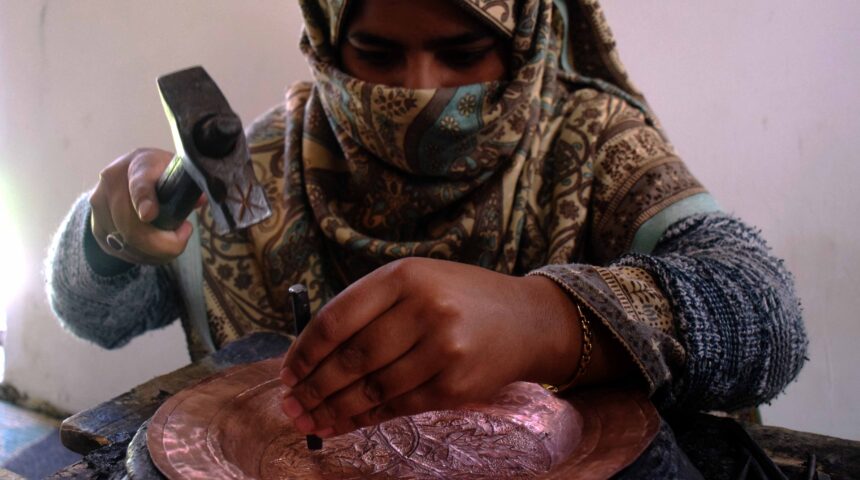
Photo Essay: Women coppersmiths of Kashmir
Women of Kashmir are breaking the gender norms and defying societal constraints, in the, till now a male dominated craft – copper craft. Women in groups of 20 learn the art in the Balpora village, Budgam. As finding stable employment is a struggle for women, especially in villages, the establishment of the training centre in May 2022, supported by the government’s Handicrafts and Handloom Department, has brought a ray of hope for many young women. The young women train in small groups under Mukhtar Ahmad. He is training the girls in the age-old craft of Tram Baneh (copperware utensils) making. Locally...
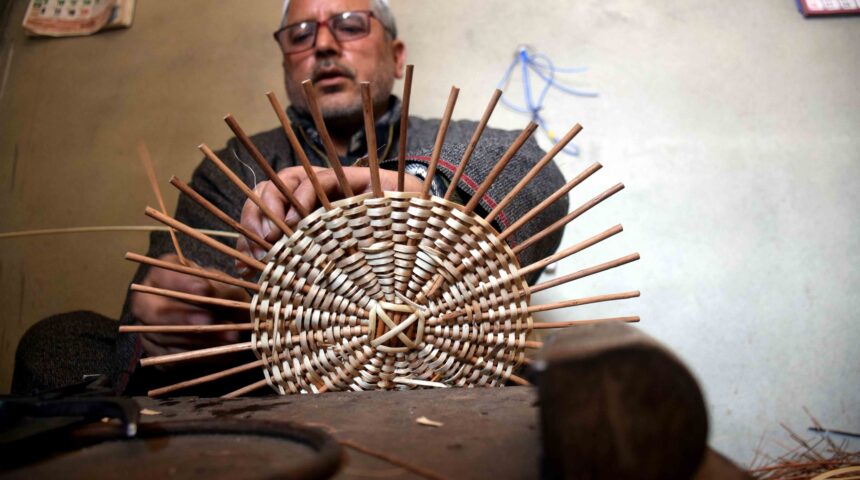
Photo Essay: Willow wicker craft of Kashmir
Basket-weaving is one of the world’s oldest crafts, and is also widely practiced in the Valley. Willow wood is most commonly used and the kangri is one of the traditional items crafted from the wicker. The soil and climatic conditions of the Ganderbal District are the best for the cultivation and production of willow wicker crop. A normal willow plant grows up 2–3 metres in its height and the crop is harvested in the month of October. Once the crop is harvested, the withy, that is the willow stem, is grouped into bundles according to size. The crop is usually...
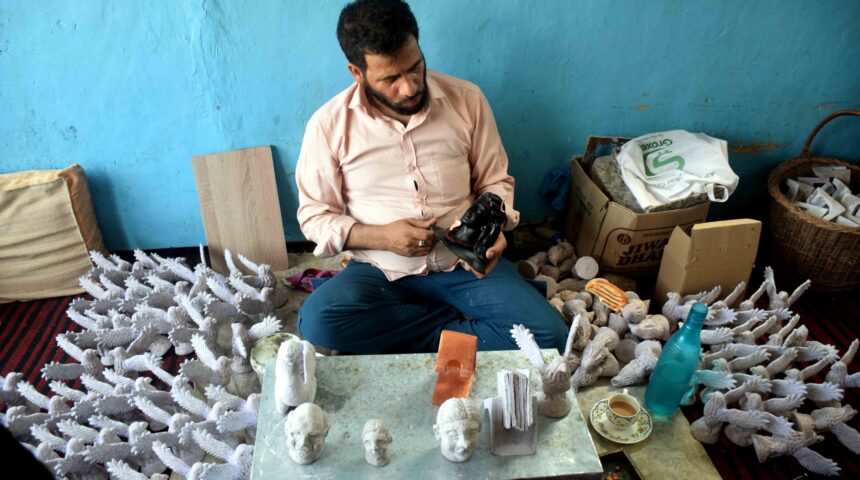
Photo Essay: Sakhta-saz, the paper pulp artisans of Kashmir
Papier mache is a 700 year old craft of Kashmir. The process of making papier mache products is a result of two- stage techniques … the first stage involves the sakhta-saz, who makes the object with paper pulp; the second stage is of the naqash, who decorates the object with artwork. The sakhta-saz prepares a paper pulp by manually pounding a mixture of paper (which has been soaked in water for days till it disintegrates), cloth shreds, rice straw and copper sulphate. These are soaked in water and then pounded to make pulp. The pulp, with an adhesive of rice...
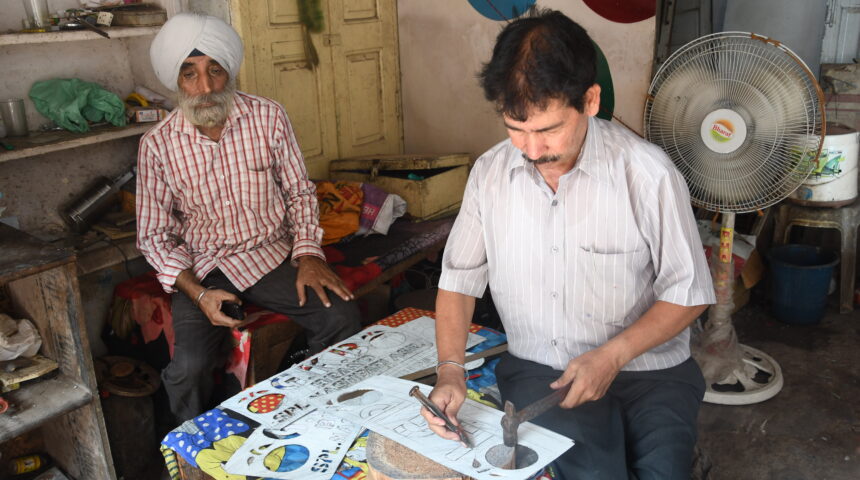
Photo Essay: The Dying Art of Stencil Makers, Amritsar
Gurinder Singh, now 70 years old started working in his father’s (Kulwant Singh) shop at the age of 20. Their shop located in the Akali Market, Amritsar has been making sign boards and stencils. Both handmade, have now lost out to the computer made large flex signs and signboards. Yashpal, who has been working in this shop for the last 43 years, learnt the art from Kulwant Singh and Gurinder Singh. He says that at one time they had 15 people working daily from morning to evening, with barely time to rest. Now they are just two, and in a...
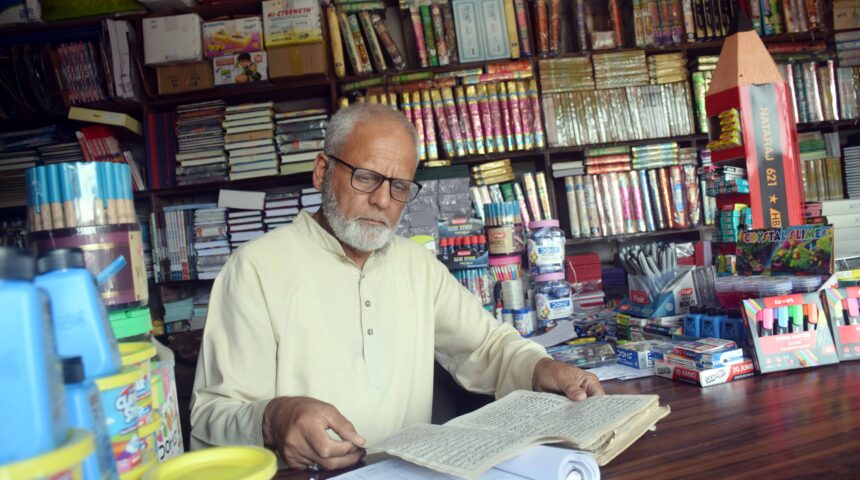
Photo Essay: Ghulam Mohd Noor Mohd Tajraan-e- Kutub
The book shop near the Budshah Tomb, has a signboard outside that reads‘ GHULAM MOHD NOOR MOHD TAJRAAN E KUTUB “. This is perhaps the oldest bookshop of Srinagar. This 133 years old bookshop sells books of literature, religion, philosophy, poetry and various other subjects, in Urdu, Persian and Arabic and was established by Ghulam Mohammad (not the same as Sheikh Ghulam Mohammad of Haji Sheikh Ghulam Mohammad Sons & Tajraan-i-Kutub, whose family too has a similar story and now the grandsons run the Jay Kay Books and Kitab Mahal Publishers Lal Bazar). Ghulam Mohammad used to travel to Lahore...
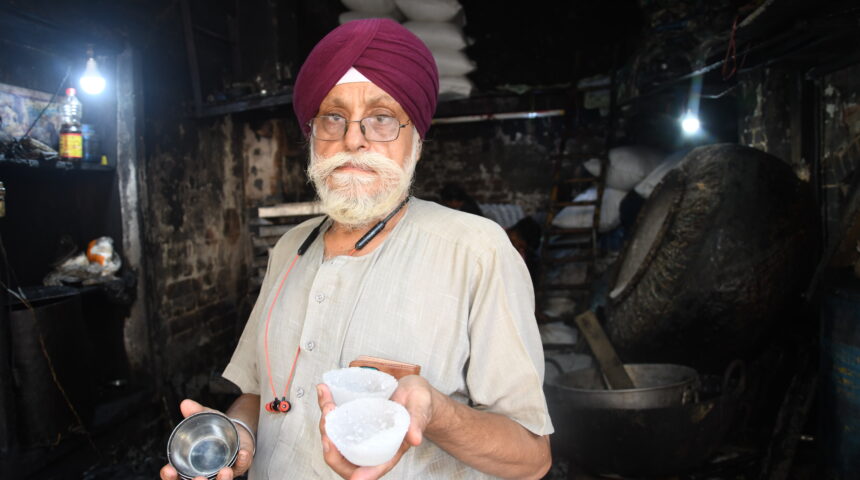
Photo Essay: Kuja Mishri, Amritsar
Rajinder Singh has been making Kuja Mishri since almost 40 years in Amritsar and he’s the third generation in this work. Kuja Mishri is a specialty of Amritsar and almost 99% of total produced is made here. In fact an entire bazaar is named after it as Mishri Bazaar, in the vicinity of Darbar Sahib. Preparations of its shops of khand khidone (edible sugar toys) was famous not only in the city, but also in neighbouring towns. It is mainly supplied to various regions of Punjab, Himachal and J&K and is mostly given as shagan during weddings and other festive...