Polishing is a necessary stage in many manufacturing processes. Architectural metal, cookware, kitchenware, metal automobile parts, etc are some of the products that are polished before they reach the market. In other cases, metals can be polished as part of general repairs or restoration.
Metal polishing is a finishing method that uses an abrasive material to smooth surfaces. When polished, the surfaces of metallic objects are enhanced as the surfaces are freed of defects and become more reflective and shiny.
Besides its aesthetic value, metal polishing also removes oxidation from beneath the surface and prevents further corrosion of a metal, significantly prolonging its working life.
Metal polishing can be performed with several varieties of abrasive. The best abrasive for it largely depends on the condition of the material that will be polished.
If the material is unfinished, polishing will consist of several stages. During the first stage, a rougher abrasive that removes imperfections from the material is used. Finer abrasives that leave the material relatively unmarked are used in subsequent stages.
To achieve a mirror-like finish, polishing and buffing compounds are usually applied with polishing wheels and high-speed polishers. While some polishing materials can be applied as-is, wax, kerosene, and other lubricants can also be used during the process. To achieve an even brighter shine, buffing can be performed with the stationary polishers, die grinders, etc.
In the case of softer metals like brass, a very fine, copper-plated grit and buffing is used to smooth out marks from impurities.
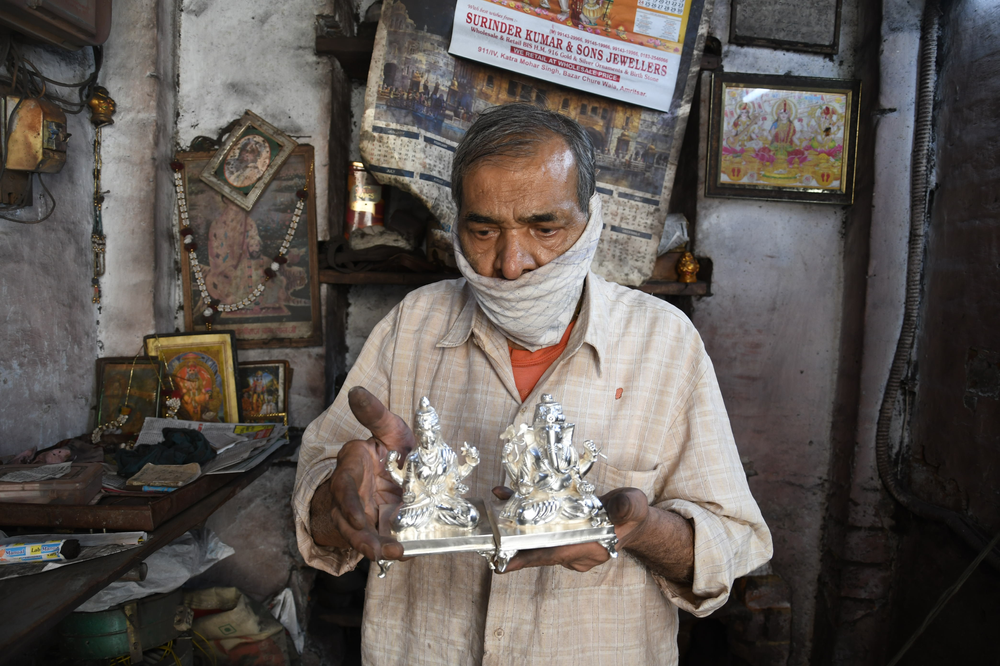
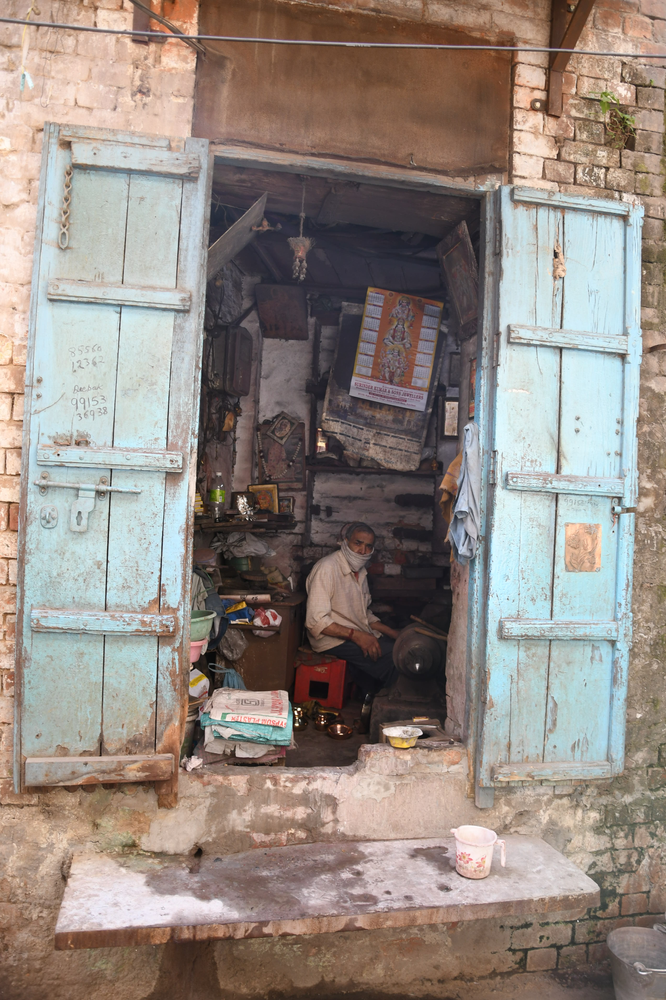
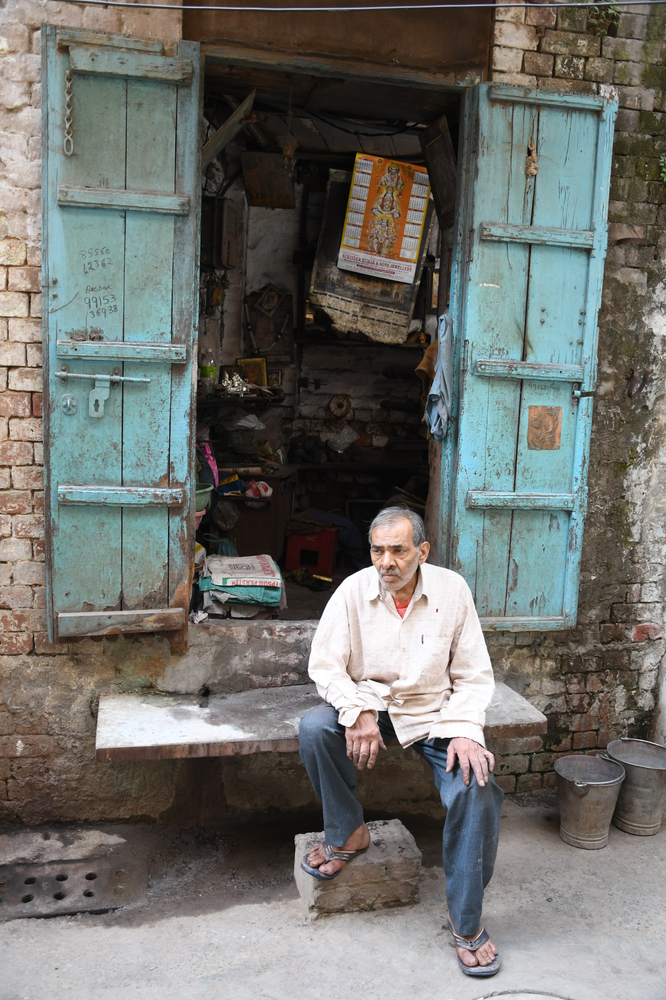
Vijay Kumar has been a metal polisher for the last 50 years in Amritsar. He learnt the craft from his maternal uncle at the age of 10. Since then he has been polishing mainly household items of silver, brass and copper. His workshop is located in Gali Fakir Khanna, Mai Sewa Bazaar.
Working alone he earns barely Rs 200-300/- per day as the work has reduced considerably, with larger manufacturing units taking over. His work, now, mostly involves re-polishing, repair or polishing of smaller items manufactured in similar, smaller local workshops. As with most local crafts, his too will end with him as he has no assistants, nor his children have learnt the skills.