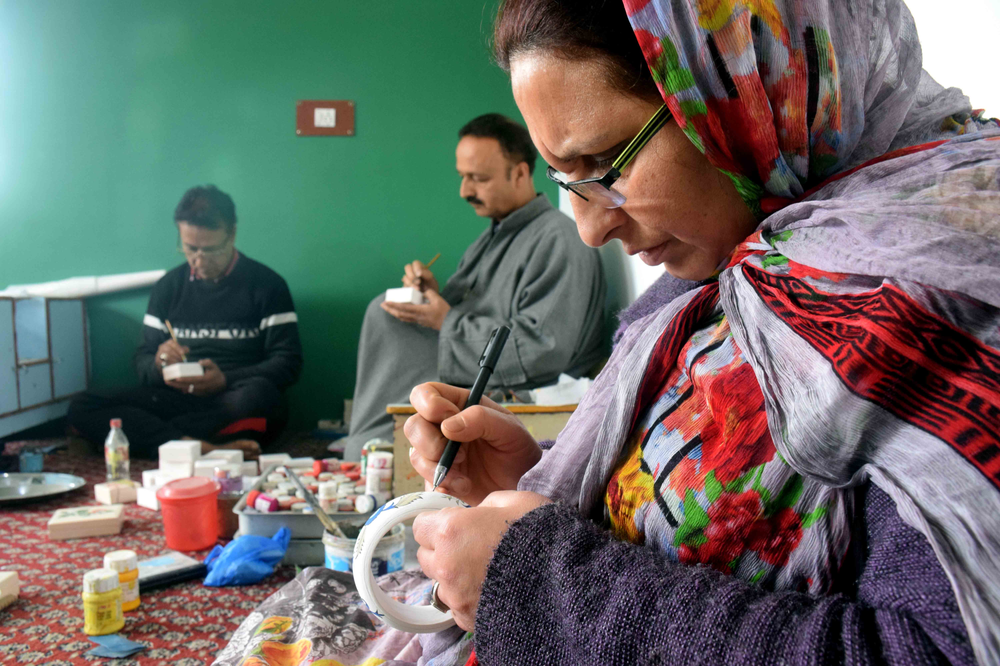
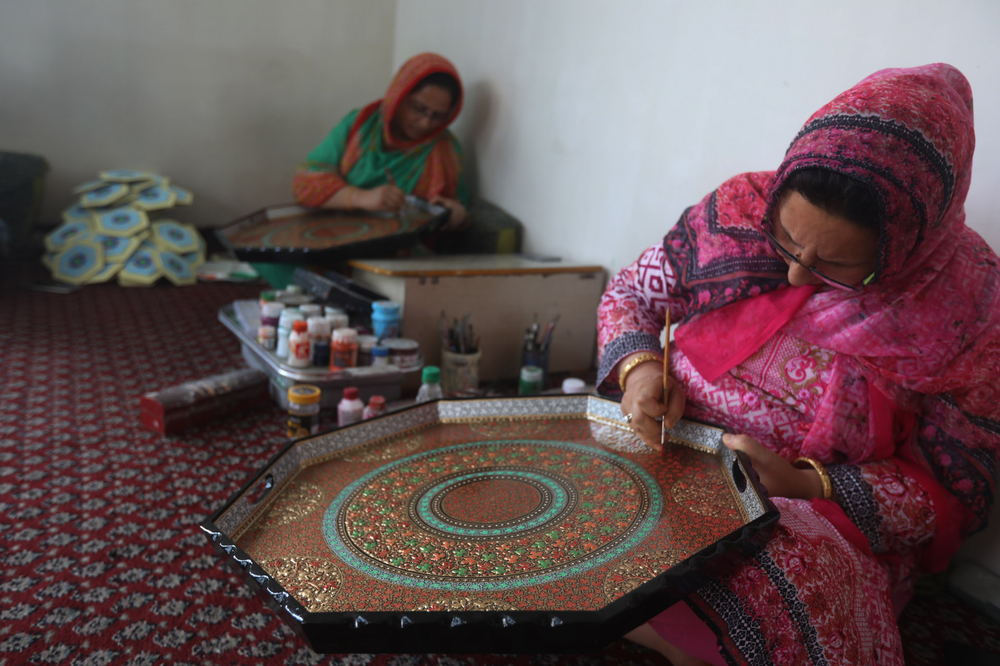
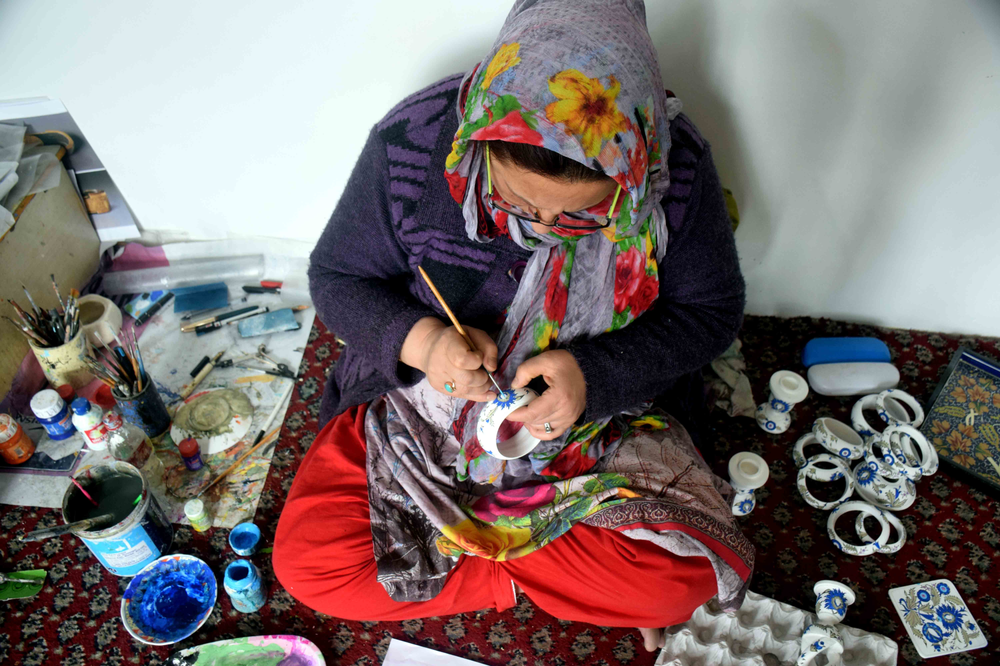
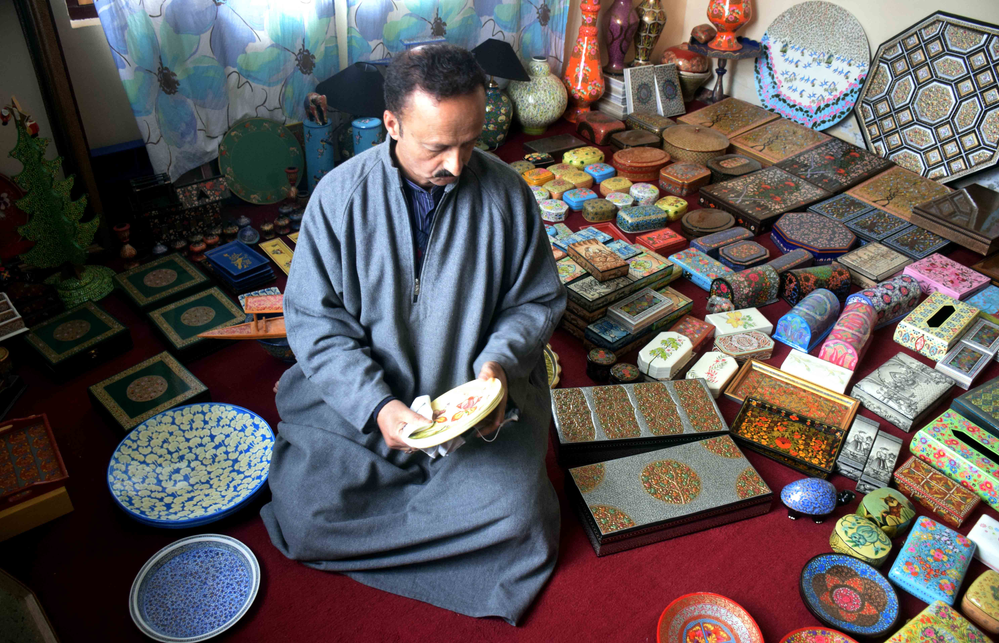
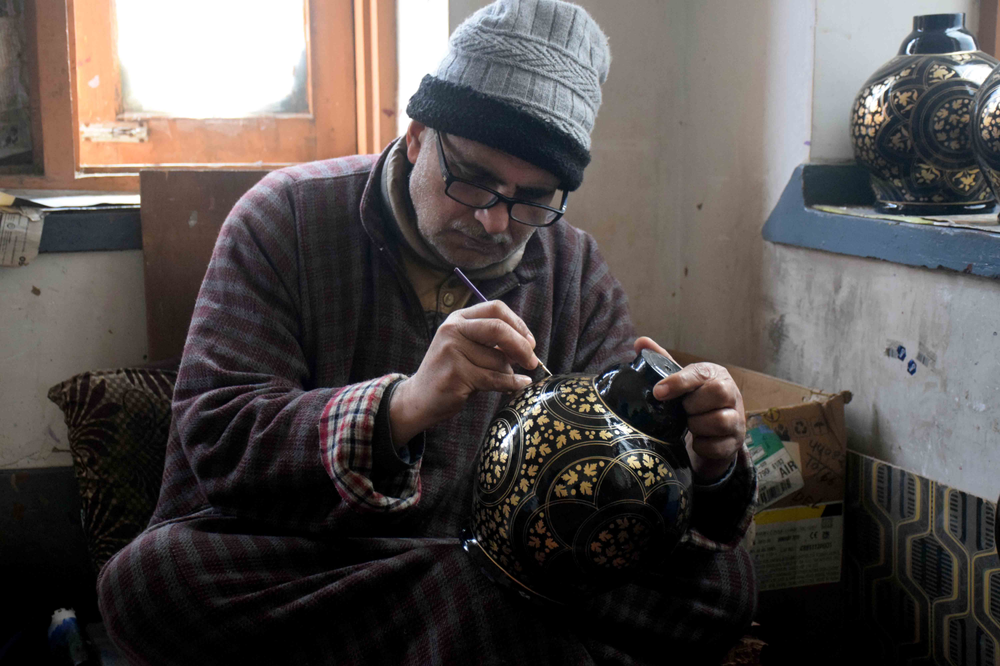
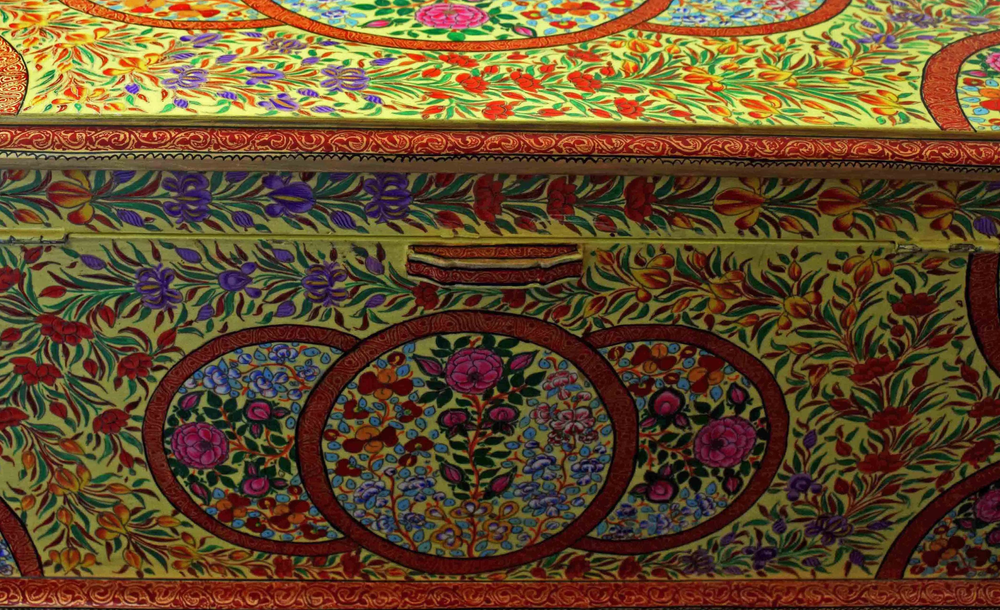
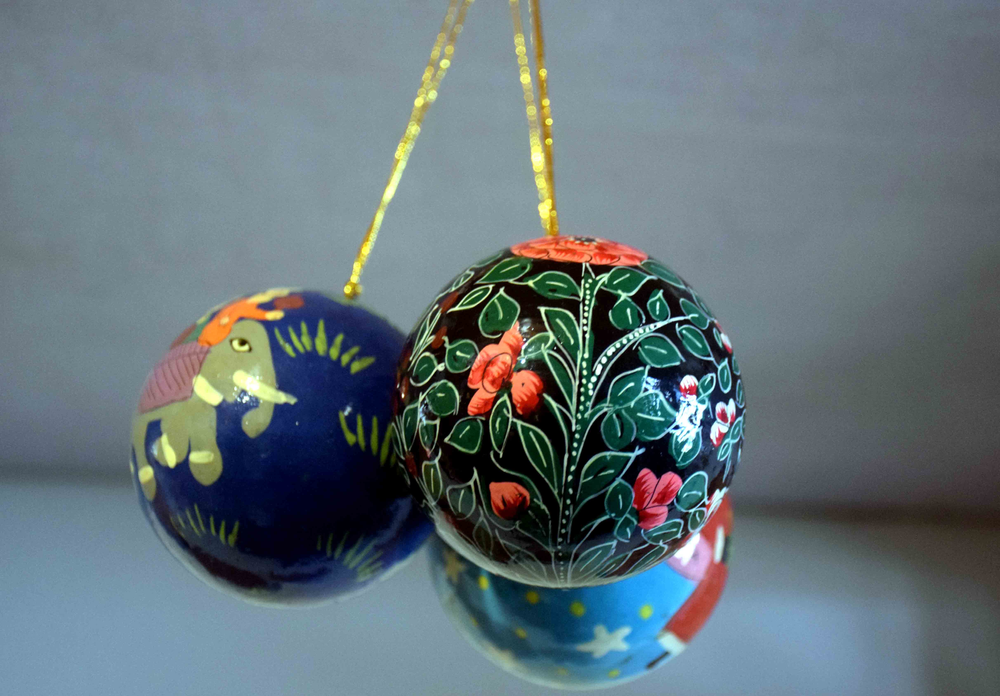
A woman from Kashmir, Masrat Jan, is reviving the dying papier-mache craft, and breaking the gender stereotypes around it. Papier mache is mostly done by men in Kashmir, while women mostly do needlework and embroidery on shawls and suits. In her 50s, Jan, a well-known papier-mache artist lives in the Lal Bazar area of Srinagar. She learnt the art from her maternal grandfather. She got support from her husband who is an artist as well, and has won several state awards.
Seeing the papier mache art declining in the region she has started assembling many young girls and women from different parts of the capital city Srinagar to join the industry, in order to revive the craft.
Masrat’s husband Maqbool Jan is also a state award winning papier mache artist. He learnt the art at an early age due to the untimely death of his father. His whole family has been involved in this art form. He has trained dozens of students so far, who have also become masters of the craft. He believes that introducing papier-mache as a subject in educational institutions will help to preserve the art form for future generations. According to Maqbool, earlier there were entire localities doing papier-mache, but now there are less than 3,000 people associated with this job.
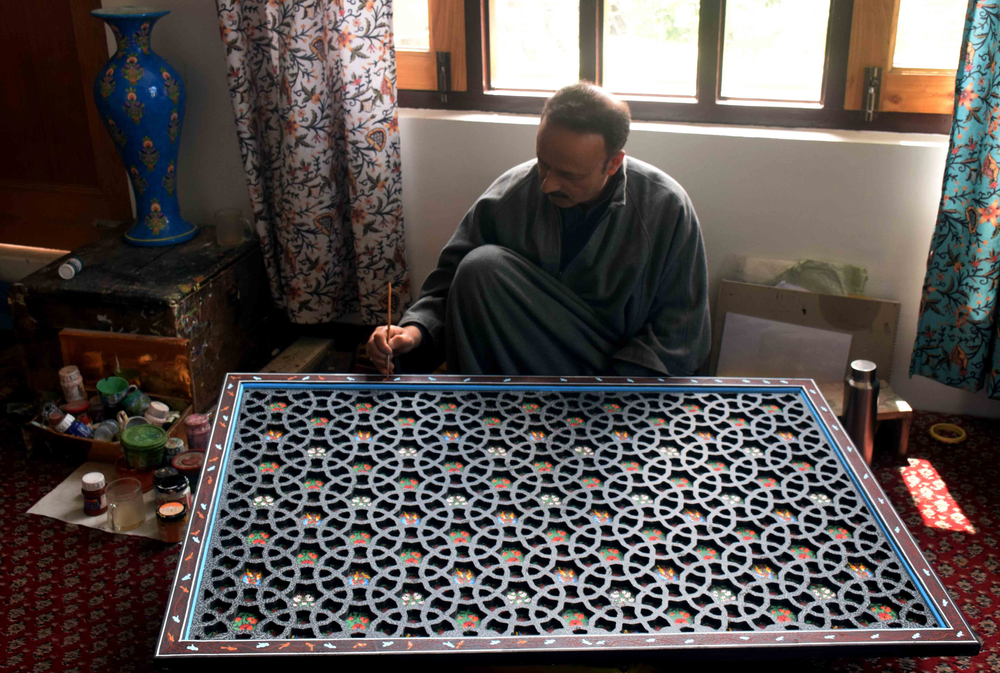
Maqbool is known for his innovative designs – changing patterns and colour schemes to keep the art alive. He has started creating art works on walls, doors, traditional Kashmiri Khatamband ceilings, as well as utensils. He was awarded the Unesco seal of excellence award for his contribution to handicrafts in 2008. Maqbool created the papier-mache cloth map of Srinagar of 1825, depicting famous sites, Jhelum and the Dal Lake.
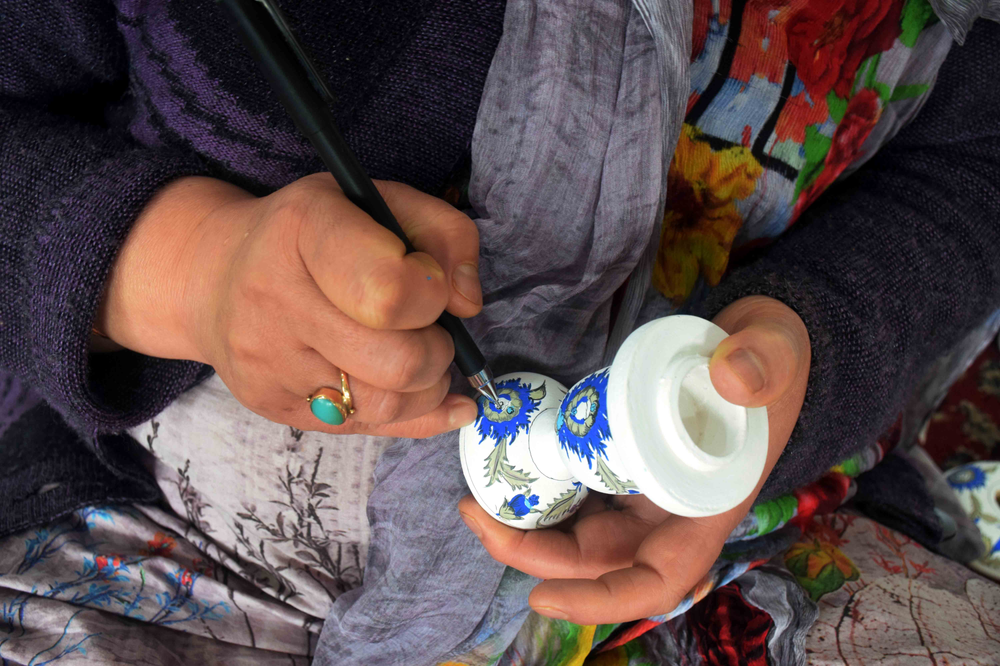
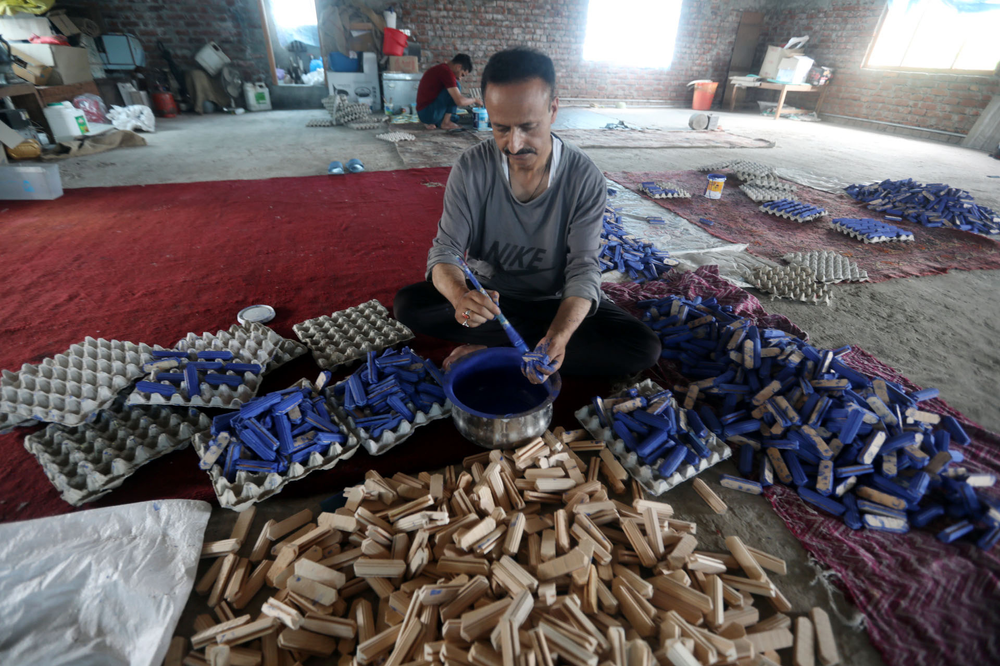
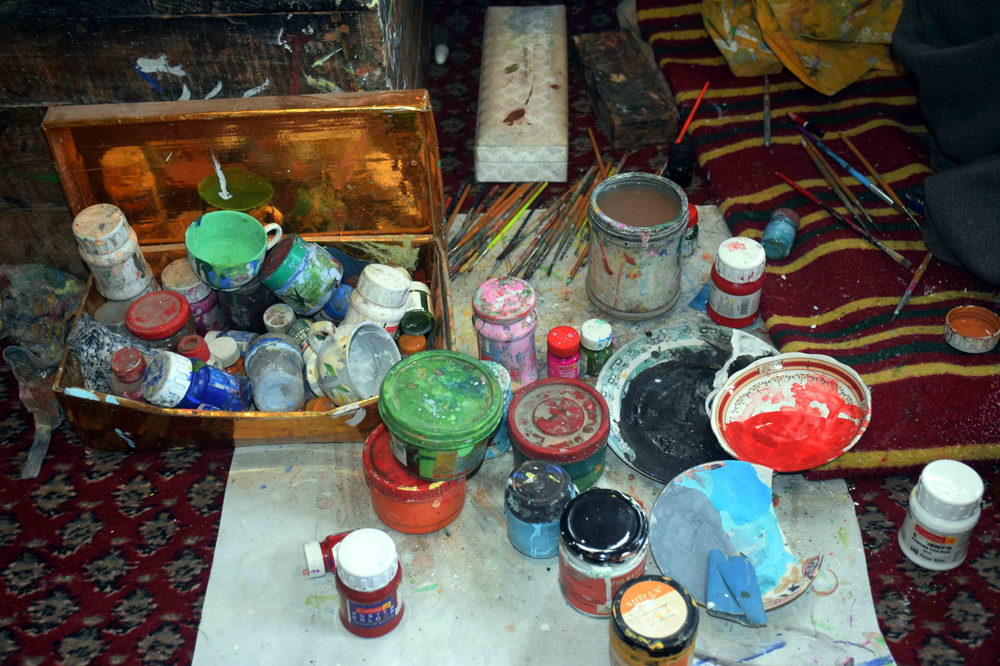
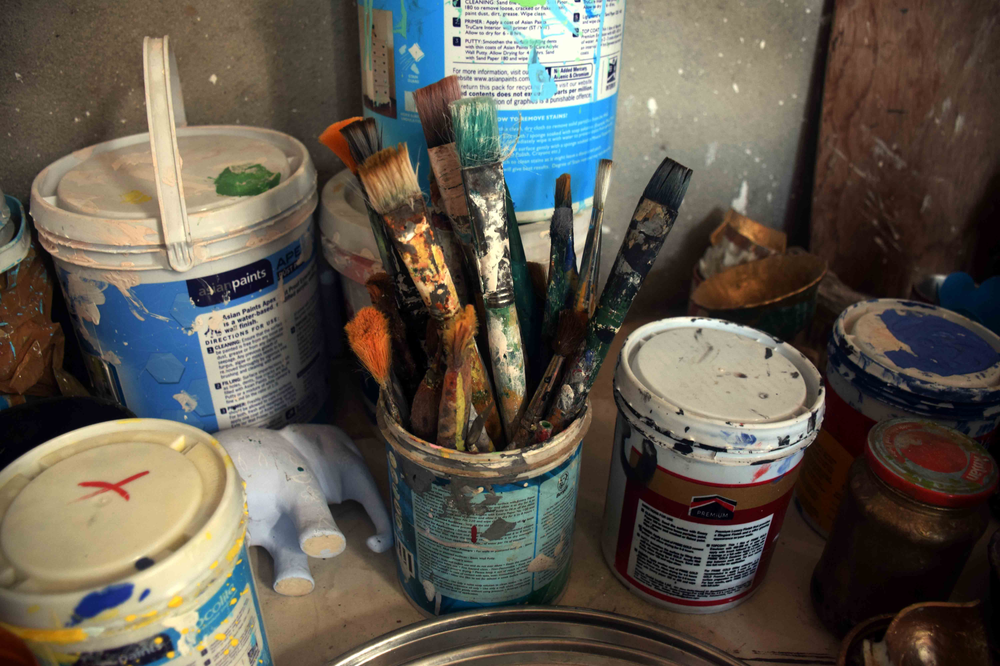
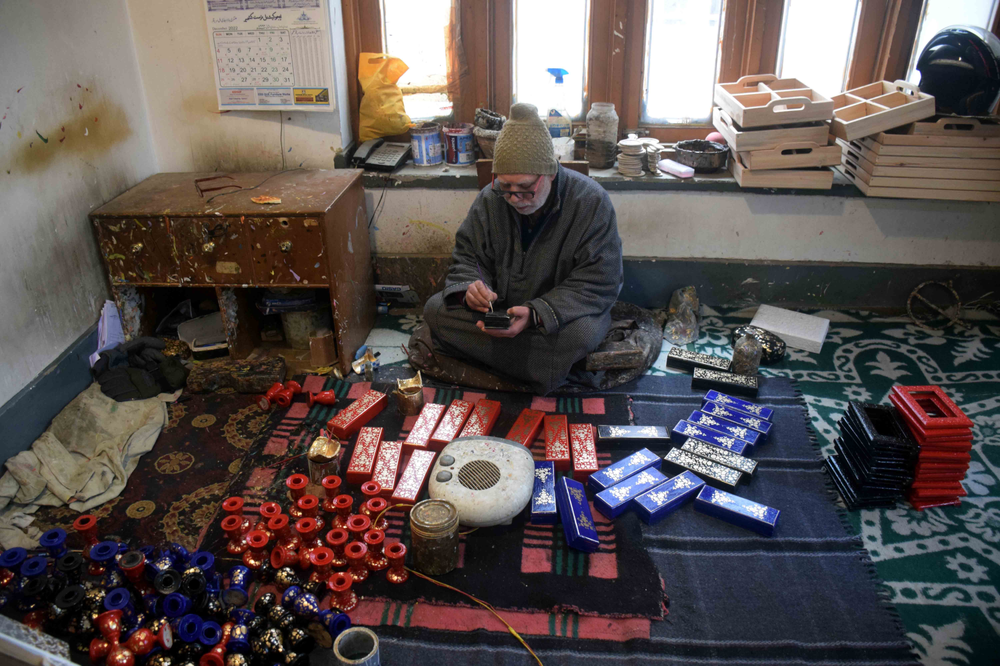
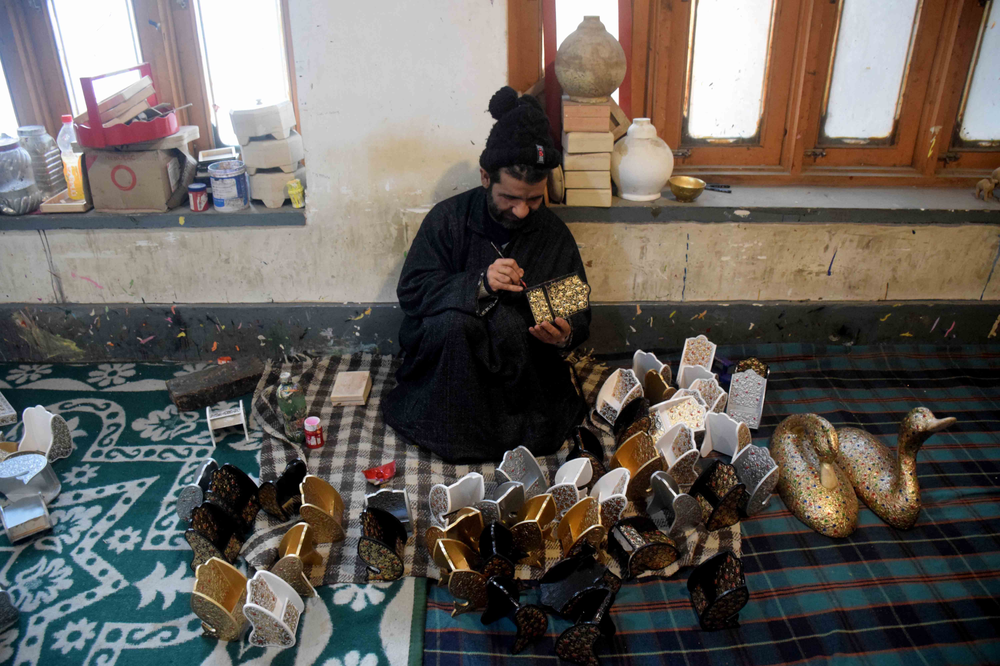
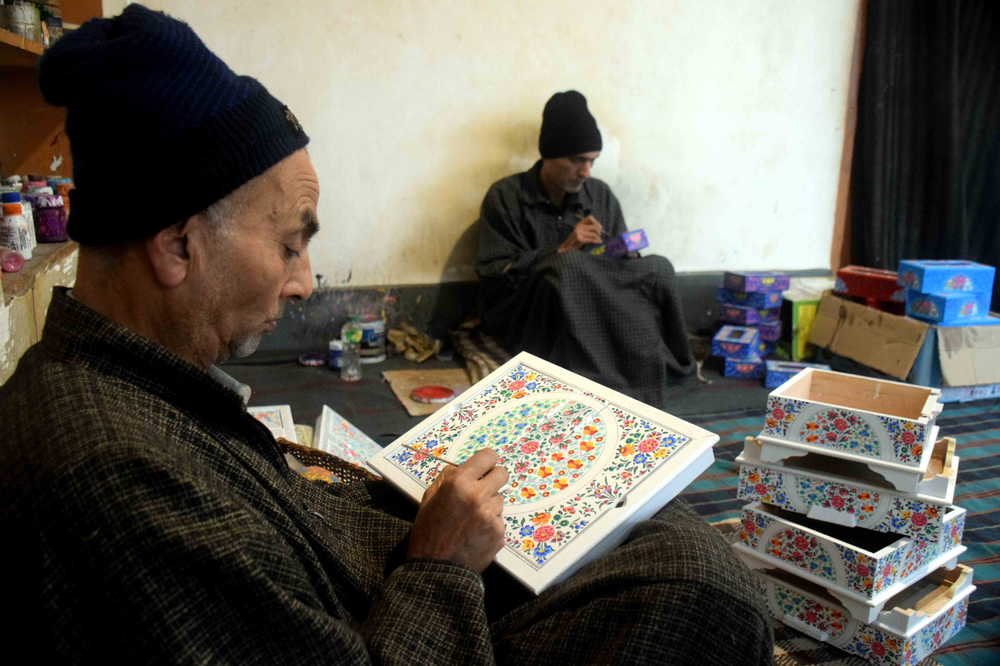
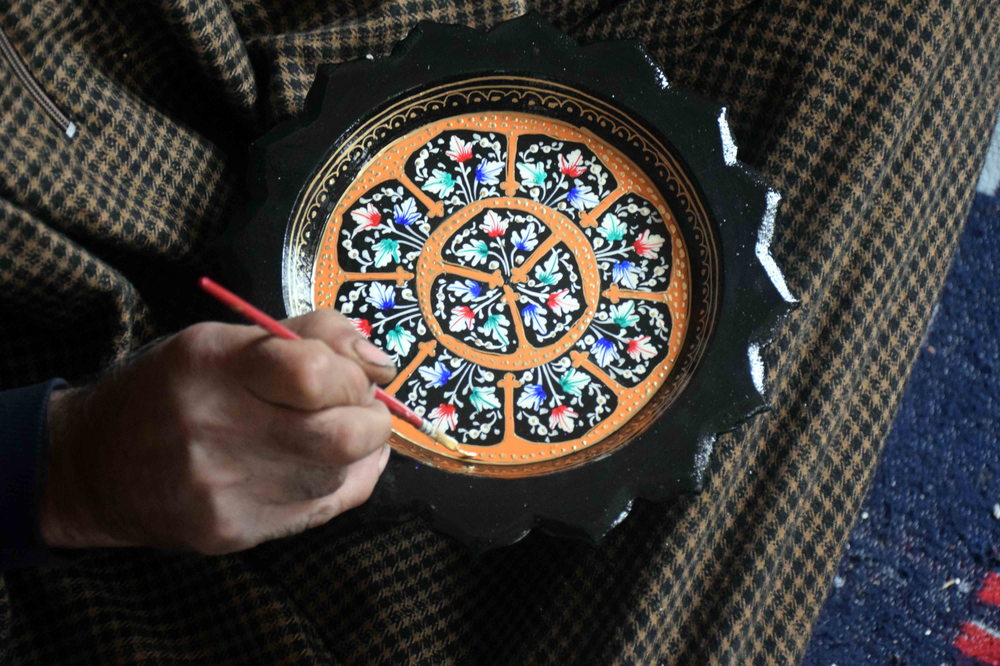
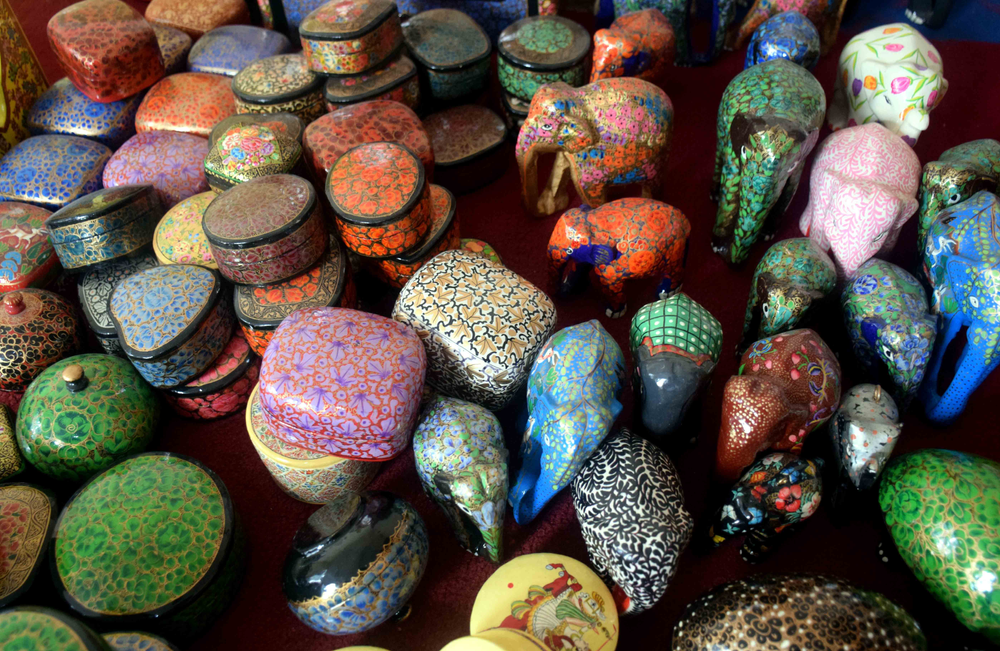
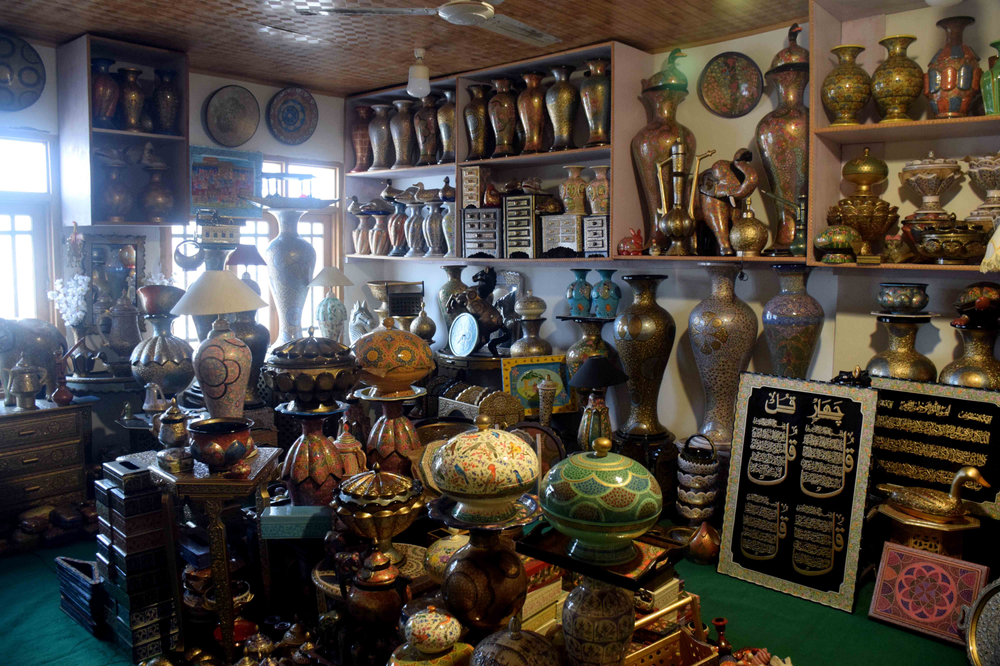
Papier mache involves making of different shapes like vases, trays, boxes, lamps, animal shapes and many other items, by applying paper pulp over moulds, then drying those objects, polishing them, and finally painting them intricately with multiple colours and patterns. These are made in homes, and workshops, in Srinagar, and other parts of the Kashmir Valley, and are marketed primarily within India, although there is a significant international market. The product is protected under the Geographic Indication Act 1999 of Government of India, and was registered by the Controller General of Patents Designs and Trademarks during the period from April 2011 to March 2012 under the title “Kashmir Paper Machie”.
The art form is a staple of the luxury ornamental market, and has a rich and long cultural lineage. It is said, like so many other crafts of Kashmir, that it was introduced in Kashmir during Shah-i-Hamdan’s visit to the Valley. Earlier to this period the practice was to draw colourful paintings on wood on household furniture such as ceilings, bedsteads, doors and windows, palanquins and so forth. This art form was called, kar-i-qulamdan as it was made as pen holders and a few other personal trinkets. Another term used for the art was kar-i-munaqqash as it was crafted on smoothly finished surfaces created using layers of polished paper. Even treated and stretched skin was used for the purpose. Starting with decorating jackets of books, the art covered many items of that period such as tables, table ware, bangles, lamp stands, cups, plaques, panels, screens and cabinets.
It is said that during the Mughal era, its use was extended to include many items of home furniture that were made in Kashmir. The basic method followed was to apply the papier-mâché on wood work, and one such work can be seen in Kashmir at the Madin Sahib Mosque built in 1444, the ceiling of the Shah Hamdan Mosque and the Shalimar Garden, a Mughal garden in Srinagar.