

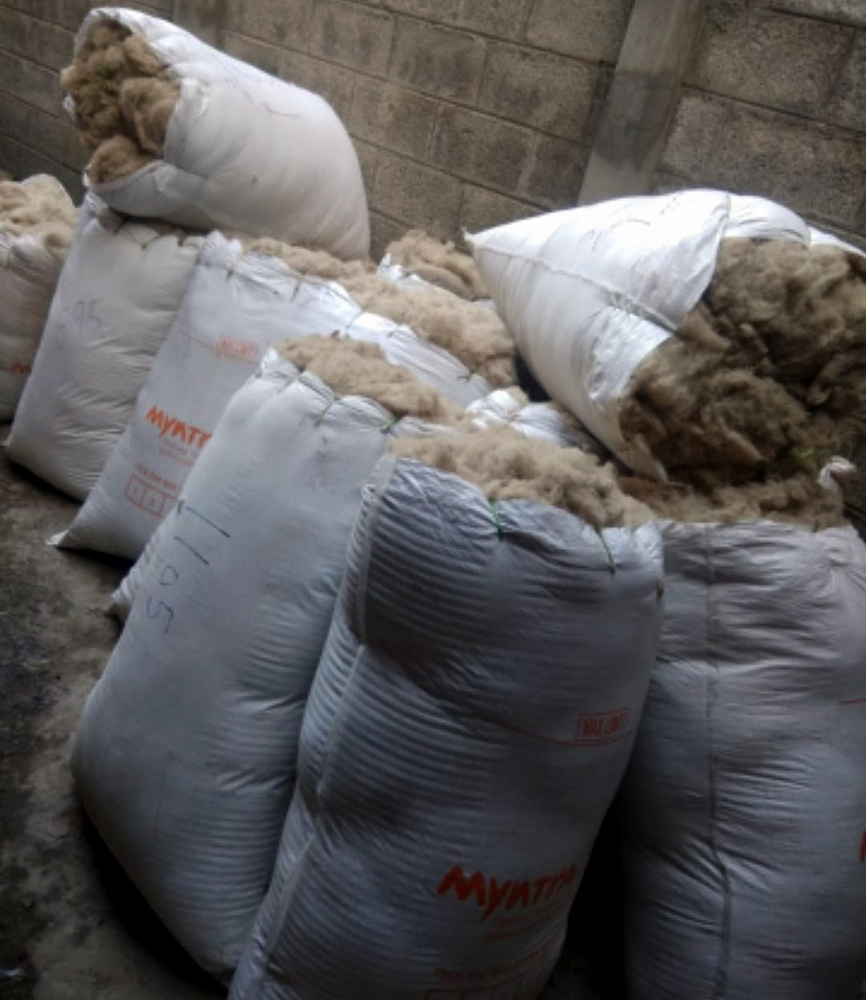
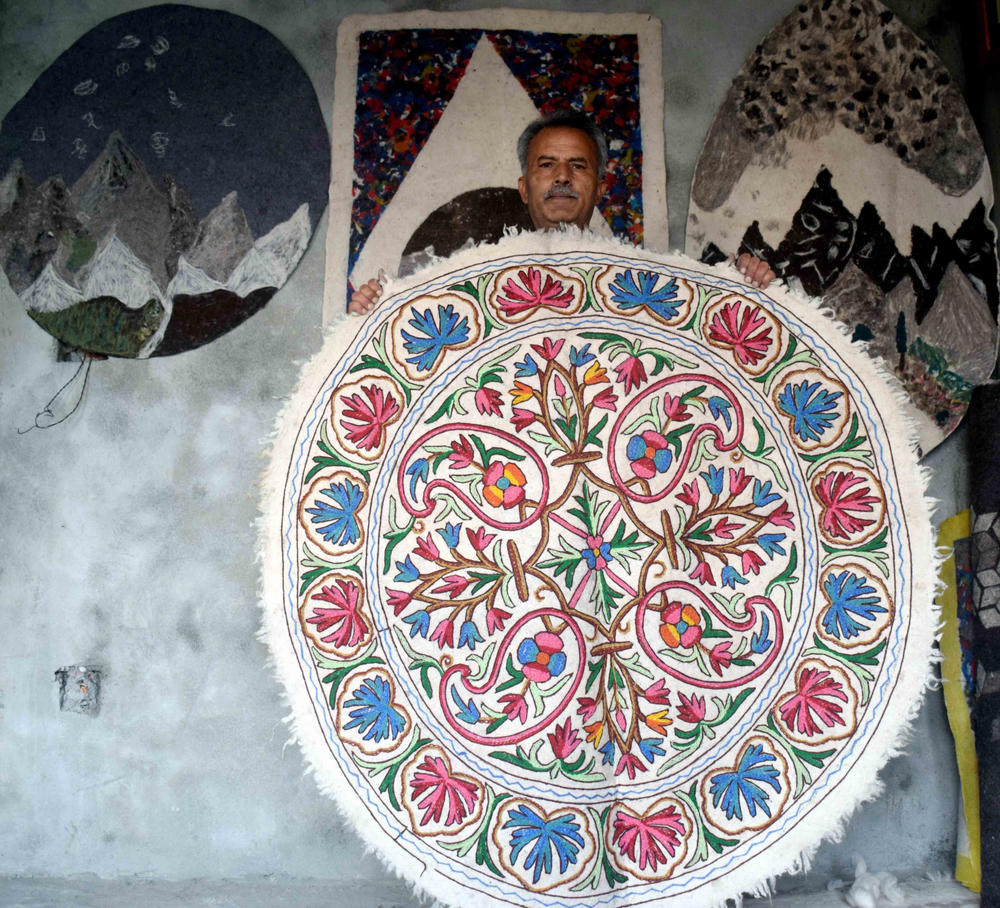
Kashmir has been known for its Namda rugs made of sheep wool, which came in to Kashmir from Central Asia. Kashmiri Namda rugs are non-woven rugs developed by highly skilled artisans in Kashmir using the felting technique. These floor coverings are primarily made of pure sheep wool, as wool has a natural property to felt.
Broadly there are three methods of felting: wet felting, nuno felting and needle or dry felting. There are processes, namely ‘felt knits’ and ‘artfelt’. Artfelt is a type of paper very much like a dissolvable interfacing; however, while dissolvable interfacing will fall apart once any water touches it, artfelt will only dissolve with boiling water. Artfelt combines the process of needle felting and wet felting, using the dryer to handle the agitation process, making this an incredibly easy form of wet felting and accessible to those who struggle with being able to do any wet felting for whatever reason.
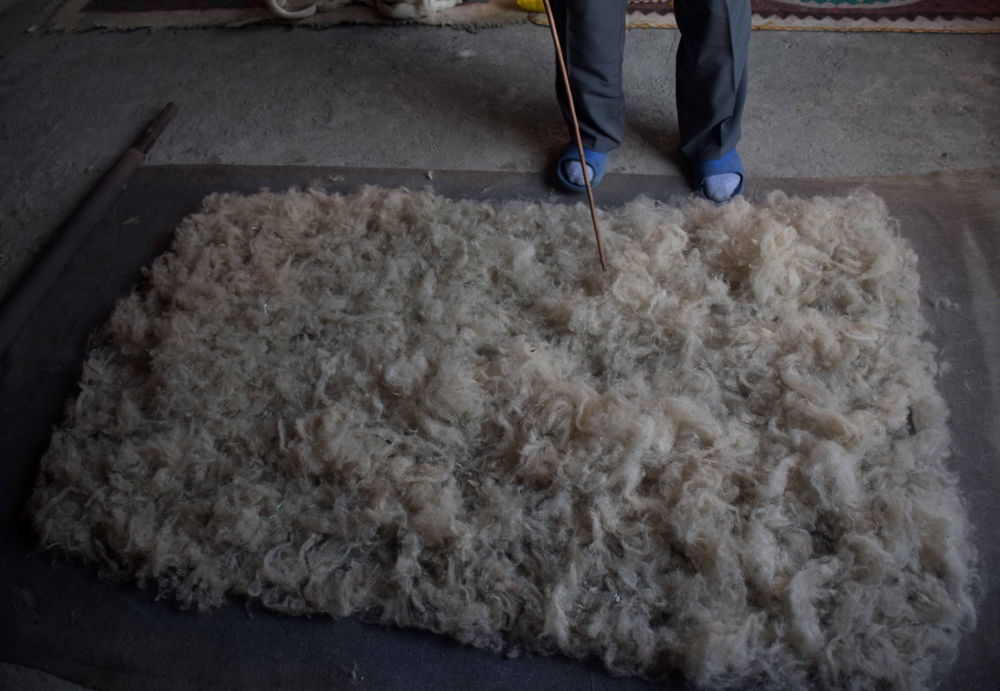
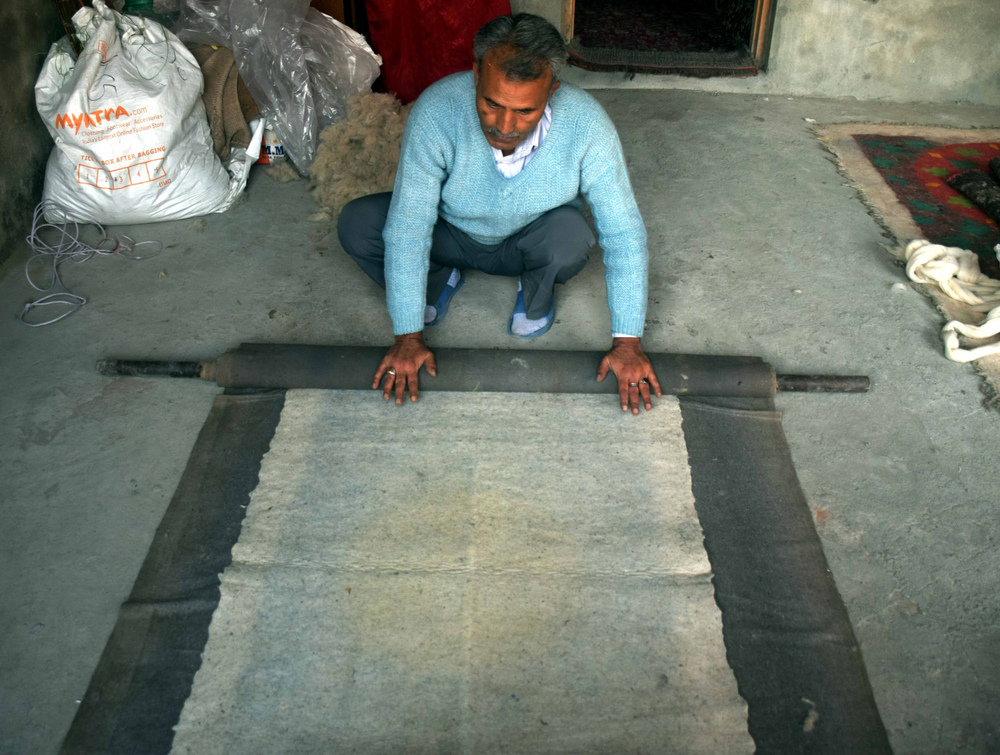
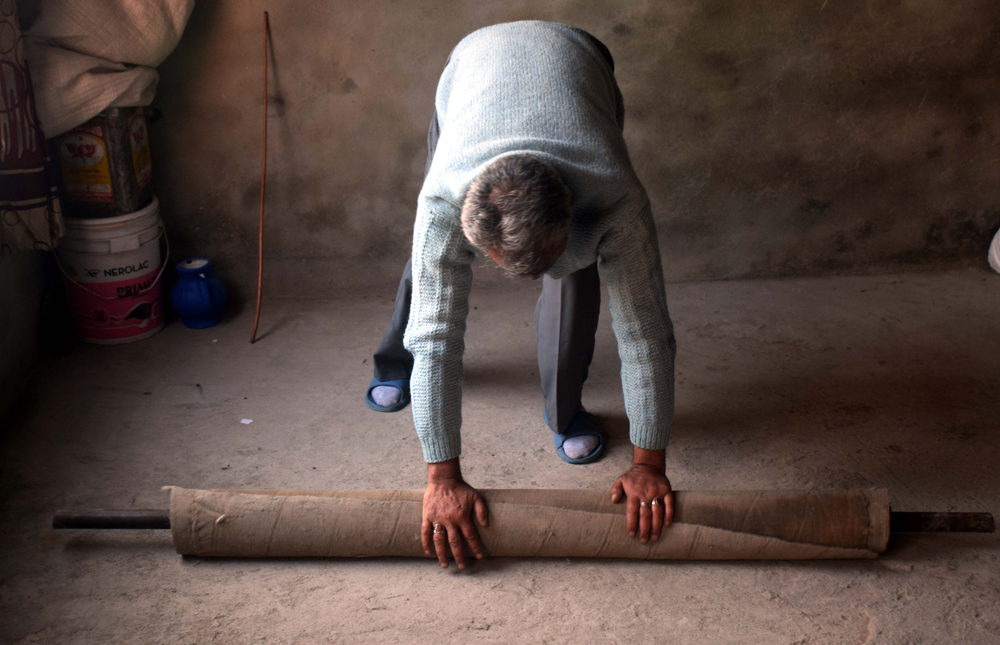
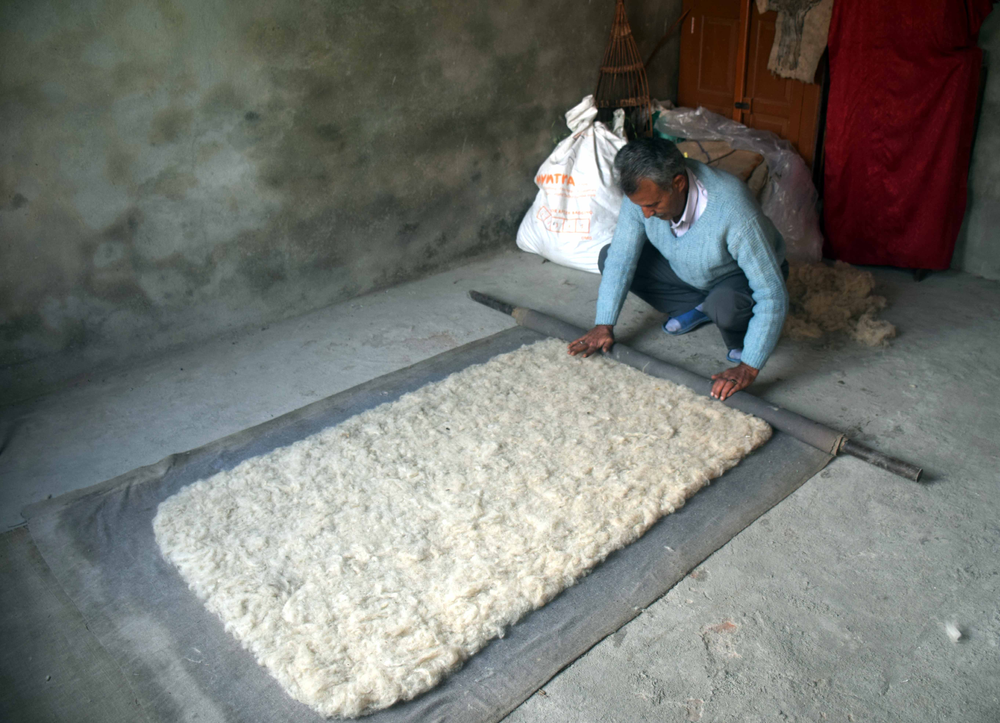
Layers of evenly laid, clean wool fibers are enmeshed with the help of moisture, soap and mechanical pressure and rolled up against a jute mat. This is moved in a back-and-forth motion and tied up to squeeze out the excess moisture. Hours of rolling makes the rug sturdy enough to be used as a floor covering. Felting is an ancient craft, and felt, as most of us know, is a textile material created by matting, condensing, and pressing wool together. This is called ‘wet felting’. Wet felting is the process of combining layers of wool roving and/or wool yarns into one flat piece of felt fabric. This is considered as the traditional or oldest felting method. Nuno felting is the process of felting wool roving and/or wool yarns onto another fabric.
Both felting methods are used to transform strands of wool fiber using friction and agitating fiber to bind the fiber to make craft items. Wool shrinks as they are felted regardless of the methods you use. Both felting methods can be used to create similar types of crafts. Crafts made after using both felting techniques cannot be reversed.
Wet felting and dry felting are two very different processes that create very different results. Wet felting uses warm soapy water and manual agitation of the wool to turn the fibers into felt. The wet-felted craft is finished by fulling or agitating the fibers against a rough surface such as a washboard that interlocks wool fiber together. On the contrary, needle felting is most prevalent and a rather easy felting technique that uses up and down motion of felting needles on wool to form felt. Needle felting is mostly used in 3-dimensional sculptural items, however it can also be used for wool paintings, embellishments, and even creating fairly 2-dimensional textiles
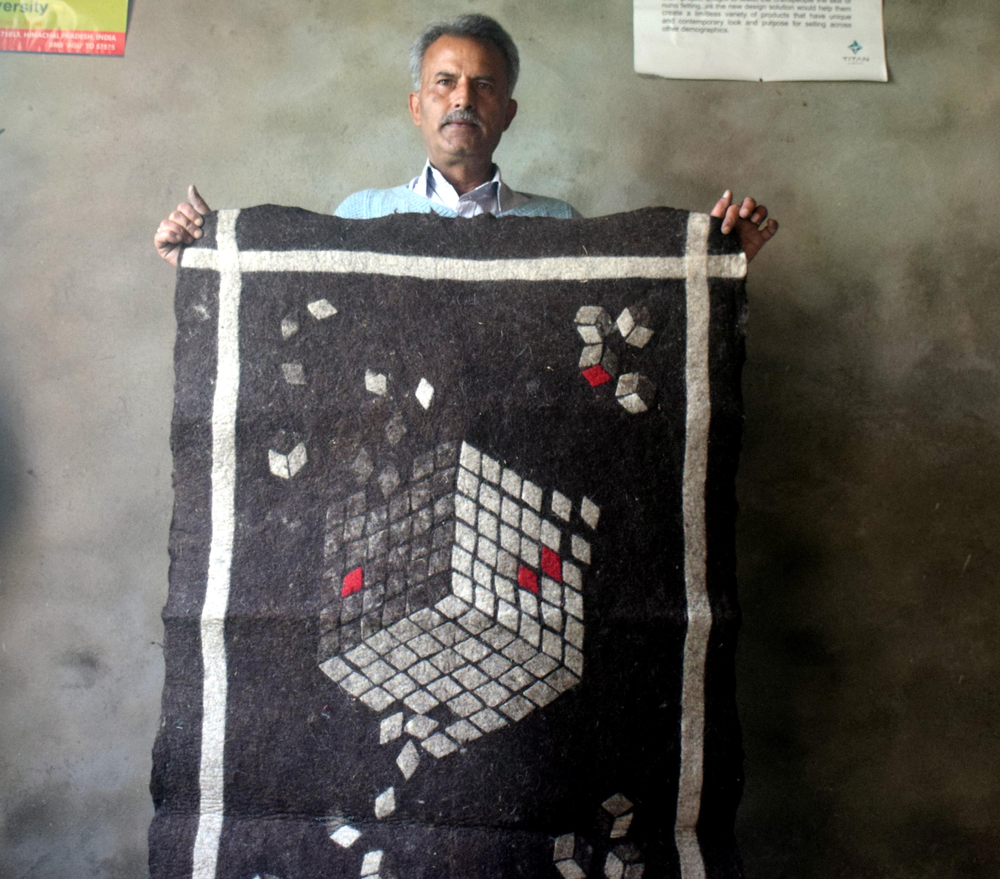
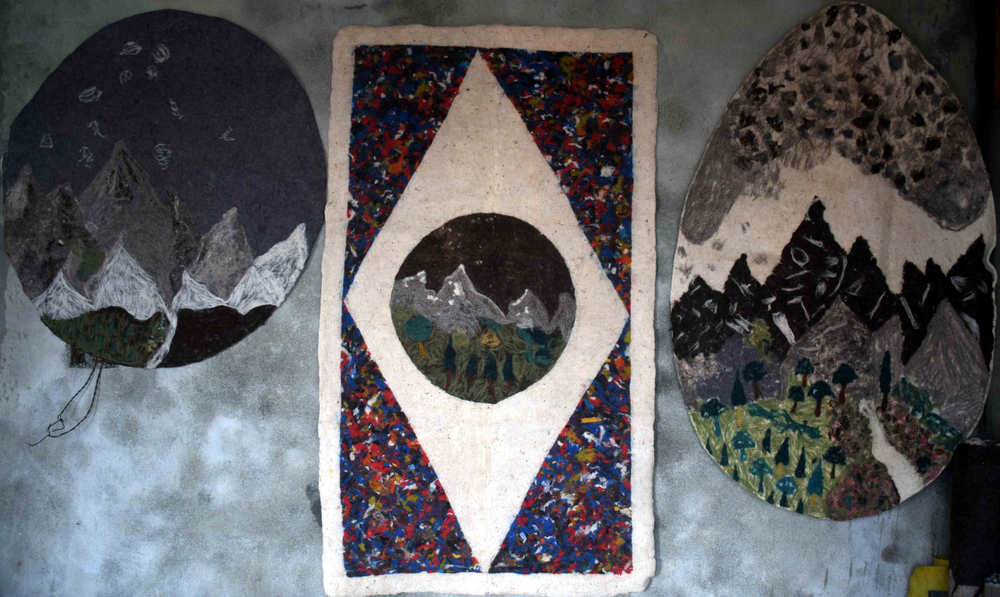
Farooq Ahmed, a skilled Namda artisan of downtown Srinagar, has combined the traditional art of making Kashmiri Namda with the Nuno felting technique, (erroneously mentioned as Nano felting by many) learnt from Australia. He is an award-winning artisan with a global clientele and has been working relentlessly for the last 35 years to revive the craft.
#namda #rugs #kashmircraft #nunofelting






Leave a Reply