

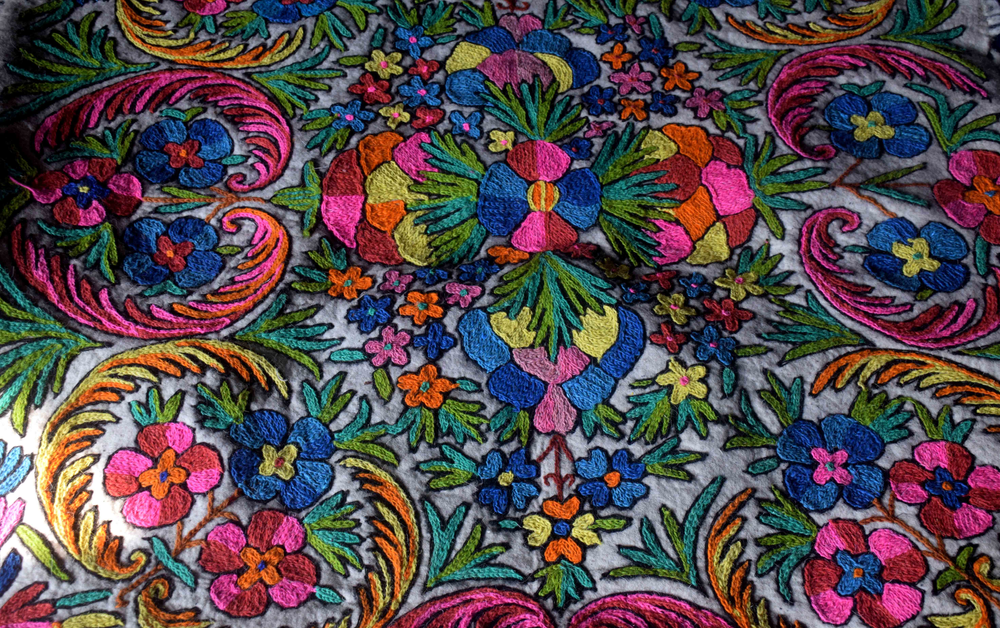
Chain Stitch, known as Jalakdozi in Kashmiri is a chain stitch embroidery done on rugs called Namda made of sheep wool. Namdas came in to Kashmir from Central Asia, however, there was a locally crafted rug called gabba, an embroidered Kashmiri rug. Made by re-purposing old woollen blankets and waste cloth, a gabba is used as a carpet, prayer rug, blanket and mattress and is usually reserved for weddings or as home furnishings.
Gabbas are traditionally made by Kashmiri women during the winter. To make the gabba, the used cloth is first washed thoroughly, then milled and dyed in various colours. Milling, similar to felting, involves carding and washing the wool sheets with warm soapy water, after which the matted fabric is dried and evened out such that the shrunk wool becomes dense, soft and warm.
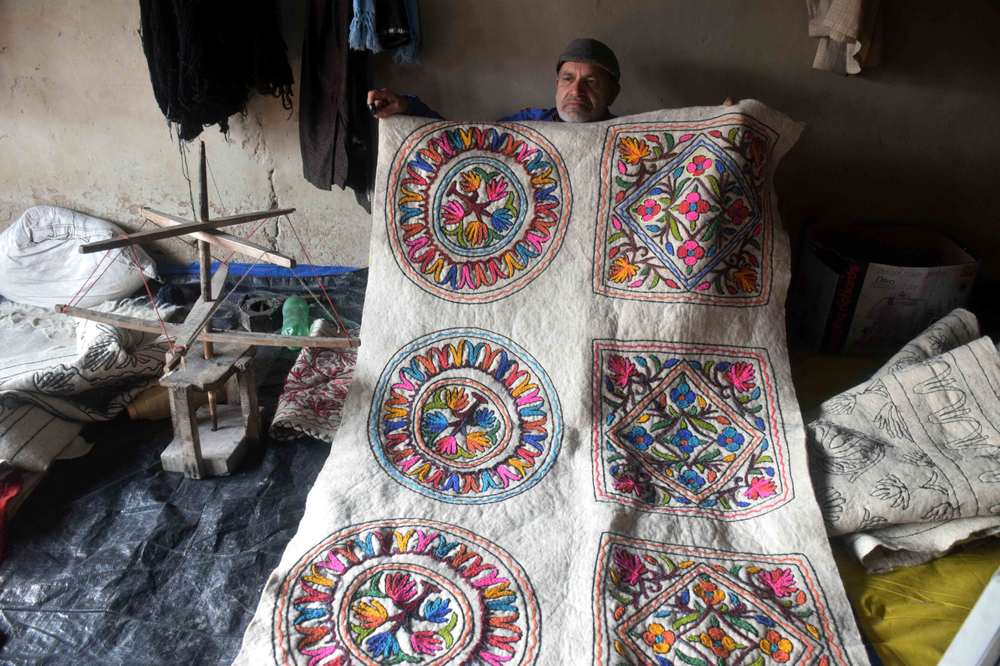
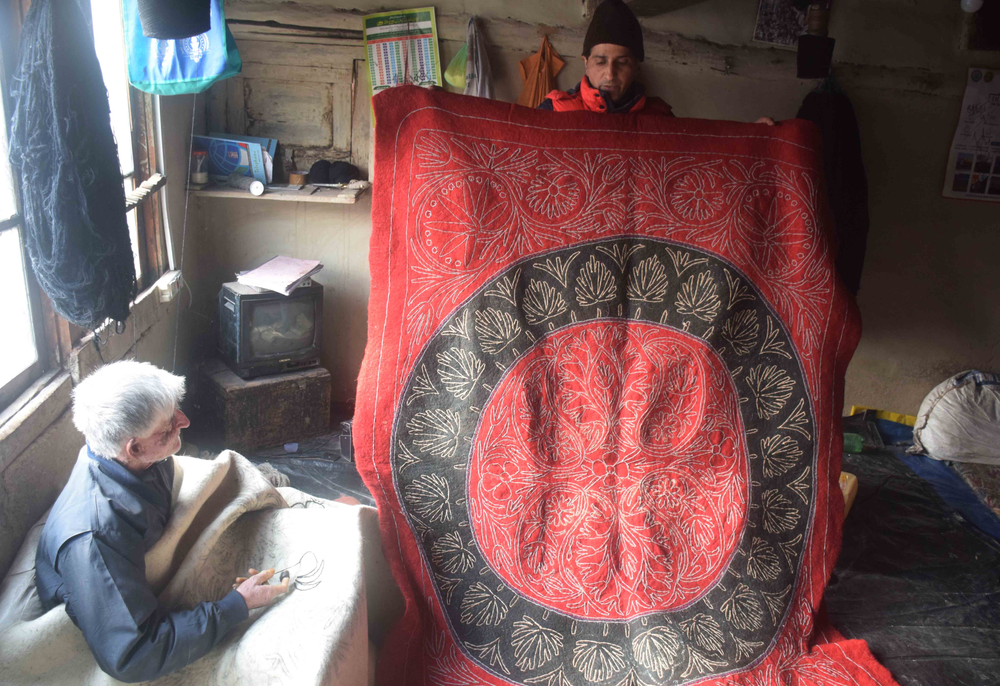
The base of the gabba is typically several layers thick and made of recycled wool and cotton fabric, covered by an upper layer of cloth that is appliqued and embroidered. The embroidery is typically done using wool or silk threads, depending on available resources, and executed with an aari using a chain stitch, which helps hold the base layers and the outermost applique layer together. Each gabba usually takes two weeks to embroider, but this can vary depending on the design. The most common design is a central medallion framed by borders with floral, natural and geometric imagery, characterized by a vibrant and colourful palette.
The popular production clusters are Anantnag and Srinagar. The craft crossed the state boundary when the carpet weavers were once invited to Punjab to prepare Shaminas, qanat and gabbas.
Kashmiri Namda rugs are non-woven rugs developed by highly skilled artisans in Kashmir using the felting technique. These floor coverings are primarily made of pure sheep wool, as wool has a natural property to felt. Layers of evenly laid, clean wool fibers are enmeshed with the help of moisture, soap and mechanical pressure and rolled up against a jute mat. This is moved in a back-and-forth motion and tied up to squeeze out the excess moisture. Hours of rolling makes the rug sturdy enough to be used as a floor covering. In Kashmir a namda is usually layered atop the gabba, and both items are an integral part of every household.
There is no weaving involved in making a namda. Wool is first washed in water and soap so the fibers are ensnared with each other thoroughly. This wool is spread in layers over a level floor, soaked with water once more, and then pressed on with the pinjra. This can be a large hand-held, forked, flattening device or a grass or jute mat, which is rolled up, tied, and put aside till the wool dries. The namda is decorated in two ways. It is either embroidered upon or has a felt-on-felt pattern. For the needle-worked version, the thread is hand-dyed by the master dyer, metre by metre. After this, the women of the household step in to assemble the thread for use. Kashmiri aari embroidery techniques are used to create complex floral patterns typical to the region. The non-embroidered but patterned namda is made using dyed wool, which is placed by hand, in design, on the bleached or non-bleached wool base, and the process of moistening, flattening, and drying is done all over again. Wool takes on a different texture when it is felted. It is softer and, therefore, more malleable, but it can also come apart if folded harshly, pulled at, etc.
Nomadic tribes of the Central Asian steppes reportedly invented the technique of felting. Even today, the felted carpets are part of the culture of countries such as Kirgizstan, Uzbekistan, parts of Pakistan, and even Turkey.
The namda craft was given a boost by the Union Minister of State for Skill Development, Entrepreneurship, Electronics and Information Technology in 2021.
#embroidery #kashmircraft #artsandcrafts #namda #carpet




Leave a Reply