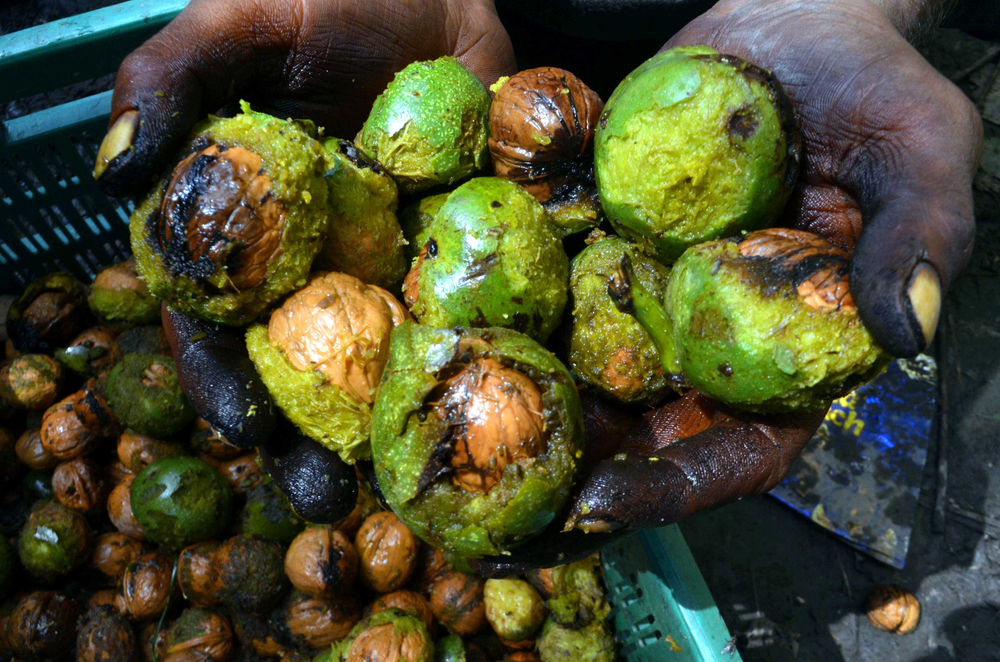
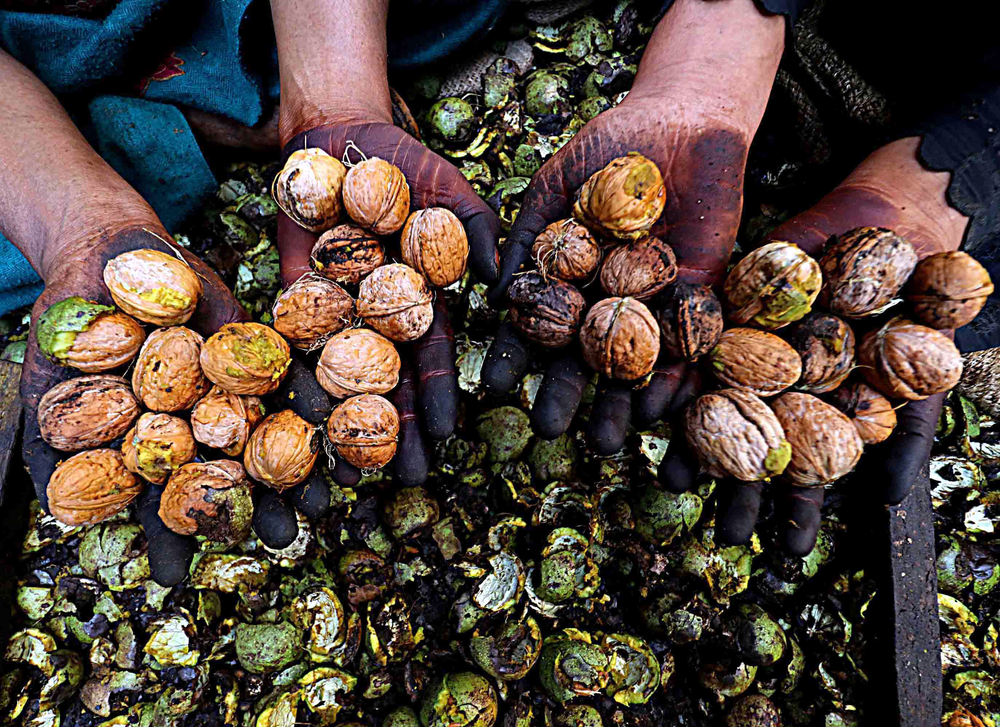
Freshly plucked walnuts with their green outer shells. The two main species of walnuts are Persian (or English) walnuts and the black walnuts. Walnut trees are grown for the nuts and timber. Timber from black walnut trees is highly priced.
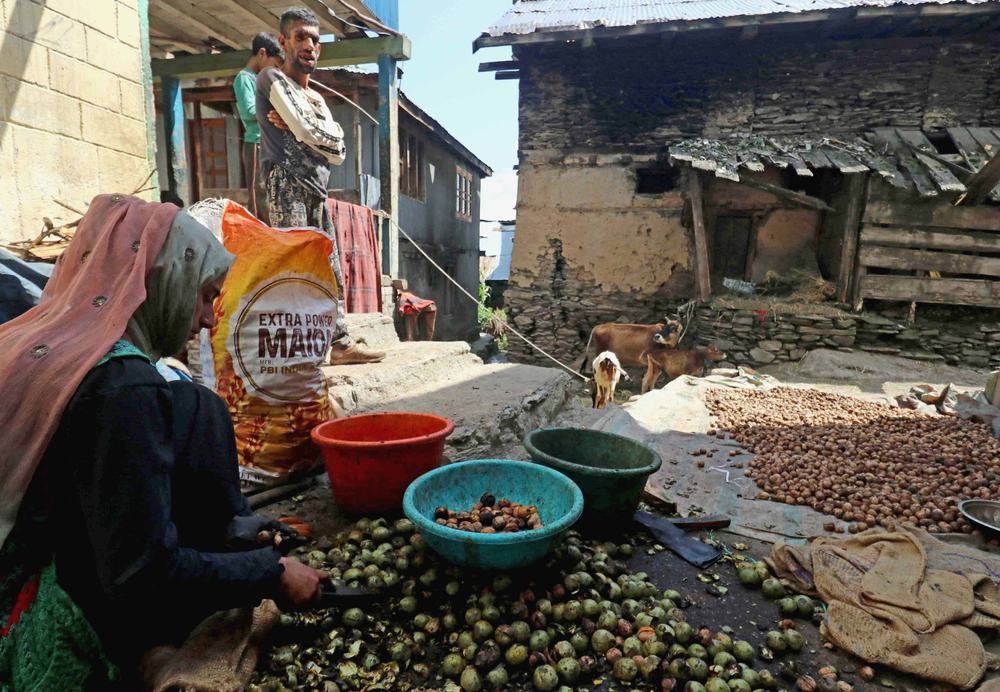
Women breaking the outer green shell.
Women gather to break the outer green shell.
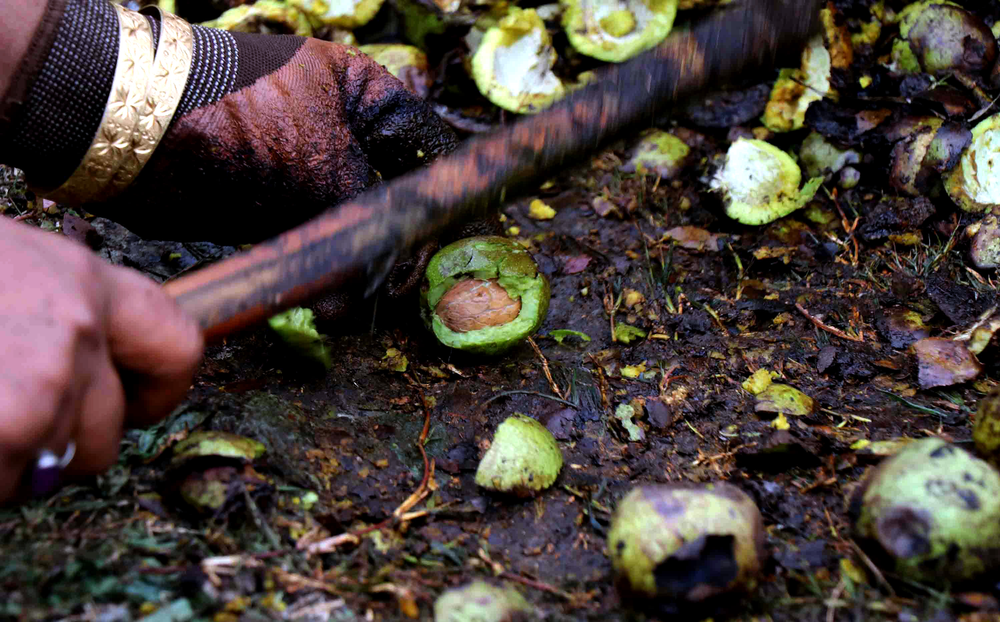
A woman breaks the outer green shell of the walnuts.
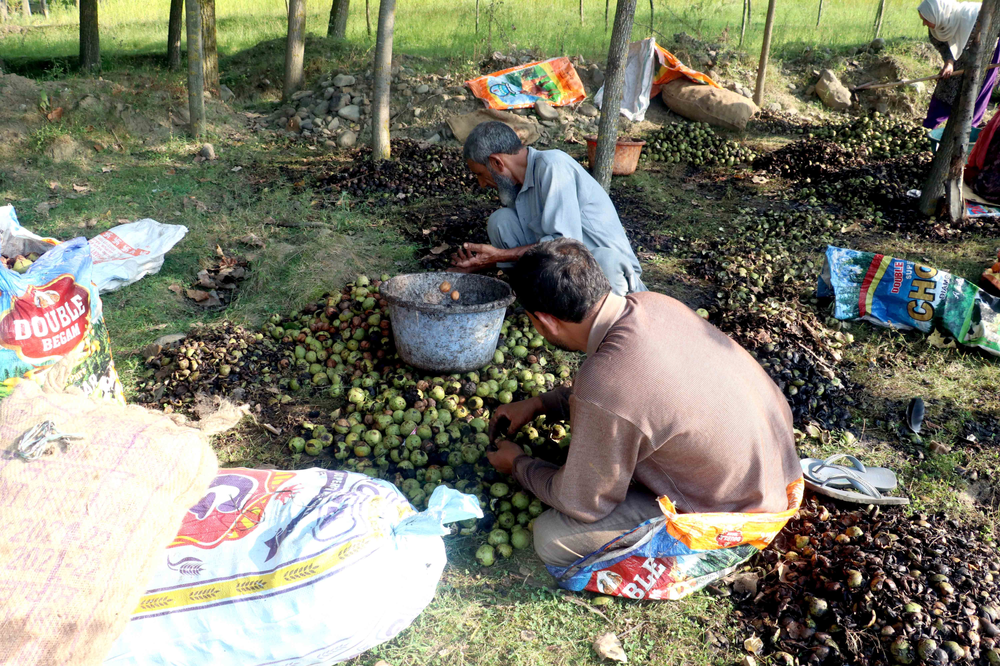
Men breaking the outer green shell of the walnuts, on the outskirts of Srinagar.
Freshly shelled walnuts. Peak harvesting season of the Valley’s best walnuts. Walnuts of Kashmir are popular across India and even exported around the world.
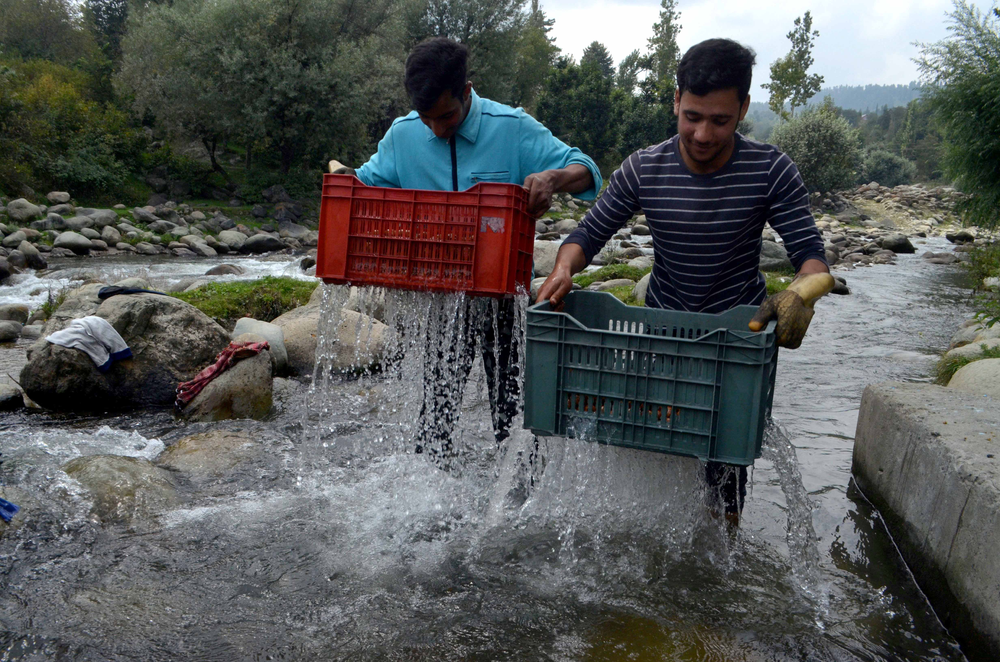
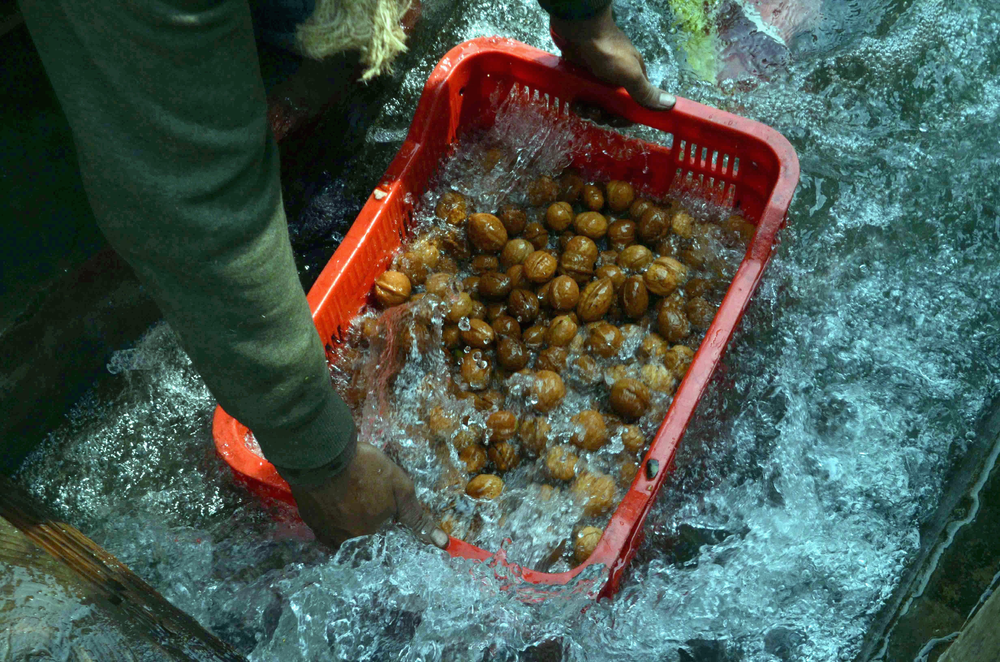
Freshly shelled walnuts being washed in the river, on the outskirts of Srinagar.
Walnuts washed in the river water.
Washed walnuts being sieved in a basket.
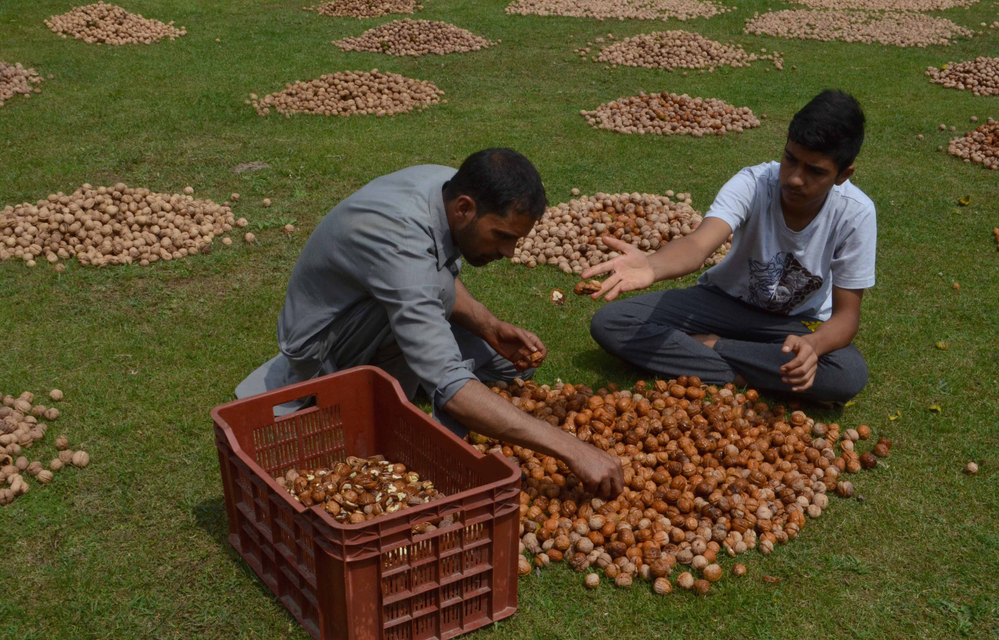
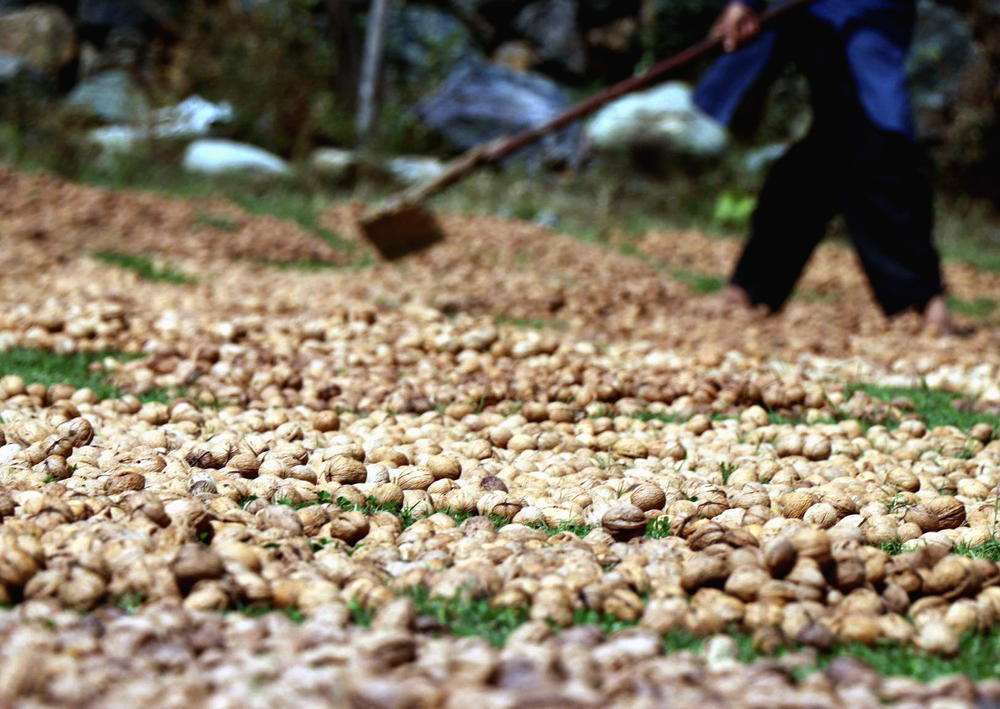
Shelled walnuts being laid out in the open, to be sun-dried.
Mainly, three varieties of walnuts are grown in the Kashmir Valley. They are Wonth (hard shells), Kagazi (larger with soft shells, white kernel) and Burzul (medium sized, darker kernel).
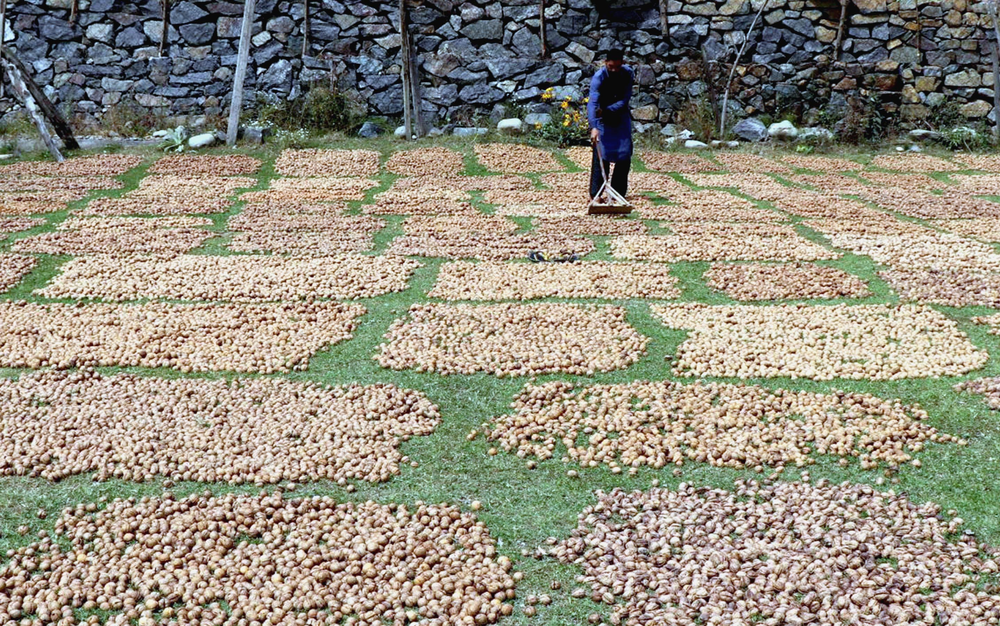
walnuts laid out in a grid pattern to be sun-dried.
These trees grow well on the slopes of Himalayas in Kashmir and require a temperate climate. In about 10-15 years after planting a walnut tree, it starts bearing fruit and in 20-25 years, it gives a good output of walnuts. Walnut trees in Kashmir give a good yield of the fruit even at 100 years of age.
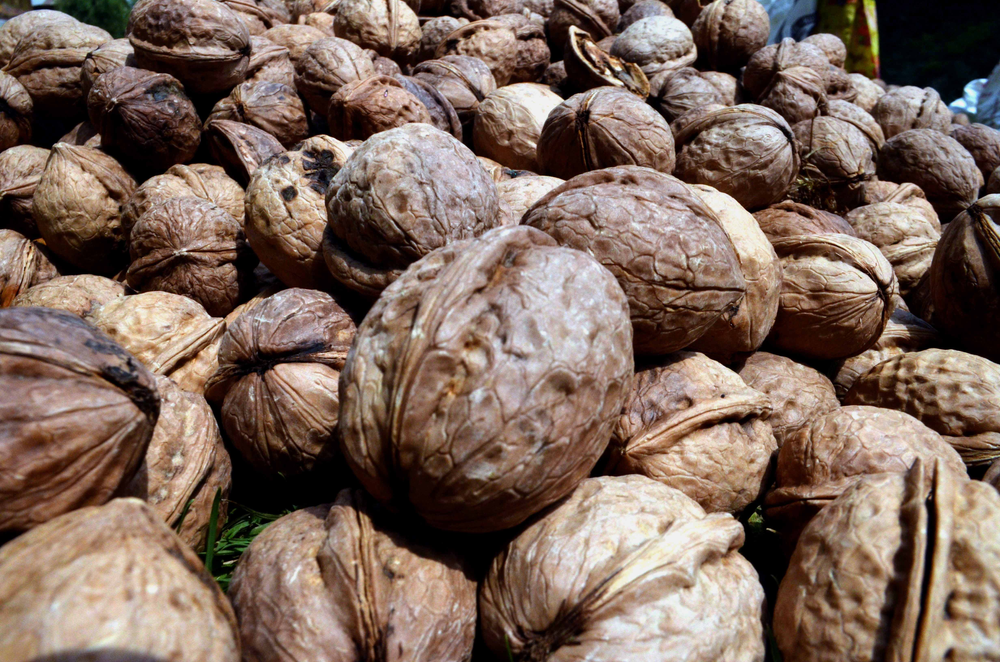
The final product. Doon are a special part of Kashmir’s culture and a sign of communal harmony. On the occasion of Hindu festival Shivratri, Muslims in Kashmir give walnuts to their Pandit neighbours and friends. The kernels can be eaten as is or used for chutney (doon chetin).





Leave a Reply