

As with most other crafts of Kashmir, history has it that the Sufi Saint, Mir Syed Ali Hamdani ,who travelled from Central Asia was instrumental in making copper popular in Kashmir. He brought craftsmen from central Asia to train locals.
However, the copperware craft flourished during the reign of King Budshah Zain-ul- Abideen. In the Mughal era, metalwork in Kashmir was focused more on making gun barrels and swords. Techniques of casting and forging Iron along with Meenakari (enamelling) as it is commonly known were used for decorating the handles of swords. By the end of the 19th century with the decline of the Mughal era, the skills of Kashmiri metalworkers concentrated again on making vessels, now ornamented with Meenakari. This was applied on silver jewelry, brass, and copperware like serving pots, jugs, trays.The elegantly designed copper utensils are not only used for cooking and serving food at homes but also at largely attended weddings and other functions.
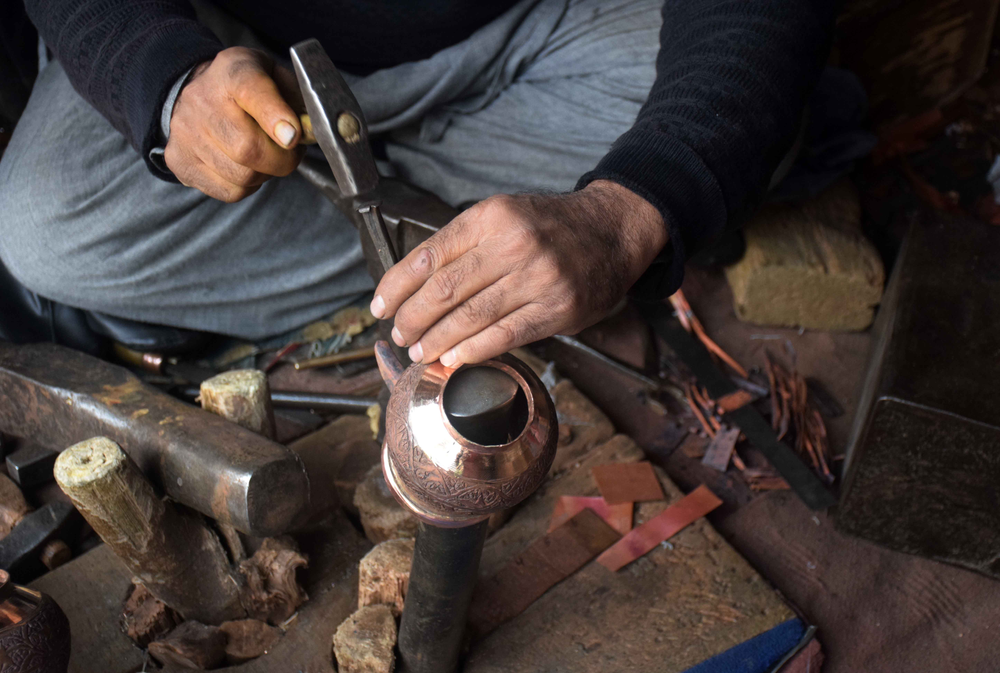
Kashmiri Copperware is locally known as kand kari Work and copper, is known as Traam. The craftsmen are known for the work of engraving and making household and decorative products from copper including utensils like Lota (pot), Tream (plate), Naer (water jug), Tash-Near (portable handwash), Isband soz, dishes, bowls, trays, vessels, Lamp Shades etc. The most famous is perhaps the Kashmiri Samovar– based on the Russian tea kettle, which was brought to Kashmir via Iran. The Kashmiri artists used intricate floral motifs, calligraphy, geometric patterns, and Chinar leaves. The hammer and chisel engraved work is known as Naqashi. The price of the Samovar depends not only on the weight but also the Naqashi work on it. Shahi Copper Samovars, which serve hot cups of kahwa and noon chai, are still the major attraction at special gatherings and wedding feasts. Tash-t-Naris (tash naer) and traamis are wedding feast staples that no Kashmiri wedding is complete without.
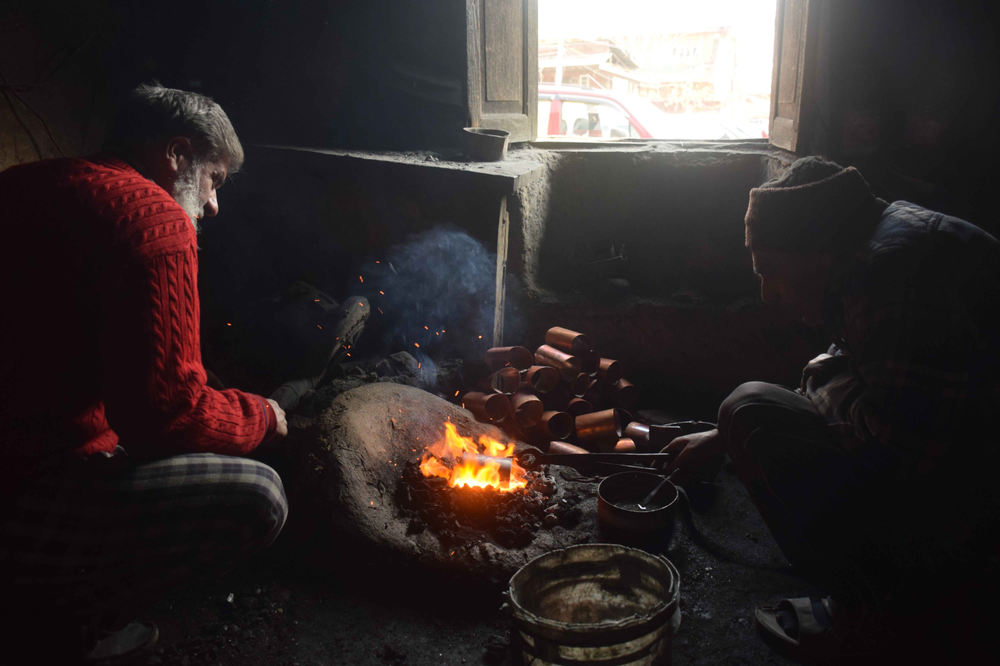
The process of making of a copper or brassware goes through many artisans, each specialized in a different part of the process.
Beginning with the copper smith, the products pass through the Naqash – the engraver, Zarcod – the gilder, Roshangar – the polisher and Charakgar – the cleaner or finisher. The old mohallas of downtown Srinagar were named after these professions.
Some of the tools used in the process of making a copperware are, Draz (hammer), Mekh (stakes), Yandrewah (anvil), Compass ,chisels, punches, files etc.
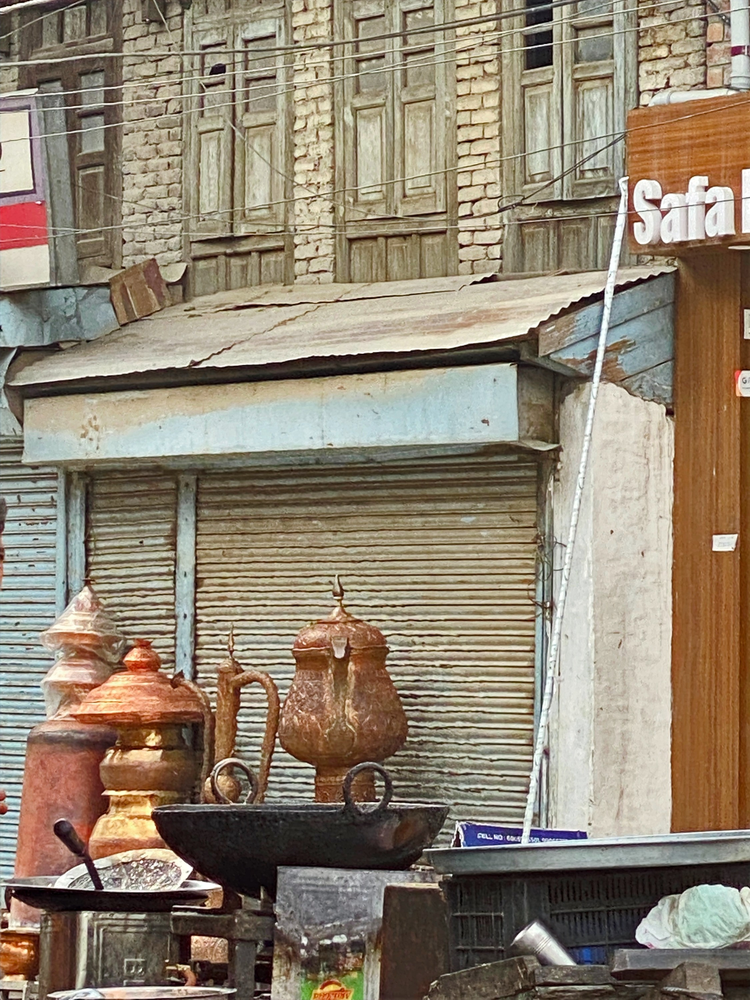
The beautiful shops of household utility and decorative copperware items in Shehr-e-Khaas, downtown area of Srinagar city has been traditionally the hub of copperware since the 19th century. Copper shops are found in the old markets of Zaina Kadal, SR Gunj ,Maharaj Gunj. The old city is full of shops where craftsmen are often seen engraving copper items.
This copperware has stood the test of time and several new products including elegant cooking pots, trays and other articles, as well as decorative pieces such as vase, vessel or lamp shade have been added from time to time.
Jammu and Kashmir prohibition on the manufacture of specific copper utensils (by Machines) Act 2006 was passed for safeguarding the interests of craftsmen associated with the copper trade. In the initial year, machine-made goods were also confiscated from time to time. In addition, local entrepreneurs were encouraged to set up their industrial units at HMT Naribal on the outskirts of the city.
These initiates, however, had little effect on the copper workers as they were poorly implemented on the ground. This has threatened the livelihood of around 28,000 copper workers who are engaged in around 6000 registered units in the valley.






Leave a Reply